



Akio Toyoda defends hybrid strategy as Toyota questions EV-only future
Thekabarnews.com—Toyota Motor Corporation Chairman Akio Toyoda has repeatedly said the global automotive industry must not rely on battery electric vehicles (BEVs) alone. He says BEVs alone are not...

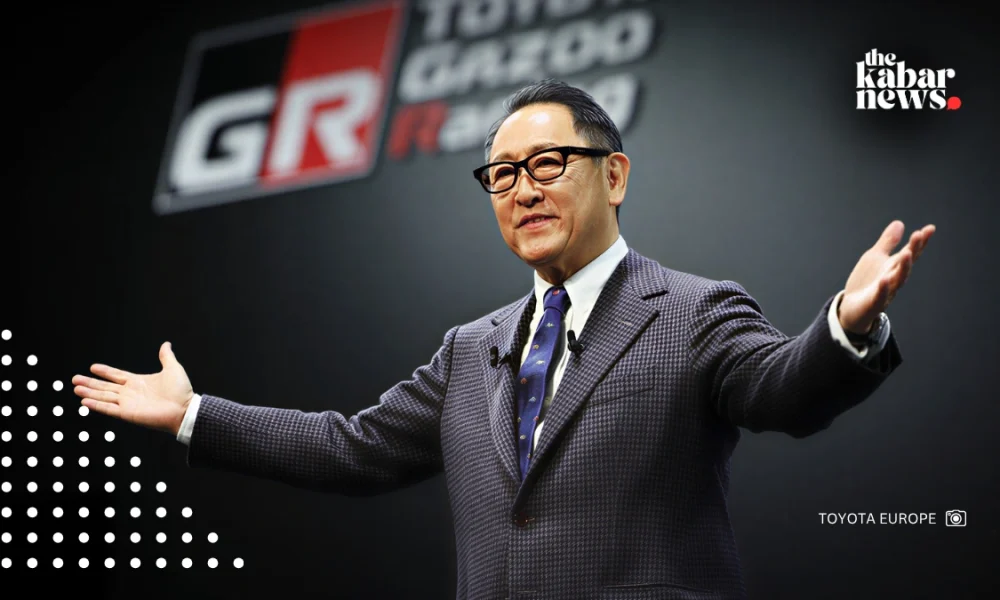
Thekabarnews.com—Toyota Motor Corporation Chairman Akio Toyoda has repeatedly said the global automotive industry must not rely on battery electric vehicles (BEVs) alone. He says BEVs alone are not enough to reach carbon neutrality.
Instead, he recommends what Toyota calls a “multi-pathway approach.” This combines a number of lower-emission technologies like hybrid electric vehicles (HEVs) and plug-in hybrid electric vehicles (PHEVs). In addition, it includes hydrogen fuel cells and battery electric vehicles themselves.
Toyoda’s argument is simple: carbon, not a specific engine technology, is the real enemy.
Instead, he believes the industry should be focused on reducing total carbon emissions as efficiently as possible. Rather than trying to force a single technological solution on all markets, he recommends flexibility.
One of the more discussed aspects of Toyota’s stance is the so-called “1:6:90 rule,” which concerns battery resource allocation.
Toyota research indicates that the raw materials to build one long-range battery electric vehicle could instead produce six plug-in hybrids. It could also produce as many as 90 conventional hybrids.
Under that model, the company says, 90 hybrids could reduce total fleet-wide carbon emissions more effectively than one BEV. This is particularly true in areas where EV adoption is still limited.
Toyota also cites Life Cycle Assessment (LCA) as a critical measure of a vehicle’s true environmental impact.
LCA measures emissions over the entire life of a vehicle, from manufacture to battery manufacture to everyday use and disposal.
Large lithium-ion battery manufacturing can result in significant carbon emissions in countries that still rely heavily on coal or natural gas for electricity generation. Notably, this happens even before the vehicle hits the road.
Toyota says that in such areas, a highly efficient hybrid vehicle may be better than a BEV (battery electric vehicle) in terms of near-term carbon reduction. This is because it may take a few years of driving for the electric vehicle to have lower total emissions than a hybrid.
Another big concern is the infrastructure’s readiness. Toyota says there are insufficient charging networks, access to renewable electricity, or economic conditions in some markets. Therefore, some markets cannot yet support rapid BEV adoption.
The company thinks a broad product portfolio will allow it to offer practical lower-emission solutions to more consumers. It believes this is better than confining progress to regions with mature EV ecosystems.
This strategy has often pitted Toyota against automakers pushing hard for full electrification. However, the debate has grown more complicated as battery recycling technology improves. Additionally, green manufacturing processes have become more common, according to industry analysts.
The public is now concentrating not only on zero tailpipe emissions but also on overall systemic efficiency. Additionally, people are considering how scarce resources such as lithium, nickel, and cobalt can eliminate the greatest amount of carbon dioxide across the global vehicle fleet by 2026.
Toyota isn’t trying to dismiss electric vehicles but rather to make sure that all the technologies on the table are used in the most realistic and effective way to reduce carbon.
The company’s stance reflects a bigger question for the global auto industry: Is the fastest route to net zero one solution or many working in concert?






No Comment! Be the first one.