



Asking AI about Islam: What Muslims should know
Thekabarnews.com—One of the important principles of Islam is to seek guidance from the people of knowledge. Allah says in the Qur’an: فَاسْأَلُوا أَهْلَ الذِّكْرِ إِنْ كُنْتُمْ لَا تَعْلَمُونَ “[….]...


Thekabarnews.com—One of the important principles of Islam is to seek guidance from the people of knowledge. Allah says in the Qur’an:
Table Of Content
فَاسْأَلُوا أَهْلَ الذِّكْرِ إِنْ كُنْتُمْ لَا تَعْلَمُونَ
“[….] So ask the people of the message [i.e., former scriptures] if you do not know.” (Quran Surah Al-Anbiya, 21:7)
Imam Jalaluddin al-Suyuti, in his book Al-Durr al-Manthur, has narrated a narration that is concerning the responsibility of the learned and the ignorant.
The learned should not hide their knowledge, and the ignorant should overcome his ignorance by asking questions and seeking guidance from reliable sources.
This principle insists that we present reasons with modesty and good manners. And those who do not know religion should learn from qualified instructors.
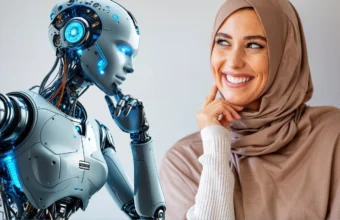
Can artificial intelligence (AI) teach Muslims about religion?
With recent advances in AI, it is now possible to ask AI tools questions about almost anything, including Islam. The tools may help users seek information, understand unknown words and select topics for further research.
But there are some serious caveats that Muslims should be aware of before turning to AI to answer religious questions. AI can assist with standard learning, but it cannot replace qualified scholars, authentic Islamic texts and recognized institutions in the area of religious rulings.
There is no sanad for AI
The most obvious drawback to learning Islam with AI is the lack of sanad, or recognized chain, through which religious knowledge is transmitted.
The great scholar Abdullah ibn al-Mubarak said:
The isnad is part of the religion, and if it were not for the isnad, everyone would say what he wanted.
“The transmission is internal to the religion. “Without it everybody could say what they liked.
Islamic education is not just a transmission of facts. It is concerned also with how teachers understand, practise and transmit knowledge through the scholarly traditions of the Prophet Muhammad (peace be upon him).
Al-Nawawi, may Allah have mercy on him, said in Al-Majmu‘ Sharh al-Muhadhdhab: “The people should seek religious knowledge from those known for their expertise, sound scholarship and trustworthiness in character.”
He also mentioned the famous advice attributed to Muhammad ibn Sirin and other early scholars:
“This information is religion, so think carefully about who you take your religion from.”
AI lacks academic integrity, spiritual discipline or verifiable lineage of learning. The answers come from data patterns, not from qualified teachers’ knowledge.
AI sources may be inaccurate or imprecise
AI is able to provide different answers to the same question asked by users. The difference is that systems like mine generate answers probabilistically; other systems just look up an answer and give it back.
Such inconsistencies require special care, especially in religious affairs. A good answer does not need to be true. The guidance in the matter of religion must be based on evidence that readers can check and can credit to authoritative sources.
Users should not rely solely on an AI response as the basis of issuing a fatwa or determining Islamic law. They have to verify every quote, statement and legal argument with standard books, reliable databases and distinguished scholars.
Artificial intelligence can be used to assist the user in formulating questions or in searching for potential references. It is not to be the final word in religion.
AI may not understand social context
A reliable religious opinion requires more than knowing the legal texts. The scholar must know the conditions for the enforcement of a decision.
Imam Shihabuddin Al-Qarafi, in his book Al-Ihkam fi Tamyiz al-Fatawa, said that preachers and jurists should be aware of the conditions and customs and features of the people they preach to. You might have to do something different depending on the circumstances.
The scholar has to be aware of the local culture, the needs of the people and the possible consequences of a judgment. The application of law may also vary with the circumstances but the core values of Islam remain constant.
The AI might miss these details or make assumptions based on incomplete data. It cannot, like an experienced scholar, fully gauge an individual’s motives, family situation, local customs, or immediate needs.
Ethical Usage of AI in Islamic Education
Muslims can use artificial intelligence as an educational support tool, particularly for introductory explanations, planning research and identifying topics for further research. However, users need to verify all important answers with trusted sources.
If you have questions about worship, marriage, divorce, inheritance, financial transactions and other binding rulings, refer to qualified scholars. Artificial intelligence can be a help in the search for knowledge, but scholarly expertise, reliable sources and proper contextual understanding must remain at the heart of Islamic learning.
Acknowledgments
- Al-Suyuti, Jalaluddin, Al-Durr al-Manthur, vol. 5, p. 133. Beirut: Dar al-Fikr, n.d.
- Al-Nawawi, Abu Zakariyya Muhyi al-Din Ibn Sharaf, al-Majmu‘ Sharh al-Muhadhdhab, Cairo: Idarat al-Tiba‘ah al-Muniriyyah, 1344-1347 AH, vol. 1, p. 36.
- Ahmad ibn Idris al-Qarafi, Al-Ihkam fi Tamyiz al-Fatawa, Beirut: Dar al-Basha’ir al-Islamiyyah, 1995, p. 244.
- Muhammad ibn Muhammad al-Khadimi al-Hanafi, Bariqah Mahmudiyyah, Egypt: Matba‘ah al-Halabi, 1348 AH, 3:126.
By: Pondok Lirboyo



No Comment! Be the first one.