



Dedi Mulyadi targets equal electricity access in West Java
BANDUNG, thekabarnews.com—West Java Governor Dedi Mulyadi has pledged to connect approximately 80,000 residents who still lack reliable electricity. The province is working to address persistent...
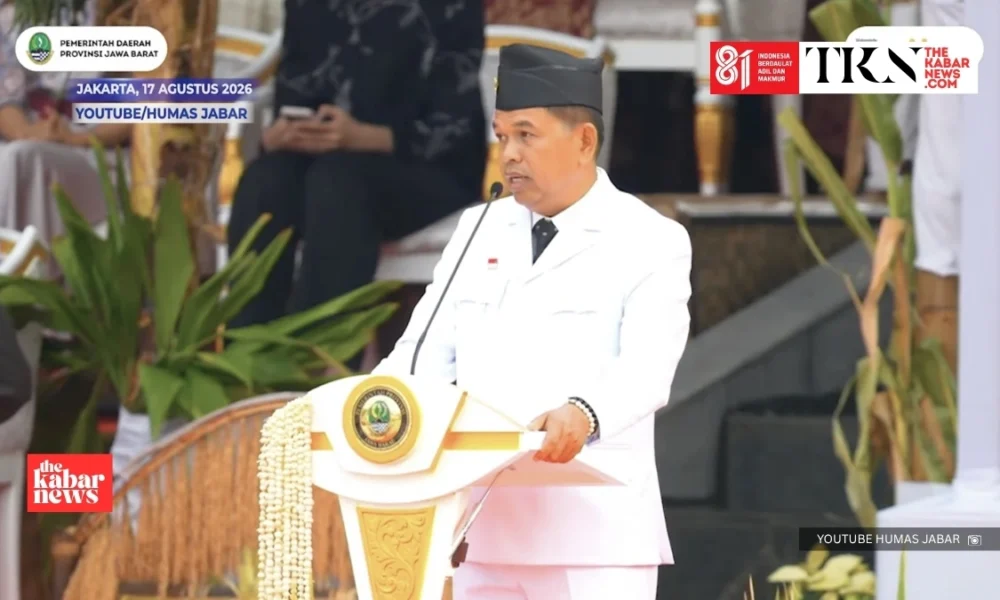
BANDUNG, thekabarnews.com—West Java Governor Dedi Mulyadi has pledged to connect approximately 80,000 residents who still lack reliable electricity. The province is working to address persistent development gaps after 81 years of Indonesian independence.
Dedi announced the target after leading the Independence Day flag-raising ceremony at Gedung Sate in Bandung on Monday, August 17.
He said West Java still faced significant work in electricity, healthcare and public infrastructure. This is despite its major contribution to Indonesia’s energy supply.
“At 81 years of Indonesian independence, we apologize. We have not yet been able to liberate all the people of West Java,” Dedi said in his Independence Day address.
He said his administration aimed to eliminate the remaining electricity-access gap in 2027.
“There are still 80,000 people in West Java who, to this day, do not have access to an electricity network. This leaves them in darkness at night. We will resolve this issue in 2027,” he said.
The figure marks a substantial decline from the estimate recorded when Dedi began leading the provincial administration.
“When we took office in 2025, more than 500,000 people in West Java did not have electricity,” he said.
The numbers require careful interpretation because provincial reports have alternately counted residents, houses, households and families without independent electricity connections.
Authorities have not yet published a consolidated public dataset reconciling those categories.
Dedi highlighted what he described as an irony: West Java accommodates major power plants. Some communities near those facilities still lack adequate electricity.
The province hosts the Cirata, Jatiluhur, Saguling and Jatigede hydropower facilities, alongside geothermal fields in several mountainous districts.
Cirata is also home to a 192-megawatt-peak floating solar power plant covering approximately 200 hectares, according to PLN.
“West Java is an energy center, with geothermal power and hydroelectric plants stretching from Jatiluhur and Jatigede to Cirata and Saguling,” Dedi said.
“There is an irony: we possess enormous energy resources, but some of our people—even those living near power plants—still do not have electricity,” he added.
“Energy-producing regions often bear the suffering,” Dedi told reporters after the ceremony. Dedi summarized the problem more sharply.
The West Java administration and PLN signed a cooperation agreement in May 2026 to accelerate electricity infrastructure and broaden access. The agreement also aims to support environmentally sustainable energy development.
Dedi also identified inadequate roads, bridges and other public facilities in parts of Garut, Sukabumi and Cianjur as unfinished development work.
Mountainous terrain and dispersed settlements make infrastructure construction more difficult and expensive in several communities across those districts.
He said the provincial administration would pursue broader improvements over the next two years while prioritizing electricity completion in 2027.
“We must resolve all these contradictions together by restructuring West Java’s financial system. We must direct it toward the basic needs of the people,” Dedi said.
One proposed measure would direct mining and natural-resource revenue-sharing funds toward facilities needed by residents in producing regions.
The proposal must still enter provincial and district budget processes and comply with national fiscal regulations.
Dedi said public officials must prioritize essential services over government privileges and unnecessary spending.
His central message was that independence should produce measurable benefits—including electricity, healthcare and adequate infrastructure. These should reach communities whose natural resources support West Java and the wider national economy.

No Comment! Be the first one.