



West Kalimantan DPRD backs LGBT regulation proposal
PONTIANAK, thekabarnews.com—The West Kalimantan Provincial Legislative Council (DPRD Kalbar) has expressed support for regional regulations addressing lesbian, gay, bisexual and transgender (LGBT)...

News Summary
- The West Kalimantan Provincial Legislative Council supports drafting a regional regulation addressing LGBT issues.
- Lawmakers emphasize that sanctions should focus on education and rehabilitation, rather than punishment.
- Alliance representatives urge for immediate drafting of the proposed West Kalimantan LGBT regulation based on Indonesia’s religious foundations.
- Legislation requires alignment with national laws and public participation, with caution against discrimination or persecution.
- The WHO emphasizes that attempts to change sexual orientation lack medical justification and can harm health.
PONTIANAK, thekabarnews.com—The West Kalimantan Provincial Legislative Council (DPRD Kalbar) has expressed support for regional regulations addressing lesbian, gay, bisexual and transgender (LGBT) issues. This follows a public audience in Pontianak on Friday, August 14.
The position emerged after lawmakers met representatives of the Aliansi Masyarakat Kalbar Bersatu.
The group urged the council to begin drafting a regional bylaw (Perda), specifically concerning LGBT communities and activities.
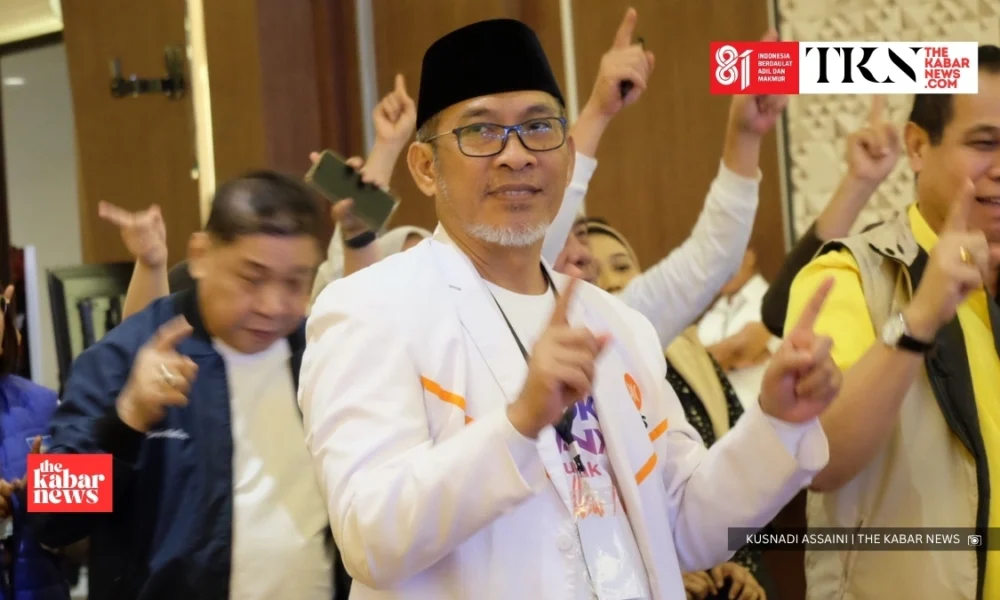
Arif Joni Prasetyo, a member of the council’s Commission V, said lawmakers supported advancing the issue through a Perda. They encouraged the provincial government to prepare a governor regulation (Pergub) to address implementation.
“We agreed to elevate this LGBT issue into a regional regulation. The legal gaps concerning sanctions, education and rehabilitation need to be addressed through a governor regulation,” Arif said.
He said the provincial administration was holding discussions through the National and Political Unity Agency (Kesbangpol).
Authorities had not publicly released a draft, policy scope, legislative timetable or supporting academic study as of Saturday.
If there are sanctions, Arif said, they should be in the form of education and rehabilitation, not punishment.
“The proposed implementing regulation must not conflict with other laws. Education and rehabilitation should remain the main priorities,” he said.
Alliance coordinator Habib Sy Rizal H. Al-Qadrie called on the provincial legislature to immediately draft the proposed Perda, citing Indonesia’s religious foundations.
“This is a nation founded on belief in God. I believe no religion permits LGBT, and we are urging the authorities to immediately prepare a regional regulation governing it,” Rizal said.
The statements represent the positions of the speakers and do not mean West Kalimantan has enacted a new LGBT regulation.
Under Indonesia’s legislative system, the provincial DPRD and governor must jointly approve a Perda. A Pergub generally implements higher regulations or matters within a governor’s administrative authority.
Indonesia’s Law No. 12 of 2011, most recently amended in 2026, requires provincial bylaw proposals to follow the national hierarchy of legislation.
The draft Perda also requires legal harmonization, public participation and, in applicable cases, an academic paper. Local provisions cannot conflict with the Constitution or higher national laws.
Indonesia’s national criminal code, effective since January 2, 2026, does not establish a general criminal offense based solely on a person identifying as LGBT.
It regulates specific conduct, including adultery and cohabitation outside marriage, through restricted complaint-based provisions.
The code applies nationally and is not framed around a particular sexual orientation.
Any use of “rehabilitation” would also require careful medical and human rights scrutiny.
The WHO states that homosexuality is not a pathological condition. Attempts to change sexual orientation lack medical justification and can harm physical and mental health.
WHO’s ICD-11 also places gender incongruence outside the category of mental disorders.
Indonesia’s National Commission on Human Rights (Komnas HAM) has similarly warned that policies targeting sexual orientation may undermine equality before the law. Such policies may also increase the risk of discrimination or persecution.
The West Kalimantan administration and Kesbangpol had not issued a detailed public response outlining the proposal’s legal basis, safeguards or next steps.




No Comment! Be the first one.