



Sweden’s climate minister Romina Pourmokhtari attends EU Summit with her baby
Thekabarnews.com—Sweden’s minister for climate and the environment, Romina Pourmokhtari, drew international attention by bringing her three-month-old son to a European Council environment meeting in...
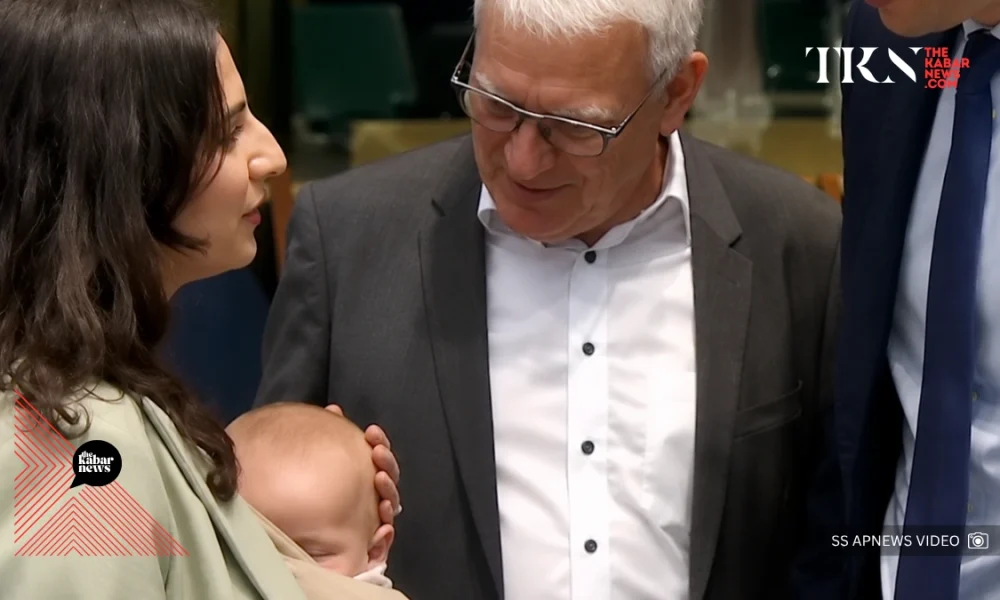
Thekabarnews.com—Sweden’s minister for climate and the environment, Romina Pourmokhtari, drew international attention by bringing her three-month-old son to a European Council environment meeting in Luxembourg. By doing so, she highlighted the ongoing debate over the balance between public service and parenthood.
Pourmokhtari, who gave birth in March, arrived at Friday’s ministerial meeting with her baby son Adam comfortably strapped in a baby sling. Then, she greeted fellow ministers, diplomats, and journalists before the official discussions began.
“Very pleased to be back in the Council and looking forward to today’s discussions on many different topics,” Pourmokhtari told reporters upon her arrival, according to AP News.
Her appearance immediately caught the attention of the European media and social media. This symbolic image of a senior government official balancing the demands of motherhood and international policymaking is particularly striking.
Environment ministers from EU member states met at the European Council environment meeting. They discussed a wide range of climate, environmental, and sustainability issues facing the bloc.
The agenda included climate action, biodiversity protection, reducing emissions, environmental regulation, and cooperation on the EU’s long-term climate goals.
Pourmokhtari’s involvement highlighted Sweden’s continued influence on environmental policy in Europe. It also showed the country’s focus on helping working parents in public life.
Pourmokhtari, 30, is one of the youngest cabinet ministers in Sweden. She has emerged as one of the country’s most recognizable politicians since assuming office.
Her choice to bring her baby to the meeting is part of broader efforts across Europe to encourage more family-friendly workplaces. Furthermore, it aims to boost women’s participation in political leadership.
There are increasing numbers of images of politicians bringing young children to parliamentary sessions, cabinet meetings, and international conferences recently. This trend comes as governments try to make balancing professional responsibilities with family life seem normal.
Supporters of gender equality say that when people can see working mothers in leadership positions, it helps challenge old ideas about parenthood and public office.
They also highlight the importance of supportive work policies that can help parents, especially women, stay in their careers without sacrificing family responsibilities.
Sweden has been a global leader for a long time in parental leave, childcare support and gender equality policies. These efforts have led to more women entering the workforce. As a result, there has been an increase in the number of women in public institutions.
Pourmokhtari’s appearance at the council meeting reflected these broader societal values while showing the practical realities for many working parents.
The minister’s presence also emphasized that parenthood and leadership can coexist, particularly in countries that value family-friendly employment policies.
Pourmokhtari’s visit to Luxembourg was significant not only for the environmental agenda on the table. It was also important for the wider debate it has sparked about inclusion in the workplace, gender equality, and the changing role of parents in political leadership. This issue is especially relevant as European governments continue to debate climate policy and sustainable development.
Her appearance with her son was a reminder that public officials, like millions of working parents around the world, must often juggle demanding professional responsibilities with family life. For this reason, the issue is a topic that continues to inform conversations about modern workplaces and inclusive leadership.


No Comment! Be the first one.