


MacKenzie Scott, the billionaire behind $19.3 billion in charitable giving
Thekabarnews.com—Billionaire author and philanthropist MacKenzie Scott has become one of the most powerful charitable donors in the world. She gives away billions of dollars to nonprofit...

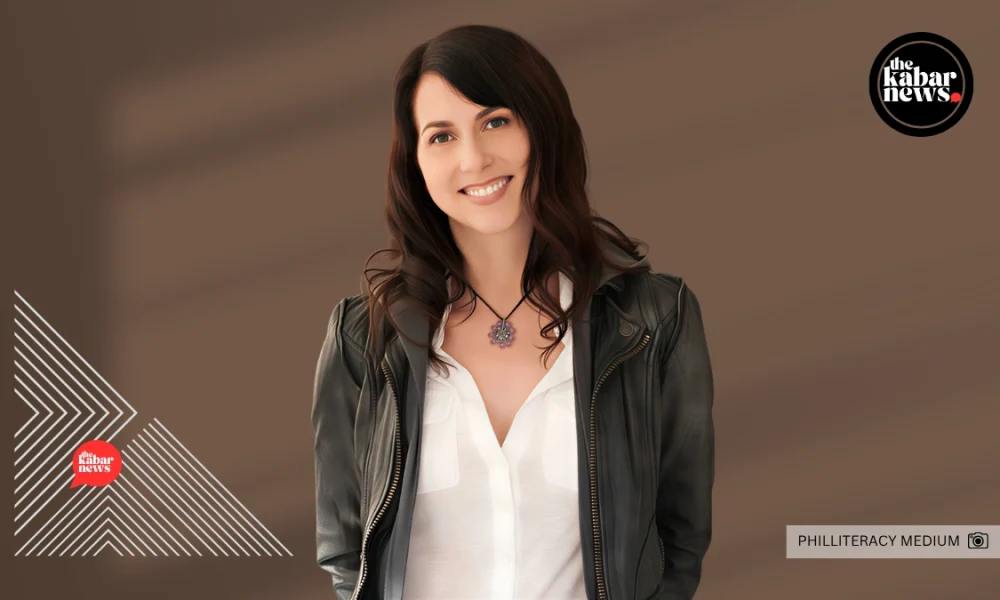
Thekabarnews.com—Billionaire author and philanthropist MacKenzie Scott has become one of the most powerful charitable donors in the world. She gives away billions of dollars to nonprofit organizations through an unorthodox method. This approach has revolutionized modern philanthropy.
Forbes estimates Scott’s net worth at US$32.9 billion, making her one of the richest women in the world. But instead of just focusing on protecting her wealth, she’s committed to giving away a giant chunk of it while she’s still alive.
Scott was married to Amazon founder Jeff Bezos for 25 years before they finalized their divorce in 2019.
In the divorce settlement, Scott received 4 percent of Amazon, which provided the financial backing for her extensive philanthropic work.
Rather than expanding her business interests with her wealth, she soon turned her attention to charitable giving on an unprecedented scale.
Scott, who signed up for the Giving Pledge soon after her divorce, is part of a global campaign. Bill Gates, Melinda French Gates, and Warren Buffett launched this campaign in 2010. It urges billionaires to give away at least half of their wealth during their lifetimes or in their wills.
By joining the initiative, Scott publicly pledged to donate much of her wealth to charitable causes. She committed to this goal instead of passing it on as an inheritance.
She has said many times that she plans to give away her money fast. For this reason, she would rather not set up a traditional philanthropy foundation. That type of foundation would last for many years to come.
Yield Giving, a platform that supports nonprofit organizations across various sectors, directs much of her philanthropy.
She has given about US$19.3 billion to more than 2,500 nonprofit organizations, according to Yield Giving.
Recipients are organizations working in the fields of education, public health, racial equity, economic mobility, disaster relief, community development, and support services. These organizations serve historically underserved populations.
Unlike many large philanthropy programs, Scott’s grants typically come with minimal restrictions. Therefore, nonprofit leaders can determine the most effective use of the funding to address their local priorities.
Many nonprofit leaders have praised that flexibility, saying unrestricted donations allow organizations to build up operations and expand services. Furthermore, they can respond more effectively to needs in the community.
Scott’s approach has garnered attention in the philanthropic space, both for the size and speed of her donations.
“I often work with independent advisors to find organizations that have already demonstrated meaningful community impact instead of selecting recipients through lengthy application processes,” she said.
The trust-based model has influenced wider discussions about how big-money donors can be better supporters of nonprofits.
Scott’s example is now one of the most high-profile instances of large-scale charitable giving by private individuals. The ongoing debate around wealth inequality provides context for her actions.
Through Yield Giving, Scott has demonstrated how individuals can use their wealth to create meaningful social impact. Moreover, she sparks a bigger conversation about the importance of philanthropy to solve problems like education, health care, poverty, and community development.




No Comment! Be the first one.