



Global coffee chains expand rapidly as Asian brands challenge industry giants
Thekabarnews.com—The global coffee industry is still growing rapidly. As a result, big chains expand their networks of shops, and new regional brands become serious competitors in the world market....

Thekabarnews.com—The global coffee industry is still growing rapidly. As a result, big chains expand their networks of shops, and new regional brands become serious competitors in the world market.
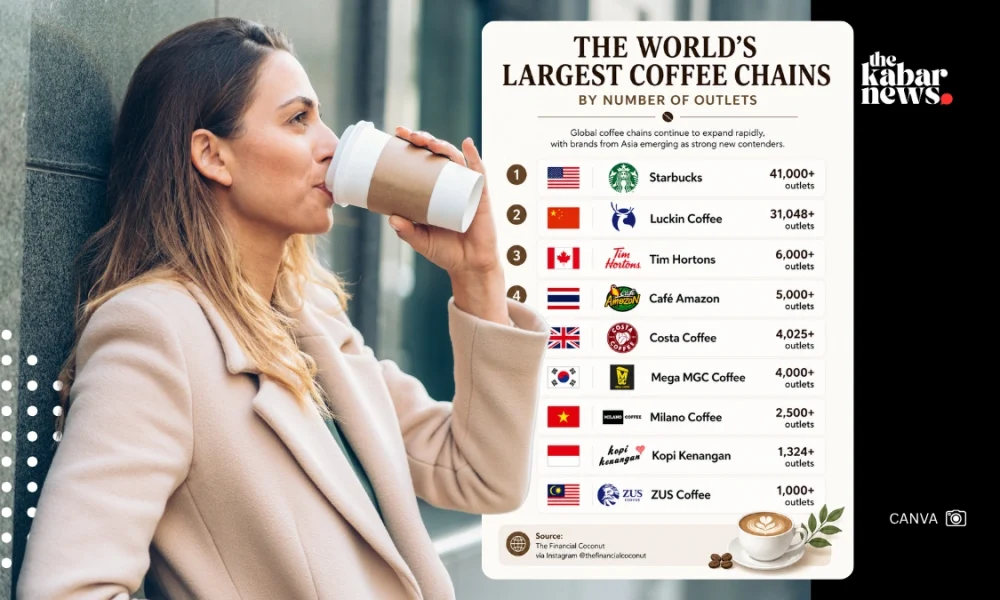
According to the latest industry reports, many coffee brands have established thousands of outlets in their home countries and overseas. This suggests that café culture and the consumption of specialty coffees are becoming increasingly popular around the world.
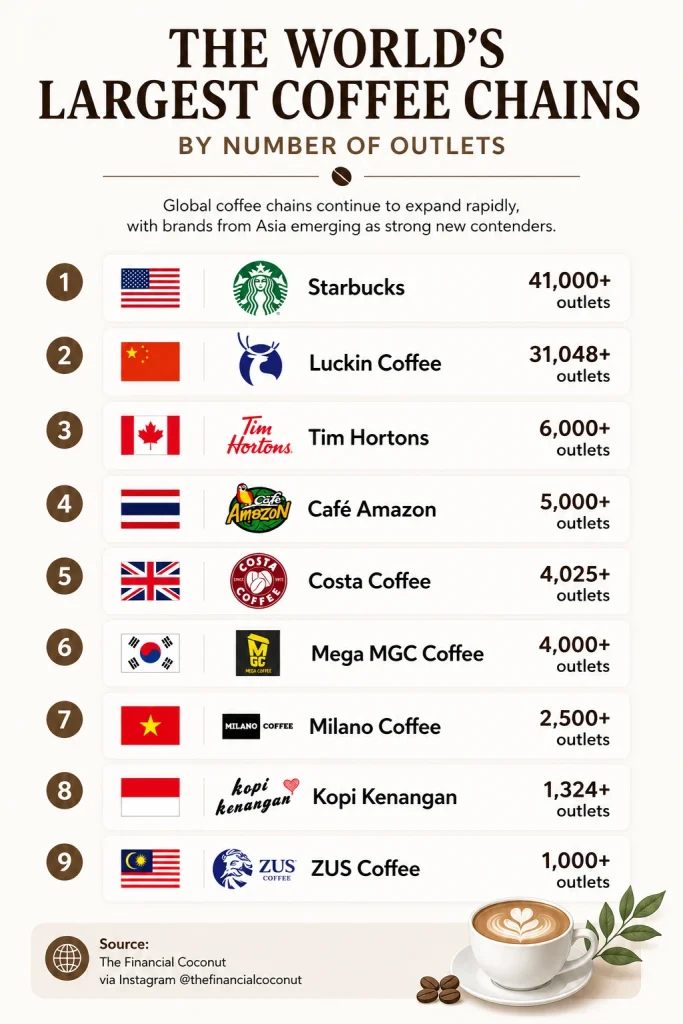
The US-based Starbucks, with over 41,000 stores worldwide, holds the top position. Starbucks is still the world’s largest coffee chain. It is still growing in North America, Europe, Asia, and the Middle East.
Luckin Coffee, which has more than 31,000 outlets, is making China one of the most dynamic coffee markets. Moreover, the company’s rapid growth is typical of the way technology-enabled ordering systems, aggressive pricing, and strong domestic demand have transformed China’s coffee industry recently.
Canada’s famous Tim Hortons has over 6,000 stores. Meanwhile, Thailand’s Café Amazon has surpassed the 5,000-outlet mark and has become one of Southeast Asia’s biggest coffee brands.
UK-based Costa Coffee remains one of the world’s biggest coffee operators, with some 4,000 outlets in several countries.
Asian coffee brands are now significant players in the industry. Since then, South Korea’s Mega MGC Coffee has expanded to 4,000-plus stores, and Vietnam’s Milano Coffee to some 2,500 locations.
Indonesia is also strengthening its position in the regional coffee market. Kopi Kenangan has expanded to more than 1,300 outlets.
The growth of the brand is a reflection of the increasing strength of the modern coffee retail sector in Indonesia. It also shows the growing consumer demand for affordable speciality coffee.
ZUS Coffee in Malaysia has also gained attention for its rapid expansion. It has opened approximately 1,000 stores and established itself as one of the fastest-growing coffee brands in Southeast Asia.
Several factors are driving the global café boom. These include urbanization, changing consumer lifestyles, digital ordering platforms, and increased demand for premium coffee experiences.
The West does not have a monopoly on competition anymore. Asian firms are aggressively pursuing local tastes, mobile technology, and lower costs to grow in their home markets
New brands like Luckin Coffee, Café Amazon, Kopi Kenangan, and ZUS Coffee are showing that local players can compete with established international chains.
More competition between the big coffee brands as coffee drinking grows globally. For consumers the trend means more choice, more innovation, and more access to the cafe experience.
The industry is moving toward a more diverse and competitive global coffee marketplace. Regional champions are increasingly pitted against established multinational giants.





No Comment! Be the first one.