



Who really feels “harmed” by political change? looking beyond the noise
Thekabarnews.com—With every political change, people raise their voices louder—not because democracy is at risk, but because change disrupts their comfort. Recently, a certain group of critics has...

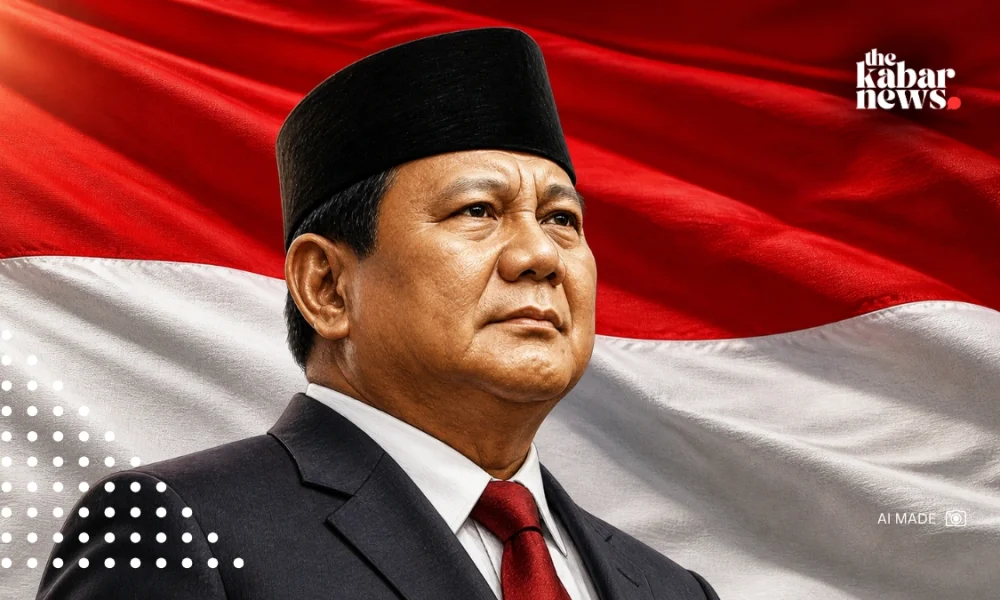
Thekabarnews.com—With every political change, people raise their voices louder—not because democracy is at risk, but because change disrupts their comfort.
Recently, a certain group of critics has been more and more outspoken, reiterating that they have been “damaged” since the new government has started its activity. They speak with urgency, with outrage, and with dramatic certitude. But the real question is a simple one: who is hurt?
Look closely and the answer may be less about public suffering and more about private anxiety.
First, there are those who entered the presidential election confident they would win but ended up losing. Some argue that an electoral loss is a loss of legitimacy. Every policy is suspect, every decision wrong, and every success must be kept back.
But many ordinary people—even those who didn’t vote for Prabowo Subianto—have already accepted the democratic result. They are aware that elections will end, but national development must continue. They went on. Some individuals remain emotionally tethered to the campaign season, perceiving political failure as an indelible personal scar.
Secondly, some business actors establish their comfort zones through weak oversight, ambiguous regulation, and shortcuts that bypass legal limits. As governance becomes more stringent, transparency increases and loopholes close, so profits naturally go down.
Some of them opt for the easier route of blaming the government, rather than altering their business practices to conform to law and ethics.
Third, there are those who built luxury on corruption. People who have been treating public money as their private wealth for years. Now, when the police arrive, the response is predictable: the perpetrators express outrage and play the victim.
Their families and networks, who also benefited from stolen resources, feel the same shock. But while they may call it injustice, many citizens call it accountability.
Fourth, there are the digital criminals—the online scammers and illegal gambling network operators that used to roam freely in the shadows of weak enforcement. Today they are under even greater pressure with blocked platforms and financial tracing, which makes their work harder. The police are their oppressors. To the public, it feels like long overdue protection.
Fifth, a range of civil society and advocacy groups, which were previously heavily dependent on foreign funding, are now under more scrutiny regarding financial transparency and national interests. Accountability is not censorship; it is oversight.
Generally, when you have to explain where the money is coming from and the political motives behind something, it’s a bit uncomfortable. But sovereignty requires clarity, not blind faith.
Sixth, there are the political performers, who do not survive by serving the public but by constantly making a noise. Controversy, accusation, and attention are their strength. Their relevance is a continuous source of outrage.
Society becomes more critical, and many citizens start to differentiate between real service and endless performance. And now the loudest people are feeling ignored. The stage is shrinking.
This does not mean all criticism of government is invalid. A healthy democracy needs criticism. Criticism should arise from public conscience, not from wounded privilege.
The distinction between defending democracy and defending access to money, influence, or media attention has become blurred.
That is why, when the demands to change the leadership grow louder, society must ask itself one honest question: is this voice speaking for the nation or for personal loss?
Those whose unchecked privileges have at last been cut back often protest the loudest, not those whose rights have been taken away.
Political change is never comfortable. This is not a question of silencing criticism but of deciding whether it is for the public good or merely a lament for the passing of private convenience. (ALS aka AP).
……….
Do you have an opinion on the issues that are happening right now? If you would like to submit your article by email to thekabarnews@gmail.com


No Comment! Be the first one.