



World population reaches 8.3 billion, study warns earth may sustain only 2.5 billion
Thekabarnews.com—There are now about 8.3 billion people in the world. This number is far more than what some researchers say Earth can sustainably support in the long term. A recent study in...

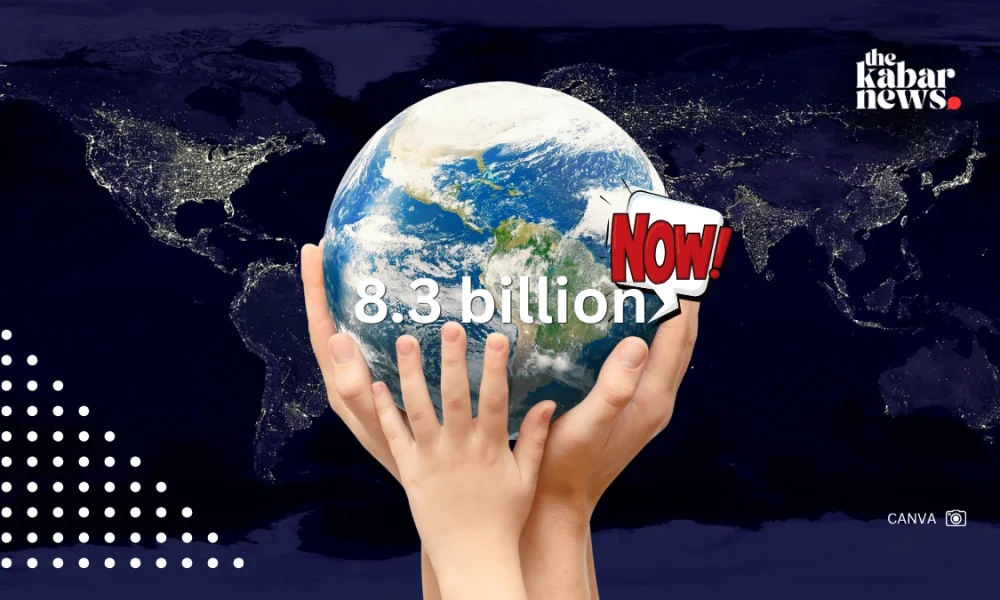
Thekabarnews.com—There are now about 8.3 billion people in the world. This number is far more than what some researchers say Earth can sustainably support in the long term.
A recent study in Environmental Research Letters warns that the planet’s ideal carrying capacity may be as low as 2.5 billion people. This figure is the estimate if humanity wants to live within ecological limits. It also assumes comfortable, economically secure living standards.
Led by researchers, including Corey J. A. Bradshaw, the study—titled Global Human Population Has Surpassed Earth’s Sustainable Carrying Capacity—looked at over two centuries of global population data. As a result, it found that humanity is already well beyond the long-term ecological capacity of the planet.
Using a Ricker logistic model, the researchers estimated the sustainable carrying capacity of the Earth and future population growth patterns.
If current consumption and development trends continue, the global population may reach between 11.7 billion and 12.4 billion people by 2067 and 2076. The researchers found these estimates through their analysis.
Researchers estimate a truly sustainable global population would be much lower by comparison.
“Our calculations suggest a sustainable global population more like 2.5 billion people,” the study said. It also noted that today’s population mostly relies on intensive fossil fuel use, industrial agriculture, and overconsumption of natural resources.
Cheap energy from fossil fuels has artificially boosted the Earth’s carrying capacity for decades, researchers say. This energy has enabled food production, transportation, industry, and global supply chains. As a result, it can sustain far more people than previous generations could have dreamed of.
But that growth has had a huge environmental cost: climate change, loss of biodiversity, pollution, and growing ecological deficits.
The study has found a major change in the connection between population growth and sustainability in the middle of the 20th century.
Around 1962, the world’s human population entered what researchers termed a “negative demographic phase.” In this phase, population growth rates continued to fall even as the total population size increased.
This shift occurred well before the world reached a global biocapacity deficit in 1970. That was the point when humanity began using natural resources faster than the Earth could replenish them.
If current consumption patterns persist without major structural changes to land use, water management, energy systems, and biodiversity protection, the planet will be under even more environmental and social pressures. These additional pressures could strain resources even further.
It’s not just about the numbers of people. It’s about how societies produce and consume and distribute resources.
But the study does make one thing clear: Earth can’t sustainably support the future population, or even today’s population, without major changes in global behavior.
With the world heading toward a potential 12 billion people by the 2070s, the argument about sustainability is no longer academic. Instead, it is becoming one of the defining challenges of the century.





No Comment! Be the first one.