



Surah recited by Prophet Muhammad ﷺ in prayer: What is special about At-Takatsur?
Thekabarnews.com—The Prophet Muhammad ﷺ used to recite a short surah in the Witir prayer. Allah revealed it in response to the companions’ questions about the punishment of the grave. On the Day of...

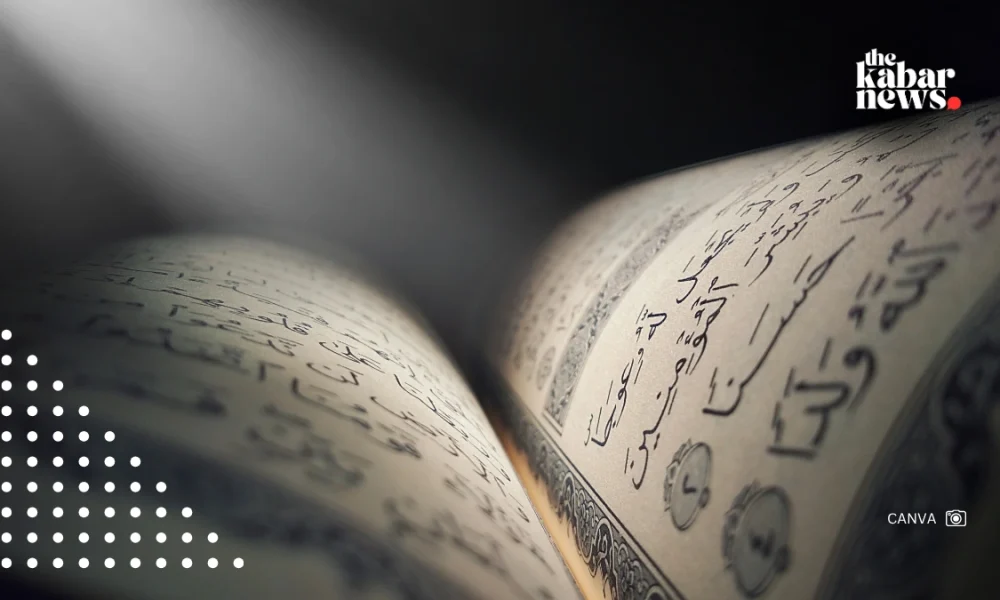
Thekabarnews.com—The Prophet Muhammad ﷺ used to recite a short surah in the Witir prayer. Allah revealed it in response to the companions’ questions about the punishment of the grave.
On the Day of Judgment, one of the most powerful questions will be, “Then you will surely be asked about every blessing.”
The surah is At-Takatsur. The lessons contained in Surah At-Takatsur far exceed its eight brief verses. In fact, they emphasize the importance of reflecting on one’s blessings and the consequences of neglecting them.
Abdullah bin Asy-Syikhir approached the Prophet Muhammad ﷺ as he was reciting Surah At-Takatsur. When the recitation was over, the Prophet Muhammad ﷺ made a startling statement.
The descendants of Adam say, “My wealth! My wealth!” But your wealth, O descendants of Adam, is only what you eat and drink, wear out, or give away in charity, and it goes on. (Hadith narrated by Muslim).
Just three choices: consumed, used, or donated. Besides that? Not ours really. In reality, it is not truly ours; we only safeguard it until it passes to our heirs or others after our death.
Surah At-Takatsur is a mirror to look at ourselves in. It shows how much time, energy, and thought we spend gathering things that never really belong to us.
Ali bin Abi Thalib (RA) said something very fascinating to us. He said, ‘Among ourselves, we would have doubts concerning the punishment in the dead until Surah At-Takathur was revealed’ (Hadith narrated by At-Tirmidhi).
In other words, this surah aims to clarify the truth of the dreadful penalty. This punishment had already become a topic of discussion earlier.
This surah, which may seem “only about the world and wealth,” actually includes a deep lesson concerning the hereafter. That is, carelessness towards worldly life has profound consequences for the region of Barzakh.
When the final verse of Surah At-Takatsur was revealed—“Then you will surely be asked on that Day about the blessings”—the companions immediately felt worried. Moreover, they asked the Messenger of Allah ﷺ the following:
“O Messenger of Allah ﷺ, what blessings shall we be questioned about?
We have just two black things, water and dates. We have swords at our throats, with the enemy before us. Which blessings and comforts will Allah ask us about? Which blessings will Allah ask us about?
The Prophet Muhammad ﷺ gave a brief but frightening reply: “Indeed, that will certainly be accounted for.” [Hadith narrated by Ahmad].
Allah will question us even about ordinary blessings, such as the presence of sincere and simple friends in our lives. And what of us, who live so much better than they do? Who doesn’t want food, drink, or comfort?
This Surah adorns the Witr prayer of the Prophet Muhammad ﷺ.
Ali bin Abi Talib (RA) said, “The Messenger of Allah ﷺ recited nine surahs from Al-Mufassal in the Witr prayer.” Aswad stated, “In the first rak’ah, he recited Surah At-Takatsur, Al-Qadr, and Az-Zalzalah.
In the second rak’ah he recited Surah Al-‘Ashr, An-Nashr, and Al-Kautsar. Then in the third rak’ah he recited Surah Al-Kafirun, Al-Lahab, and Al-Ikhlas” (Hadith narrated by Ahmad).
It was not a coincidence that Prophet Muhammad ﷺ chose to complement his worship at the end of the night with At-Takathur. Furthermore, the recitation of At-Takatsur, Al-Qadr, and Al-Zalzalah in the first rak’ah of Witir becomes a particularly important combination.
A surah on ignoring the world: a night is better than a thousand months. It is a day when the earth trembles, disclosing all of humankind’s crimes.
Let us close the day with a reminder that is strongest: let not the world blind us to the eternal.
At-Takatsur consists of only eight short verses, making it easy to read in a matter of seconds. But its content can shake the way we see our whole life.
He tells us that striving for the accumulation of the world—wealth, status, followers, and popularity—is a neglect that we will regret.
The only wealth we “carry” is what we eat, worship with, and donate to charity.
On the Day of Judgment, Allah will ask whether we showed gratitude for His blessings or took them for granted.
This verse comes from a collection of hadiths discussing the virtues of Surah At-Takatsur. Book of Faith: Questions & Answers with the Prophet Muhammad ﷺ (Team Lingkar Kalam).



No Comment! Be the first one.