



Prabowo pushes national waste management reform, targets full control within three years
Thekabarnews.com—President Prabowo Subianto reiterated the government’s commitment to accelerate the reform of national waste management during his visit to the Environmentally-Based Integrated Waste...

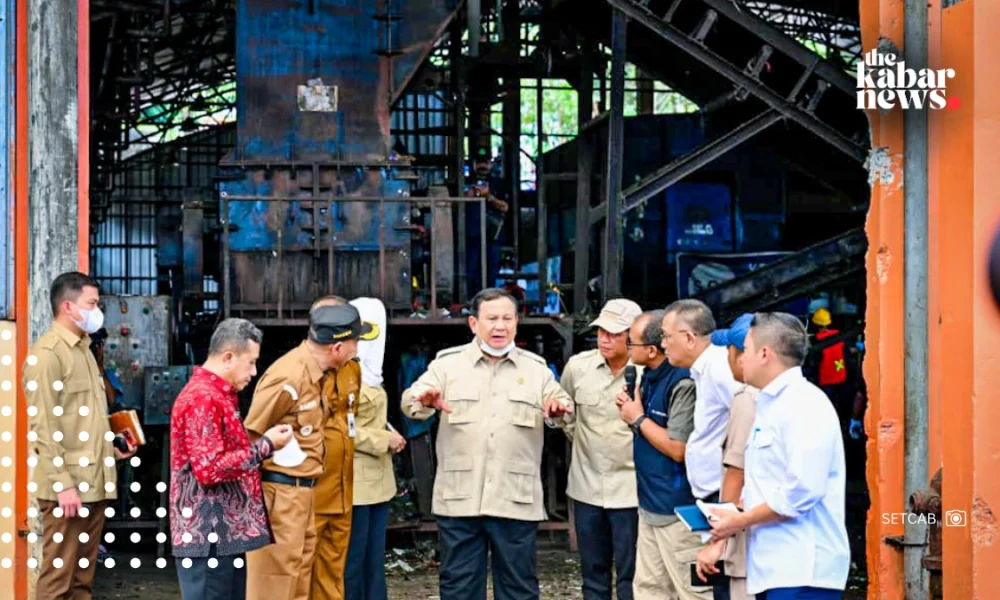
Thekabarnews.com—President Prabowo Subianto reiterated the government’s commitment to accelerate the reform of national waste management during his visit to the Environmentally-Based Integrated Waste Management and Education Facility (TPST BLE) in Banyumas Regency, Central Java. The visit took place on Tuesday, April 28.
During the inspection, President Prabowo Subianto stressed that the government must make waste management a national priority and fully control it across Indonesia within the next two to three years.
Waste management has become a national concern. “We have to control waste in all of Indonesia in two to three years,” Prabowo said.
“The TPST BLE model is an innovative waste management system that regional governments are increasingly adopting,” said the president.
Central Java Governor Ahmad Luthfi said that at least 13 regencies in the province had developed similar systems.
Prabowo said the central government will give direct support to expand and improve waste processing models across the country.
“We from the central government will support this initiative. I will send direct assistance so that we can improve, expand, and make the system more effective,” he said.
He also welcomed Banyumas Regency’s commitment to achieve a “zero waste to landfill” target by 2028. Moreover, he expressed optimism that strong cooperation between local and central governments could achieve the goal.
In addition to processing waste, Prabowo also mentioned the economic potential of recycled products produced by the TPST BLE system. In particular, he highlighted roof tiles made from processed waste materials at affordable prices.
The president said these products could potentially be used for programs to help fund government-funded housing renovation aid programs.
“The roof tiles are cheap and good. This could be part of our housing repair budget. Currently, the budget for renovating housing is Rp20 million per house, and we estimate that Rp4 to Rp5 million could be allocated for these tiles,” he said.
Prabowo also stressed the importance of building materials that are healthier and more aesthetically pleasing. Furthermore, he called for cutting down on the use of zinc roofing, which can rust over time and impact both health and the visual quality of housing.
“Eventually, rusty materials harm the health of residents and also detract from the visual appeal of their homes. We want to make Indonesia beautiful again, to make it a wonderful country for tourism, a comfortable country to live in,” he said.
The government’s focus reflects a broader shift in the way waste management is viewed. People now see it not just as an environmental problem, but also as an opportunity for economic growth.
There is potential for new jobs, better public health, and sustainable urban development by turning waste into valuable products.
The Banyumas model is now one of the examples of how local-level innovation can support national policy goals. Particularly, it helps address the long-standing problem of waste in urban and rural areas.
Indonesia is under mounting environmental stress from rapid urbanization and consumption. Consequently, the government’s new approach signals a more aggressive push for sustainable development.
Officials say the long-term objective is not just cleaner cities. Rather, it should be a system where waste becomes part of a circular economy that improves both livelihoods and environmental quality.



No Comment! Be the first one.