



Pentagon analysts warn of miscalculation in Iran conflict
Thekabarnews.com—US military officials fear the Iran-US-Israel war isn’t going as planned. Such developments could mean that the first strategic assessments were wrong. Major news organizations...

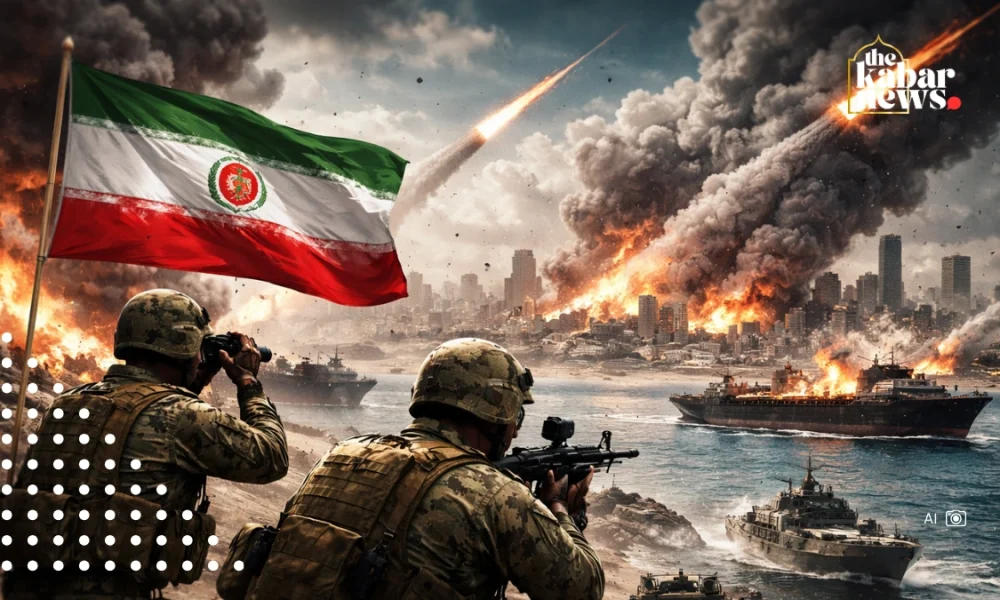
Thekabarnews.com—US military officials fear the Iran-US-Israel war isn’t going as planned. Such developments could mean that the first strategic assessments were wrong.
Major news organizations from all over the world reported that the Pentagon’s first estimates said that Iran’s political and military structure could quickly weaken after a lot of coordinated attacks. One of these hopes was that the group might be unstable, especially after losing important leaders.
But things on the ground have not gone as planned. There have been many military strikes and pressure on important places. However, Iran’s government and military operations still seem to be going well.
The Islamic Revolutionary Guard Corps (IRGC) and other Iranian institutions are strong because they have been following a long-term plan that focuses on being ready for defense and staying resilient during times of crisis.
The people in charge of the system have changed, but not much else has. This indicates that the core strategies and resilience of the IRGC and other institutions remain intact despite the leadership changes.
At first, people thought the rise in violence would cause problems, but that hasn’t happened. Some people believe that in certain areas, public opinion appears to support efforts to protect the country. In contrast, others are not opposing them.
Such ambiguity makes it harder for people from other countries to figure out what is going on.
A geopolitics expert, Barbara Slavin, said that targeting key figures in Iran’s military is unlikely to make the military as a whole weaker.
She stated that these types of strategies do not always disrupt operational structures designed to manage the loss of leaders.
Three weeks have passed since the battle began, and it does not look like it will end anytime soon. Iranian forces have continued to demonstrate their military capability by launching missiles and positioning themselves in strategic locations. This highlights their readiness for a prolonged conflict.
People around the world worry that Iran’s control of the Strait of Hormuz—one of the most critical global energy routes—could disrupt energy supplies. In fact, Iran’s control of this area shows how important it is for the safety of the whole world economy and the region.
The war is causing problems that go beyond the fighting. Long-term instability could change the way countries get along with each other, the flow of energy, and the global markets. This could potentially lead to increased tensions and economic sanctions that could further disrupt international relations.
Both sides still have their positions, but the situation is still very unstable and hard to understand. This is particularly due to the complex interplay of political, social, and economic factors that influence the conflict.
It is wrong to make the conflict seem too simple because modern warfare is often more than just having many soldiers.
It also needs help from the people, political power, and the ability to change its mind. In addition, it requires support from international organizations and a commitment to diplomatic solutions.
As the fighting continues, more people worldwide are calling for peace talks and an end to the violence. Many people are asking everyone involved to find ways to stop the violence and help those who need it.





No Comment! Be the first one.