


Iran’s Khatam al-Anbiya challenges US victory claims in escalating war of words
Thekabarnews.com—Iran’s Khatam al-Anbiya Central Headquarters, one of the country’s most important military command centers, released a strong statement. The statement disputes President Donald...

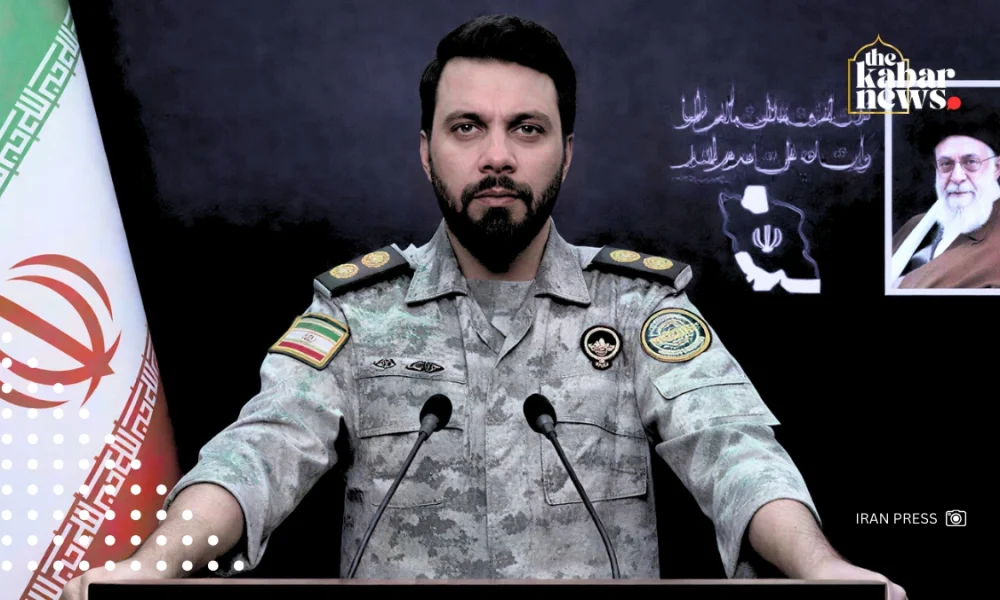
Thekabarnews.com—Iran’s Khatam al-Anbiya Central Headquarters, one of the country’s most important military command centers, released a strong statement. The statement disputes President Donald Trump’s claims of victory.
The statement claims that Washington’s narrative of “absolute victory” contradicts their portrayal of the battlefield situation. Instead, Tehran said that US troops are having more and more trouble in the area. The report highlights the challenges they face in maintaining control and security amidst ongoing conflicts.
As a result, the report suggests that the situation on the ground is deteriorating rather than improving as claimed by American leaders. This is even though American leaders have publicly said they are strong. This evidence indicates that the reality of the situation contradicts the optimistic portrayals from Washington.
In response to Trump’s repeated claims that the U.S. military is the best in the world, a spokesperson for the Khatam al-Anbiya headquarters said that the reality on the ground differs greatly from what leaders say in Washington.
“Do not let microphones and podiums in Washington fool you. A defeated enemy no longer has the power to shape the reality of the battlefield,” the spokesperson said in the statement.
They depend on false media stories that are the opposite of the truth. These stories misrepresent the actual events and narratives surrounding the conflict. This leads to confusion and misinformation among the public and influences international perceptions of the situation.
The comments show how the information and rhetoric war between Tehran and Washington is getting worse. Both sides try to change how the world sees the ongoing conflict.
Iran also told the US government to stop worrying about possible naval mines in the region’s waters. However, rising tensions could lead to a much bigger threat to global markets. If tensions keep rising, there could be a much bigger threat to global markets.
Rising geopolitical risks could cause oil prices to rise sharply. Such developments may destabilize economies. This is particularly true in countries closely tied to global energy markets, such as those in the Middle East and Europe. For instance, these regions rely heavily on oil imports and could face inflationary pressures as a result.
Tensions in the Strait of Hormuz, a key oil shipping route, can quickly affect global energy prices.
The Iranian military command also said that its troops were able to carry out operations that targeted strategic locations connected to US military deployments. The statement indicated that Iranian units employed heavy warheads to strike significant locations housing US troops.
The operations continued in bad weather, like heavy rain or snow. Iranian commanders used these situations as proof of what they call the operational resilience of their military forces.
The Khatam al-Anbiya headquarters ended its statement by saying that the US is facing what it called an irreversible decline in power in the area.
Washington has not directly responded to the latest comments. Nevertheless, the exchange shows how the war of stories is getting worse as military and political tensions rise in the Middle East.
Strategic communication often employs these types of statements. Both sides try to strengthen support at home and sway public opinion abroad during times of geopolitical conflict.



No Comment! Be the first one.