



ECoJet bankruptcy adds to growing list of airline failures worldwide
Thekabarnews.com—ECoJet Airlines, a new airline, went out of business in January 2026 and will never fly again. This marks the end of a major plan to make flying environmentally friendly. The...

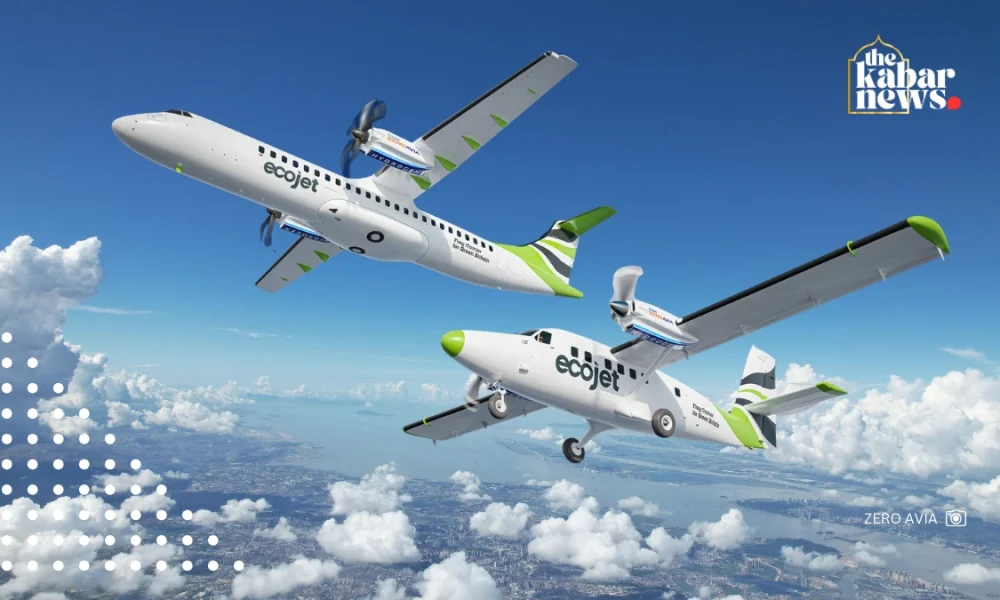
Thekabarnews.com—ECoJet Airlines, a new airline, went out of business in January 2026 and will never fly again. This marks the end of a major plan to make flying environmentally friendly.
The airline, which is based in Edinburgh, wanted to be the best at flying without harming the environment. They changed regular planes into hydrogen-electric ones to do this. But eventually, the company had to stop doing business and cancel all of its flights because it did not have the right technology or enough money.
These factors hindered its ability to compete in the rapidly evolving aviation market. Furthermore, the market prioritized sustainable energy solutions.
ECoJet attracted global attention when its founders announced plans to convert conventional aircraft into hydrogen-powered planes. Brent Smith, who works for an airline, and Dale Vince, who runs a green business, both agreed that the plan was beneficial.
They wanted the ATR 72 and the De Havilland Canada DHC-6 Twin Otter to be able to run on both hydrogen and electricity.
ECoJet thought that the new propulsion system would cut down on carbon emissions a lot and show that flying did not have to be bad for the environment.
But the project had many problems. The hydrogen-electric aircraft technology is still pretty new, which makes it difficult to use it for business on a large scale. This scenario is particularly true due to the high costs and regulatory challenges. These are associated with its implementation.
The company says that the people who started ECoJet mostly used their money to pay for research and development. Prices went up a lot over time, and it took longer to get things going because of problems with the technology. For example, there were delays in achieving necessary safety certifications.
They also faced challenges related to hydrogen storage and fuel cell efficiency, which hindered their ability to meet production targets and increased overall costs.
The company made one last attempt to get £20 million from people who were not already investors in the company. But not enough people were interested in the funding round.
ECoJet had to stop flying and start the process of going out of business because it did not have enough money to keep going.
In the last year, ECoJet is just one more airline that has stopped flying. Many airlines have had trouble with money because running a business costs more, there is a lot of competition, and the economy is not stable. This situation leads to significant financial strain. Ultimately, it results in some airlines, like ECoJet, ceasing operations.
Some of the airlines that have recently gone out of business are Spirit Airlines, Ravn Alaska, Corporate Air, PLAY Airlines, and Braathens Airlines.
Starting an airline is still one of the most costly and dangerous ventures. This is especially true if you are a new company trying to bring new technologies to market.
ECoJet’s bankruptcy shows how hard it is to make money from flying ideas that are good for the environment.
The airline industry is exploring environmentally friendly technologies such as electric aircraft and hydrogen propulsion. However, the industry must ensure these technologies are profitable and obtain government approval.
It also has to overcome major technological challenges before adopting them on a large scale, which includes addressing issues such as infrastructure development and market acceptance, as well as ensuring that these technologies can be integrated into existing systems and that consumers are willing to embrace them.
The ECoJet’s story is a positive example of what it is like to run an airline with low emissions.
The company went out of business because it did not want to pollute the air. However, governments, companies, and airlines continue to pursue more environmentally friendly air travel by investing in sustainable aviation fuels, improving aircraft efficiency, and implementing carbon offset programs. They are developing ways to reduce aviation’s environmental impact.





No Comment! Be the first one.