



Bank Indonesia raises BI rate to 6% to defend rupiah
JAKARTA, The Kabar News—Bank Indonesia (BI) raised its benchmark interest rate by 25 basis points to 6 percent on Wednesday, Nov. 18, seeking to support the rupiah and keep inflation within its...
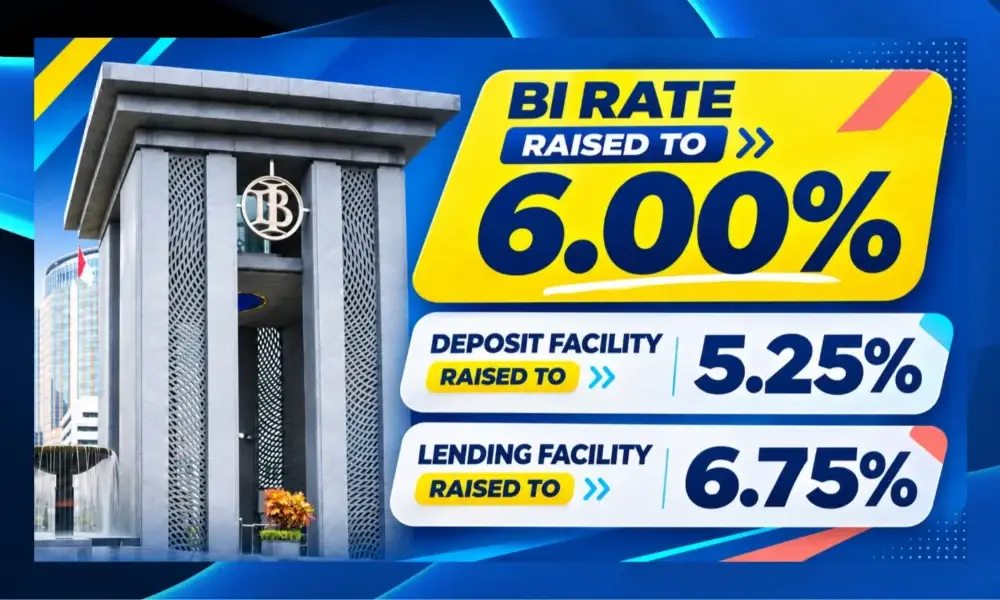
JAKARTA, The Kabar News—Bank Indonesia (BI) raised its benchmark interest rate by 25 basis points to 6 percent on Wednesday, Nov. 18, seeking to support the rupiah and keep inflation within its target amid persistent volatility in global financial markets.
The central bank’s Board of Governors made the decision during its Nov. 17–18 policy meeting. It also lifted the Deposit Facility rate by 25 basis points to 5.25 percent and the Lending Facility rate to 6.75 percent.
“The increases aim to further strengthen rupiah exchange rate stabilization efforts against the impact of heightened global uncertainty and represent a pre-emptive measure to maintain inflation within the 2.5±1 percent target corridor in 2026 and 2027,” Bank Indonesia said in its official policy statement.
The move followed four consecutive meetings in which the central bank had maintained the BI rate at 5.75 percent, according to BI’s interest-rate records.
BI said the rupiah traded at Rp18,245 per US dollar on Nov. 17, weakening 0.66 percent from its position at the end of October. The central bank linked the depreciation to global uncertainty and foreign-investor sentiment in the domestic equity market.
Read also: Indonesia’s online lending hits Rp100.69 trillion as default risks rise
Foreign investors recorded US$900 million in net outflows from Indonesian equities during the fourth quarter through Nov. 16. However, total foreign portfolio flows remained positive at US$4.8 billion, supported by inflows into government securities and international bond issuances.
Indonesia’s foreign-exchange reserves stood at US$146.8 billion at the end of October. The amount covered 5.3 months of imports, exceeding the international adequacy benchmark of around three months.
Alongside the rate increase, Bank Indonesia said it would continue intervening in offshore non-deliverable forward markets. It will also use spot transactions and domestic non-deliverable forwards to reduce excessive currency volatility.
The central bank plans to expand incentives for longer-term hedging transactions and introduce cross-currency repurchase facilities no later than March 2027. The facility will allow banks to obtain rupiah liquidity by using eligible foreign-currency securities as collateral.
Read also: Indonesia’s external debt climbs to $437.9 billion in February 2026, driven by the public sector
Indonesia’s annual consumer inflation eased to 3.23 percent in October from 3.28 percent in September, keeping the headline figure within Bank Indonesia’s target range.
Core inflation declined to 2.56 percent, while inflation in government-administered prices stood at 3.24 percent. However, volatile food inflation increased to 5.81 percent as weather disruptions reduced production in several agricultural centers.
The central bank said it would continue coordinating with central and regional inflation-control teams to manage food prices. Exchange-rate stability also matters because sustained rupiah depreciation can raise the domestic cost of imported fuel, food ingredients and industrial materials.
Although higher interest rates can support the currency, they may also increase funding and borrowing costs. Bank Indonesia is therefore combining tighter monetary policy with measures intended to keep credit flowing to businesses.
Bank lending grew 13.21 percent year-on-year (YoY) in October. Investment loans increased 21.32 percent, while working-capital lending expanded 12.99 percent.
Read also: The president of IDX resigns after two days of strong pressure on the IDX composite IHSG
From Dec. 1, the central bank will implement a macroprudential liquidity incentive of up to 3 percent of banks’ third-party funds for financing that supports employment and micro, small and medium enterprises. It will also maintain a separate incentive of up to 2 percent to encourage liquidity redistribution through the money market.
BI projected national economic growth of between 4.9 percent and 5.7 percent in 2026. Indonesia’s economy expanded 5.47 percent year-on-year in the third quarter, up from 5.29 percent in the previous quarter.
The central bank will also move forward with its payment-system agenda. It plans to begin an inbound pilot for cross-border QRIS transactions with Hong Kong in the second week of December.
BI will expand online functions for the Indonesia Credit Card (KKI) starting in January 2027. New rules for payment-support providers and the initial phase of a national payment-system data infrastructure are also scheduled for December.
You May Also Like: Sponsored Offers
Digital payment volume reached 6.18 billion transactions in October, rising 31.47 percent from a year earlier. QRIS transactions grew 70.95 percent, with the system serving 71.91 million users and 51.31 million merchants.
The rate increase does not automatically mean that commercial banks will immediately raise every loan or deposit rate. Each bank will determine how quickly it transmits the policy change.
The decision shows that Bank Indonesia now prioritizes protecting the rupiah and containing inflation while offering targeted incentives to ease pressure on lending and economic growth.






No Comment! Be the first one.