



Prabowo and Xi push smart cities, trade and AI ties
SHENZHEN, The Kabar News–President Prabowo Subianto and Chinese President Xi Jinping agreed to expand economic and strategic cooperation on Friday, Nov. 20. Indonesian government announced US$86.8...
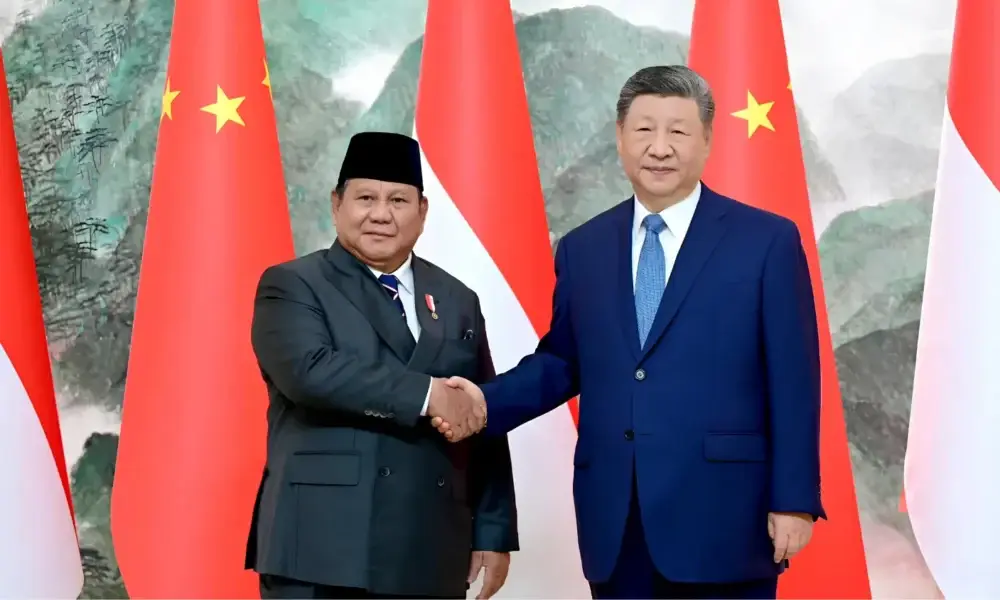
SHENZHEN, The Kabar News–President Prabowo Subianto and Chinese President Xi Jinping agreed to expand economic and strategic cooperation on Friday, Nov. 20. Indonesian government announced US$86.8 billion in business agreements and investment commitments during Prabowo’s visit to Shenzhen.
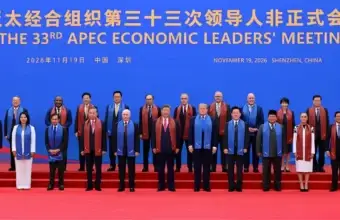
The two leaders held bilateral talks at Kylin Villa following the 33rd Asia-Pacific Economic Cooperation Economic Leaders’ Meeting. They discussed investment projects and cooperation in artificial intelligence (AI) while also addressing maritime development and broader Global South interests.
China’s Foreign Ministry said the two presidents jointly announced the opening of negotiations on a comprehensive economic partnership agreement.
The proposed pact could establish new rules for trade and investment between the two countries. However, neither government immediately disclosed a negotiating timetable.
“Our relationship, we feel, has gone from strength to strength,” Prabowo said, according to a statement published by the Presidential Secretariat.
“We are cooperating in all fields, especially in the economy, but also in other strategic fields. We have come to a convergent understanding,” he added.
Read also: Indonesia-China MoUs target $71.8bn in projects
President Xi described the meeting as his fourth with Prabowo in slightly more than two years. According to the Chinese Foreign Ministry, he called for closer coordination on major infrastructure projects. He also called for greater cooperation in clean energy and the digital economy.
After meeting President Xi, Prabowo attended the 2026 Indonesia-China Business Forum. There, companies from both countries concluded 35 agreements valued at approximately Rp274 trillion (US$15 billion).
The agreements cover industrial estates and manufacturing as well as renewable energy. Other projects involve electric vehicles, data centers, pharmaceuticals and infrastructure.
The Presidential Secretariat reported the projects could create more than 30,000 jobs. However, it did not provide an individual timetable or employment estimate for each agreement.
“Today, I witnessed 35 very large and important agreements,” Prabowo said at the forum.
Read also: China sentences former defense ministers to death in major military corruption crackdown
The new agreements followed four memorandums of understanding announced on Nov. 18 with a combined indicative value of US$71.8 billion. Adding the two packages produces a headline total of almost Rp1.6 quadrillion (US$86.8 billion).
However, the figure represents MoUs and commercial commitments rather than investment already realized in Indonesia. Financial closure, regulatory approvals and construction will determine how much of the announced value eventually enters the economy.
The earlier package included a proposed US$50 billion project to build 10 “future smart cities” through Danantara-affiliated PT Kota Masa Depan Indonesia. A consortium led by Shaanxi was also involved.
Other MoUs cover manufacturing and research cooperation with Hisense. There is infrastructure financing with a consortium led by the State Development and Investment Corporation. Additionally, a US$1.8 billion coal-to-ethanol project involves Pertamina and Beijing Petrochemical Engineering.
“We have exchanged MoUs on projects that are very significant and strategic for our mutual benefit, but also for Indonesia’s development,” Prabowo told President Xi.
Read also: President Prabowo meets Putin to boost energy and economic cooperation
The government will need to publish project locations, financing structures and implementation schedules. Transparent procurement and credible environmental reviews will also be necessary, particularly for large urban and energy projects.
Prabowo said Indonesia and China had identified opportunities for cooperation in the South China Sea. This includes progress toward potential joint-development areas.
“We are already finding a strong future of cooperation in the South China Sea,” he said. “I’m very pleased that there has already been an exchange of notes on the areas for joint development.”
The issue remains sensitive because China’s expansive maritime claims intersect with Indonesia’s exclusive economic zone near the Natuna Islands. Indonesia maintains that it has no overlapping territorial claim with China. Indonesia insists Beijing’s historical-rights claim lacks a basis under the 1982 United Nations Convention on the Law of the Sea.
Following controversy over similar wording in a 2024 bilateral statement, Indonesia’s Foreign Ministry said maritime cooperation would not affect Indonesia’s sovereignty or sovereign rights.
Any joint development will therefore require a clear legal framework consistent with UNCLOS. The government must also explain the relevant location and how it will protect Indonesia’s jurisdiction.
Prabowo also told President Xi that Indonesia had completed procedures for membership in the International Organization for Mediation (IOMed) and the World Artificial Intelligence Cooperation Organization (WAICO).
You May Also Like: Sponsored Offers
He said WAICO could help Indonesia obtain access to AI expertise and research while participating in the development of global technology rules. IOMed, he added, could provide a faster mechanism for resolving international disputes and increase certainty for businesses.
Both leaders framed their partnership as part of wider cooperation among developing countries. President Xi said Indonesia and China should strengthen coordination through the United Nations and APEC while supporting ASEAN unity.
The Shenzhen meeting expanded the scope of bilateral cooperation, but the real test will be in implementation. Indonesia must now convert the US$86.8 billion pipeline into funded projects that create jobs and transfer technology. This must be done without weakening environmental standards or sovereign rights.
No Comment! Be the first one.