



Prabowo: ASEAN-China ties need peace, shared growth
MANILA, Philippines—Indonesian President Prabowo Subianto called on ASEAN and China to deepen their comprehensive strategic partnership through peaceful dialogue and broader economic cooperation at a...
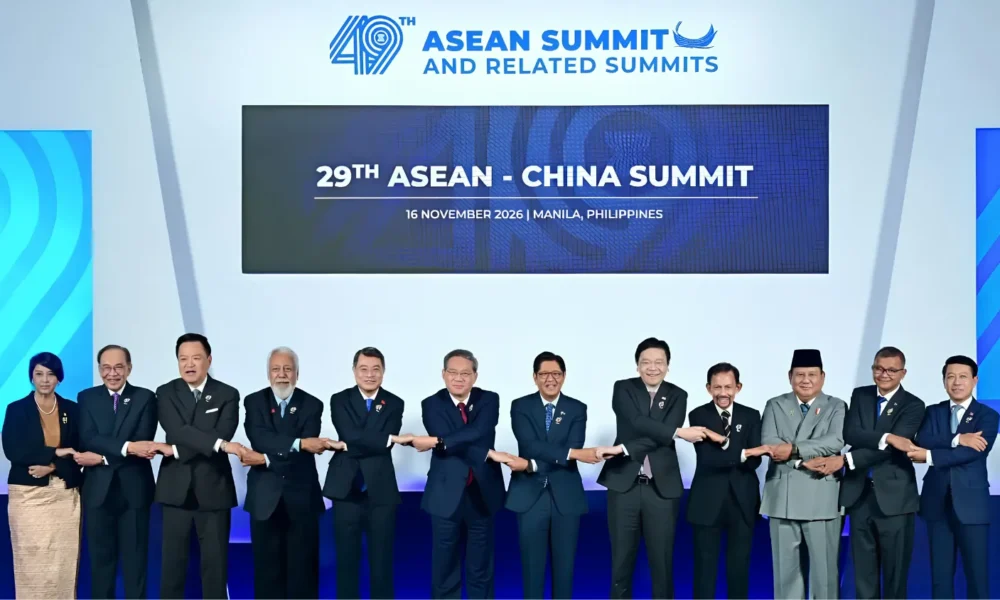
MANILA, Philippines—Indonesian President Prabowo Subianto called on ASEAN and China to deepen their comprehensive strategic partnership through peaceful dialogue and broader economic cooperation at a summit in Manila on Monday, Nov. 16.
Prabowo delivered the message during the 29th ASEAN-China Summit at the Philippine International Convention Center. ASEAN leaders and Chinese Premier Li Qiang attended the meeting, which formed part of the 49th ASEAN Summit and related gatherings.
The president said more than three decades of cooperation had helped both sides navigate global crises and geopolitical tensions. Their partnership also endured the disruption caused by the COVID-19 pandemic, he added.
“We are comprehensive strategic partners, a symbol of friendship which is deeply embedded in history,” Prabowo said, as quoted by the State Secretariat.
Read also: Prabowo: ASEAN must build resilience from within
ASEAN and China established dialogue relations in 1991 before declaring a comprehensive strategic partnership in 2021. Their cooperation now covers trade and investment as well as political security and people-to-people exchanges.
Prabowo said peaceful settlement must remain the foundation for managing differences in the South China Sea. He argued that progress would require sustained political will, mutual respect and a commitment to ASEAN unity.
The president also called for the early completion of negotiations on an effective and substantive Code of Conduct (COC) that conforms with international law.
ASEAN members and China have negotiated the COC since 2018. The proposed framework is intended to guide conduct and reduce the risk of maritime incidents in the disputed waters.
ASEAN maintains that the agreement should comply with international law, including the 1982 United Nations Convention on the Law of the Sea, or UNCLOS. In May 2026, ASEAN and Chinese officials reviewed the negotiations.
Prabowo said China’s continued participation in the process could strengthen trust and support regional stability. However, completing the agreement will require the parties to settle questions about its substance and implementation.
Read also: Indonesia dominates ASEAN economy in 2026 with $1.55 trillion GDP
A final text will also need practical mechanisms that allow countries to manage incidents and resolve disagreements. Without those measures, political commitments may not produce predictable conduct at sea.
Economic relations have become a central part of the ASEAN-China partnership. Preliminary ASEAN data show that two-way merchandise trade reached US$913 billion in 2025. This was an increase of 18.2 percent from the previous year.
The figure makes China one of ASEAN’s most important economic partners. It also highlights why trade rules and supply-chain resilience remain prominent in regional discussions. The data were reported in the joint statement of the 2026 ASEAN Economic Ministers-China consultation.
Prabowo said closer economic integration should benefit more than major corporations. He called for stronger connections among small businesses and regional industries so that growth could reach workers and local communities.
He argued that mutually reinforcing economies would strengthen social welfare and provide a more durable foundation for regional peace. Meanwhile, ASEAN and China have also been modernizing their free-trade framework through the ASEAN-China Free Trade Area 3.0 upgrade. This upgrade covers emerging areas of cooperation, including the digital and green economies.
You May Also Like: Sponsored Offers
Prabowo also praised China’s poverty-reduction record and its support for developing countries in multilateral forums. Indonesia, he said, shared the goal of reducing poverty and ensuring that economic progress improved living standards.
“We greatly appreciate China’s continued support in defending the interests of the Global South, particularly on the issue of Palestine,” Prabowo said.
The president’s intervention placed economic integration and maritime stability within the same strategic framework. For Indonesia, the partnership’s value will ultimately depend on whether both sides can manage their differences peacefully. It will also depend on whether trade and investment deliver benefits across the region.


No Comment! Be the first one.