



Prabowo vows to defy pressure in economic reform push
PALU, Central Sulawesi—President Prabowo Subianto has vowed to resist political pressure and other attempts to obstruct his government’s economic reform agenda. The president said Indonesia must...
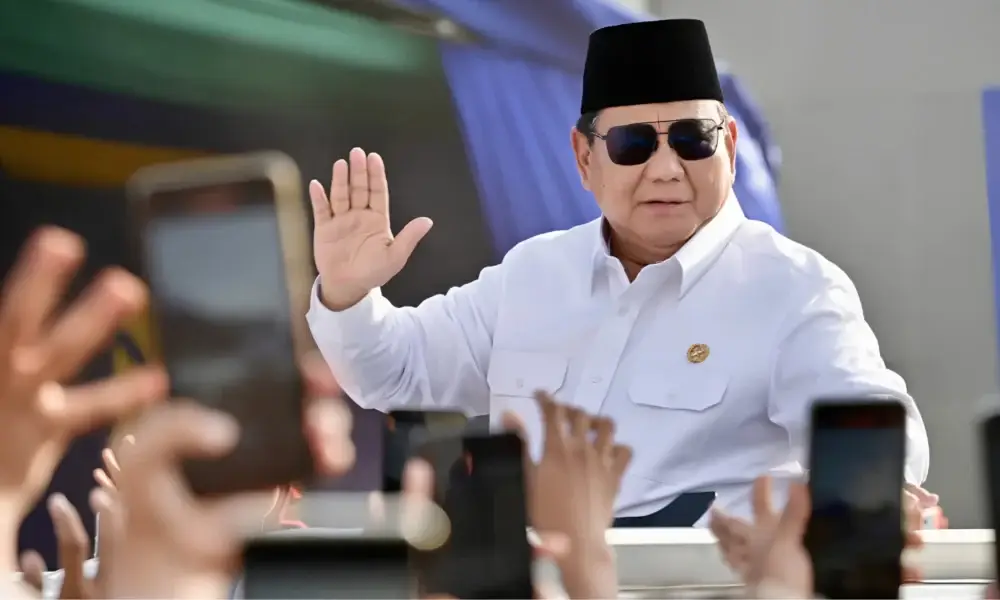
PALU, Central Sulawesi—President Prabowo Subianto has vowed to resist political pressure and other attempts to obstruct his government’s economic reform agenda. The president said Indonesia must ensure that its natural wealth delivers greater benefits to its people.
Prabowo made the remarks while opening Muhammadiyah’s 2026 Tanwir meeting and its 114th anniversary celebration at Muhammadiyah University in Palu on Saturday, Nov. 14.
In a wide-ranging address, the president said his government was working to correct what he called weaknesses in Indonesia’s economic system. He linked the reform effort to his administration’s goals of reducing poverty and preventing national resources from flowing overseas. He noted there needs to be adequate public benefit in these areas.
Prabowo said he remained troubled that millions of Indonesians still lived in poverty despite the country’s extensive mineral reserves and other natural resources. He also alleged that powerful interests had sought to influence public officials and destabilize reform efforts.
“Do they think I am afraid? I will not be afraid,” Prabowo said, according to the State Secretariat. “I am ready to die.”
Read also: Suyudi’s 100-day plan targets crime, police reform
Indonesia has reduced its official poverty rate, but the number of people living below the national poverty line remains substantial. Statistics Indonesia (BPS) recorded 22.93 million people in poverty in March 2026, equivalent to 8.07 percent of the population.
The figure declined by 920,000 people compared to March 2025. However, the rural poverty rate remained higher at 10.67 percent, compared with 6.34 percent in urban areas. The difference illustrates the uneven access to income opportunities and public services across the country.
Prabowo said his administration aimed to eliminate hunger and poverty by retaining more value from Indonesia’s resources. He argued that companies granted mining, plantation or forestry concessions should provide greater economic returns to the state and local communities.
The president also said his government was reviewing public procurement to reduce inflated prices and budget leakage. Savings from more coordinated purchasing, he said, could support schools and regional development.
Read also: Indonesia’s poverty rate hits 8.07% as 430,000 exit poverty
These proposals will require detailed regulations and transparent implementation. Clear reporting will also be necessary to show how recovered revenue or budget savings improve public services.
During the same speech, Prabowo praised National Police Chief Gen. Suyudi Ario Seto, whom he appointed in October 2026. Prabowo said he had not known Suyudi well before selecting him. He recalled meeting him only once when the officer served as a district police chief.
The president said he became interested in Suyudi while reviewing candidates and learning about his service as head of the National Narcotics Agency (BNN). Prabowo described the new police chief as reassuring. He said the appointment had proved appropriate.
Suyudi and Deputy Police Chief Wahyu Hadiningrat were inaugurated on Oct. 1 under presidential decrees No. 96/POLRI/2026 and No. 97/POLRI/2026, according to the State Secretariat.
His appointment has coincided with a police investigation into alleged illegal wiretapping and unauthorized access to electronic systems. Police say investigators have named four suspects identified by the initials LSP, SU, EH and AS.
Authorities allege that investigators entered telephone numbers into surveillance systems without formal requests between 2025 and 2026. Investigators have questioned 28 witnesses and six experts while seizing electronic devices and system records.
All allegations remain subject to investigation and judicial review. The suspects retain the presumption of innocence unless a court rules otherwise.
You May Also Like: Sponsored Offers
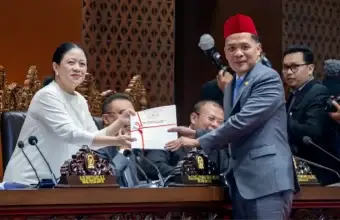
“The law will lose its authority if its enforcers are unwilling to submit to the same law,” Suyudi told lawmakers on Nov. 12.
Prabowo did not explicitly connect his praise for Suyudi to a specific outcome in the wiretapping investigation. Nevertheless, his remarks placed the police leadership within his broader message that state institutions must confront wrongdoing while remaining accountable to the law.
No Comment! Be the first one.