



Prabowo: ASEAN must build resilience from within
MANILA, The Kabar News—President Prabowo Subianto called on Southeast Asian nations to strengthen regional resilience and unity as economic pressure, geopolitical tension and competition for...
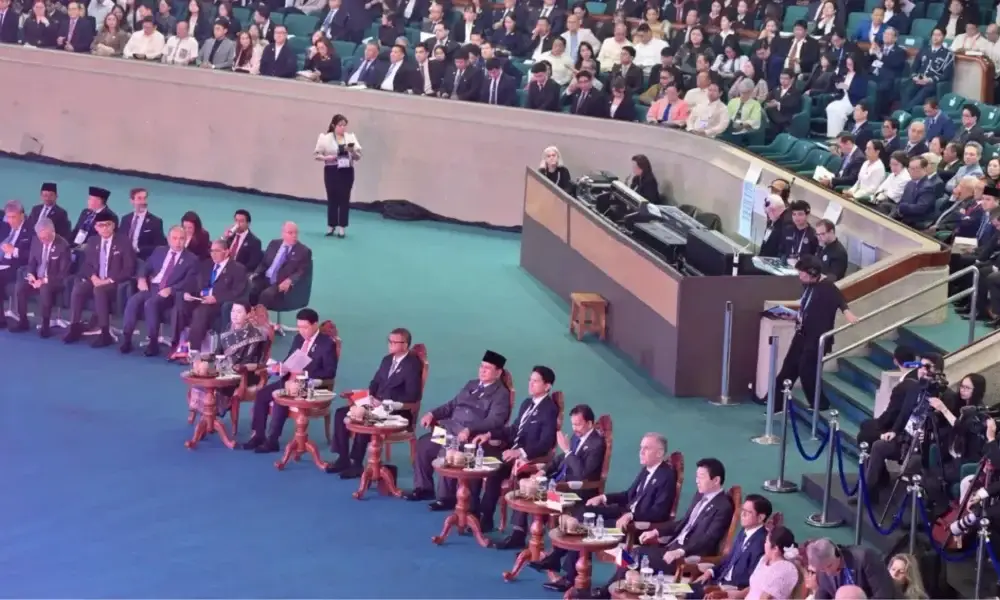
MANILA, The Kabar News—President Prabowo Subianto called on Southeast Asian nations to strengthen regional resilience and unity as economic pressure, geopolitical tension and competition for resources reshape the global landscape.
Prabowo delivered the message during the plenary session of the 49th ASEAN Summit at the Philippine International Convention Center in Pasay, Metro Manila, on Sunday, Nov. 15. The summit brought together ASEAN leaders to discuss regional priorities. They also discussed their collective response to external risks.
The president said ASEAN, which will mark its 60th anniversary in 2027, had helped maintain peace and stability while supporting economic development across Southeast Asia. However, he warned that the region would need stronger national institutions and deeper cooperation to protect those achievements.
“Today, ASEAN is home to around 700 million people, with a combined economy exceeding US$4 trillion,” Prabowo said, according to statement published by the Presidential Secretariat.
“We have come a long way. However, the challenges ahead require us to become much stronger, more capable, more united and more resilient,” he added.
Read also: Indonesia dominates ASEAN economy in 2026 with $1.55 trillion GDP
Prabowo placed food security, energy independence and water management at the center of his regional resilience proposal. He argued that ASEAN’s collective strength must begin with each country’s ability to meet essential needs. Moreover, countries must protect the welfare of their population.
“For us, food and energy are top priorities, as are water resilience and management,” Prabowo said. “In our region, water is sometimes scarce, but at other times it comes in excessive amounts and causes disasters.”
The president also outlined Indonesia’s domestic energy plans. He said the country had implemented its B50 biodiesel program, which blends diesel fuel with 50 percent palm-based biofuel. In addition, Indonesia was developing 100 gigawatts of solar power capacity.
Those programs form part of Indonesia’s stated effort to reduce dependence on imported fossil fuels. Their long-term impact, however, will depend on implementation schedules. Moreover, it depends on environmental safeguards and the capacity of the electricity network to absorb new renewable generation.
Read also: Prabowo joins ASEAN summit as haze tops agenda
Prabowo also said Indonesia was investing in education, health services and domestic industry to strengthen its human capital. He encouraged ASEAN members to combine their natural resources, productive land and industrial capacity. In this way, members can secure food reserves and reliable energy supplies.
The president identified the ASEAN Digital Economy Framework Agreement, or DEFA, as another instrument for strengthening the region. ASEAN signed the agreement in Manila on Nov. 14 and expects it to enter into force in early 2027.
ASEAN studies estimate that effective implementation of DEFA could help expand the regional digital economy to as much as $2 trillion by 2030. The figure represents a projection rather than guaranteed economic output. Its realization will depend on how member states align rules governing digital trade, data flows and online security.
According to the ASEAN Secretariat, the agreement seeks to create a more integrated digital market that remains open, secure and interoperable.
“With the potential to unlock a $2 trillion digital economy by 2030, this agreement can provide tangible benefits for our businesses,” Prabowo said.
Read also: Malaysia surpasses Indonesia to become ASEAN’s largest car market in 2025
He added that it could also improve prospects for workers and expand opportunities for young people.
Prabowo concluded his intervention by urging ASEAN members to translate regional unity into practical cooperation. He said the bloc should strengthen its collective influence in multilateral institutions and international decision-making processes while maintaining ASEAN centrality.
The president also expressed Indonesia’s support for Timor-Leste to hold the ASEAN chairmanship in 2029. He said the newest member’s first chairmanship should become a shared success for the organization.
You May Also Like: Sponsored Offers
ASEAN’s scale gives it considerable economic and diplomatic weight. The main test will be whether its members can turn summit commitments into coordinated national policies. These policies must protect citizens while preserving regional stability.



No Comment! Be the first one.