



Honda reports first annual loss in nearly 70 years, scales back EV plans
TOKYO, Thekabarnews.com—Honda has reported its first annual loss in almost 70 years. This marks one of the biggest financial shocks in the carmaker’s recent history. The carmaker’s push into electric...

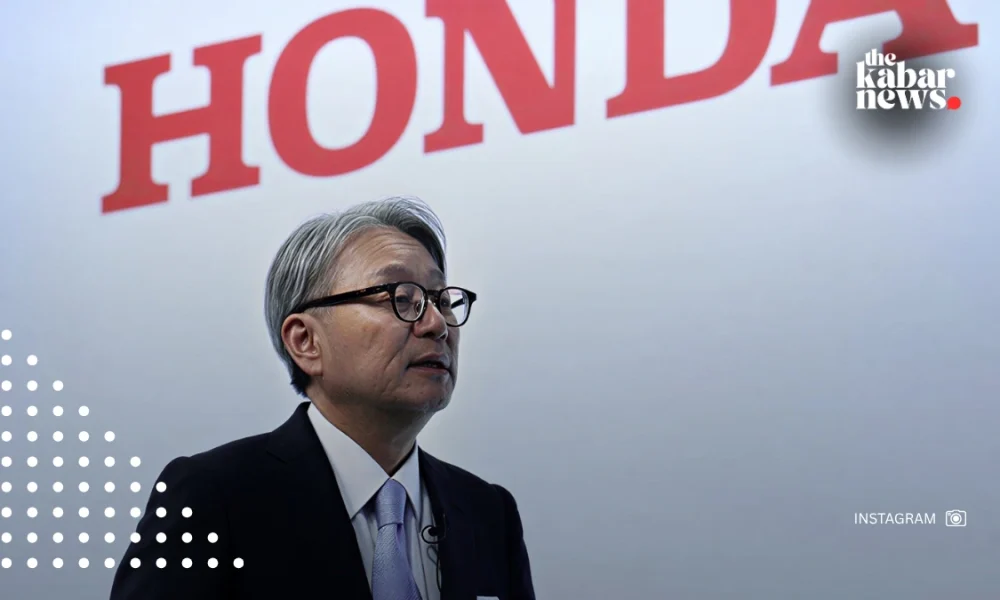
TOKYO, Thekabarnews.com—Honda has reported its first annual loss in almost 70 years. This marks one of the biggest financial shocks in the carmaker’s recent history. The carmaker’s push into electric vehicles (EVs) resulted in massive losses.
The Japanese automaker reported an operating loss of 414.3 billion yen ($2.6 billion) for the fiscal year ending March 2026. By comparison, it had a profit of about 1.2 trillion yen a year earlier.
Honda also reported a net loss of 423.9 billion yen, its first full-year loss since it became a publicly listed company in 1957.
The company suffered much of the damage from its canceled electric vehicle projects in North America. In addition, it suffered from suspended battery investments in Canada.
The company said the EV-related losses amounted to about 1.45 trillion yen to 2.5 trillion yen. This range depends on accounting treatment and restructuring charges.
Honda has now decided to kill off several planned EV models and drastically scale back its previous electrification targets.
The company also scrapped its earlier goal of EVs being 20 percent of new car sales by 2030. It also retreated from its broader target of going all-electric or fuel-cell vehicles by 2040.
Honda is now going with a mixed powertrain strategy, focusing more on hybrid vehicles and regular gasoline-engine models instead.
Honda CEO Toshihiro Mibe said that the company still supports carbon neutrality targets. However, market realities require a more flexible approach.
“We have to stop the bleeding as soon as possible and open the path to future growth. That is the biggest responsibility I have. We are facing a very harsh business environment,” Mibe said.
Honda blamed a mix of external factors for the decline, including weaker demand for electric vehicles and less favorable environmental incentives in the United States. Additionally, tariffs on imported auto parts and policy changes by the administration of President Donald Trump contributed.
The rollback of EV subsidies and charging infrastructure support in the U.S. had a major impact on Honda’s North American electric vehicle plans.
It also faced dwindling competitiveness in China, where local EV automakers like BYD increased pressure on foreign automakers. Despite the historic loss, Honda’s motorcycle business offered a valuable financial cushion.
The company sold 22.1 million motorcycles in the fiscal year, up from 20 million the year before. Sales were particularly strong in India and Brazil. As a result, total sales for the company edged up to 21.8 trillion yen.
Honda now expects to return to profit in the fiscal year ending in March 2027, with net profit forecast at 260 billion yen.
By 2030, the company hopes to introduce more than a dozen hybrid models. In addition, it plans to bolster its gasoline-hybrid lineup, particularly in North America.
Honda’s loss reflects not only the slowdown in the EV market. It also shows the challenge of timing major technology transitions in a rapidly evolving global auto industry.
The lesson for Honda seems obvious: the future may still be electric, but the road to get there will be slower—and much more expensive—than anticipated.






No Comment! Be the first one.