



Did Fatima al-Fihri found the world’s first university?
Thekabarnews.com—For nearly 12 centuries, Al-Qarawiyyin in Fez has served as an enduring symbol of education in the Islamic world. Historical tradition credits Fatima al-Fihri, a wealthy Muslim woman...

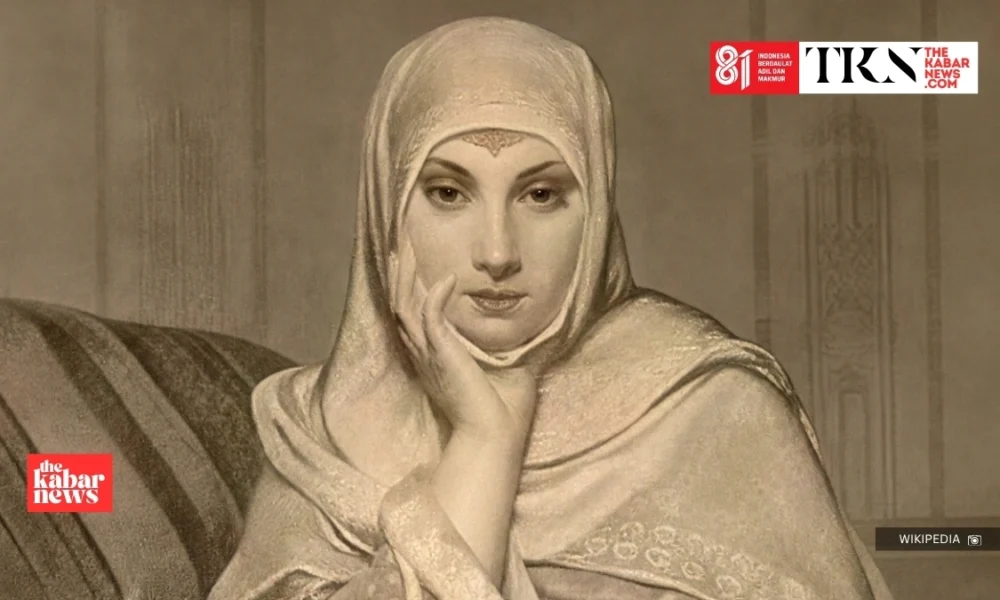
Fact Summary
- Fatima al-Fihri founded Al-Qarawiyyin Mosque in 859, traditionally credited as the world’s oldest university.
- Guinness World Records recognizes Al-Qarawiyyin as the oldest ongoing higher-learning institution, although it lacks a verified founder.
- Historians question the narrative around Fatima due to scarce contemporary documentation and rely on much later chronicles.
- Al-Qarawiyyin evolved from a mosque to an advanced education center, differing from the definition of a modern university.
- Fatima al-Fihri’s story highlights women’s historical roles in philanthropy and education within Islamic institutions.
Thekabarnews.com—For nearly 12 centuries, Al-Qarawiyyin in Fez has served as an enduring symbol of education in the Islamic world. Historical tradition credits Fatima al-Fihri, a wealthy Muslim woman whose family migrated from Kairouan in present-day Tunisia. She was responsible for establishing its original mosque in 859.
The institution later developed into a major center of religious scholarship and higher learning. Its long history has fueled the widely repeated claim that Fatima founded the world’s first university. Historians say the description requires context.
Guinness World Records recognizes Al-Qarawiyyin as the world’s oldest existing and continuously operating higher-learning institution, dating its foundation to 859. Its record page does not identify a verified founder.
The UNESCO World Heritage Centre inscribed the Medina of Fez on its World Heritage List in 1981. UNESCO describes Fez as a ninth-century city that remains Morocco’s cultural and spiritual center.
Some language versions of its listing also refer to the world’s oldest university. The protected heritage site encompasses the wider medina rather than Al-Qarawiyyin alone.
The traditional account says Fatima used inherited wealth to finance the Al-Qarawiyyin Mosque. Scholars later taught Islamic jurisprudence, Quranic studies and Arabic there. Over the centuries, instruction expanded to subjects such as logic, mathematics, astronomy and medicine.
Historians lack contemporary ninth-century documentation about Fatima’s life. Much of the familiar narrative comes from Rawd al-Qirtas, a chronicle associated with Ibn Abi Zar. The chronicler wrote the account centuries after the mosque’s reported founding.
An academic review published through SciELO found that available sources about Fatima’s personal history remain scarce, unclear and widely dispersed. Researchers distinguish established institutional history from details preserved through later tradition.
No verifiable contemporary record shows that Fatima said, “What can I build so that knowledge continues to live even after I am gone?” It should not be published as her authentic words.
Modern commentators—not Fatima al-Fihri—coined the statement, “Knowledge is not built by power, but by vision.” No verified historical record attributes it to her.
The answer depends on how historians define a university. Al-Qarawiyyin began as a mosque and gradually became a mosque-based center for advanced education. The University of Bologna traces its founding to 1088 and calls itself the oldest university in the Western world.
It is more accurate to describe Al-Qarawiyyin as the oldest continually functioning institution of higher learning. This is better than to say simply that it was the first modern university.
Despite uncertainties surrounding parts of her biography, historical tradition closely links Fatima al-Fihri to Al-Qarawiyyin’s founding. Her story speaks volumes about the historic role of women, philanthropy and Islamic institutions in the promotion of education.






No Comment! Be the first one.