



‘Pesta Babi’ documentary on Papua exploitation triggers public debate and screening bans
Thekabarnews.com—Since its release, Dandhy Laksono’s documentary Pesta Babi has been one of the most discussed topics on Indonesian social media. It has evoked strong emotions and rekindled the...

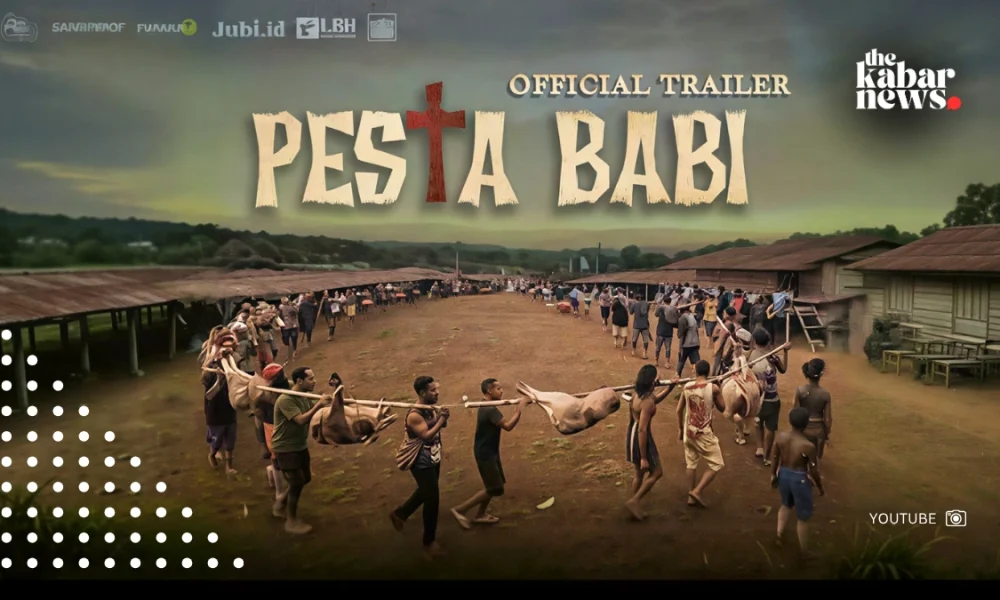
Thekabarnews.com—Since its release, Dandhy Laksono’s documentary Pesta Babi has been one of the most discussed topics on Indonesian social media. It has evoked strong emotions and rekindled the national debate over land exploitation and human rights in Papua.
The film highlights what it calls the large-scale exploitation of Papuan land. It points to environmental degradation, the displacement of indigenous communities, and the social impacts of industrial expansion through mining and planting projects.
The documentary highlights long underreported suffering; many viewers said they were “grieving and furious.”
The film has also received public support from various communities, civil society groups, and activists. They view the documentary as giving voice to marginalized Papuan communities.
The film deals with time-sensitive issues of Indigenous rights, deforestation, militarization, and environmental justice.
The documentary has faced challenges in some quarters, with reports of blocked or canceled screenings.
Some of the critics against the showings have called the film provocative and divisive. They say it fosters social tension and political polarization.
Many who opposed the screenings were government officials who hadn’t seen the whole documentary before calling it dangerous.
These events raised the issue of censorship and whether officials were making choices without really knowing what they were doing.
The controversy is part of a bigger issue about freedom of expression and the public’s discussion of sensitive national issues.
The film argues that what is happening in Papua is not just environmental destruction. Instead, it is systemic injustice with lasting humanitarian consequences.
It is a claim that hundreds of bulldozers are destroying massive forest ecosystems, often referred to as the “lungs of the world.” Native Papuan communities are losing their ancestral lands and traditional territory.
The documentary also points to concern about the expanding military presence in villages close to major mining and plantation projects. In these areas, local communities reportedly face pressure to defend customary land rights.
Activists claim that land conversion and security operations have displaced over 100,000 people from their original homes.
Such claims remain politically sensitive and continue to be the source of fierce disagreements. These disagreements are between activists, state institutions, and corporate interests.
Pesta Babi is not just a film but also a moral stand against injustice and modern-day colonialism for its supporters. It risks inflaming tensions and presenting a one-sided version.
By any standard, it has been a success in bringing Papua to the attention of the public. The situation is an issue many feel has too often been overshadowed by less important national headlines.
The filmmakers initially intended Pesta Babi to be a documentary. However, it has since become a symbol of the battle between silence and public accountability in continuing debates.



No Comment! Be the first one.