



America–Israel vs Iran: A conflict not only of power, but of Humanity
Editorial, Thekabarnews.com—Military power, strategic advantage, and geopolitical rivalry in the present conflict between the United States, Israel, and Iran: missile assaults, maritime blockades,...

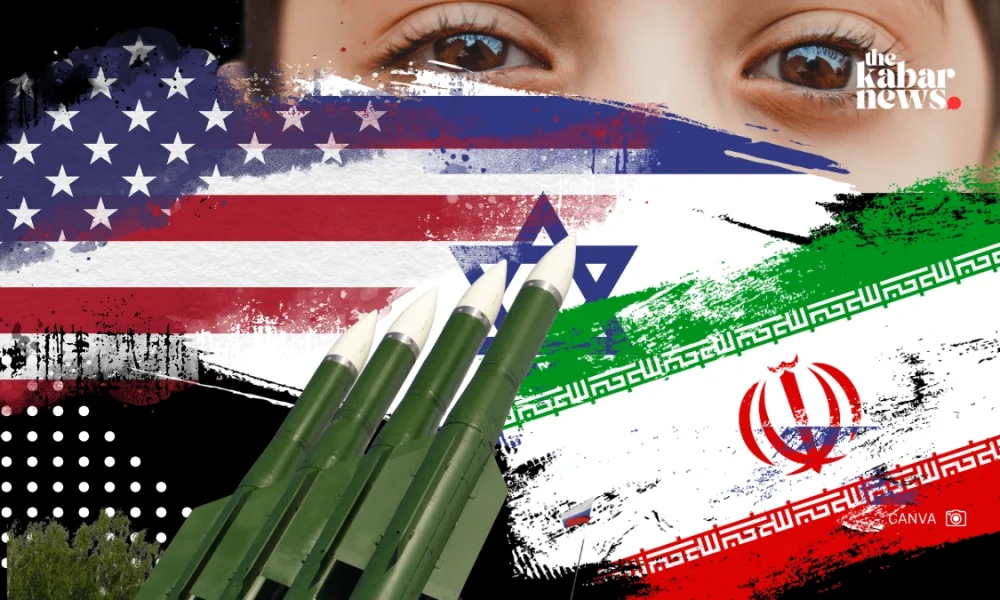
Editorial, Thekabarnews.com—Military power, strategic advantage, and geopolitical rivalry in the present conflict between the United States, Israel, and Iran: missile assaults, maritime blockades, and diplomatic brinkmanship are these headlines in many news agencies. Nevertheless, the story has a deeper, often concealed, truth. There is more to the battle than a power play. The situation is a severe humanitarian problem.
The site became one of the most deadly flashpoints in recent history when the U.S. and Israel launched strikes on a range of facilities near Iran in late February 2026. Afterward, the tit-for-tat began. Iran launches missiles and drones at Israel, hitting U.S. interests across the Middle East. Cities shook, infrastructure was destroyed, and the stability of whole regions was threatened.
But outside of big-power geopolitics, the human cost is mounting. Some 2,600 were reported massacred in the first few weeks alone. Thousands more were killed in the first month of the battle. The statistics are overwhelming; however, they are not the complete narrative of human suffering: displaced families, traumatized children, and villages razed to the ground.
Even Israel, with its fearsome missile-defense systems, has failed to protect residential areas. Iranian Retaliatory Strikes Hit Residential Areas, Injures People, and Disrupts Daily Life. Moreover, Iran has also taken a heavy hit. The bombing is not only of military targets but also of civilian infrastructure that people rely on for their basic life.
The effects are felt well beyond the national borders. The flashpoint is the Strait of Hormuz, a critical choke point for the world’s energy supply. In turn, shocks have sent shivers through the global economy, including a spike in fuel costs and worries about supply shortages. For many countries, especially in Africa and the developing world, this war is not front-page news. Regardless, the violence is an immediate economic threat, forcing millions more into poverty and hunger.
But there have been recent glimpses of promise—a fragile truce between Israel and Lebanon and cautious U.S. diplomatic outreach to Iran. However, the stairs are hazardous. All sides are on a war footing, and a miscalculation might mean a return to all-out fighting.
We should not only be concerned about how long this war will last but also where it will go. There are hardline elements within the leadership, especially in the Iranian military establishment. These officials have supported tighter policy, and the possibility for compromise has been narrowed. Critics claim that a strong position on the military and unilateral sanctions have weakened confidence. Furthermore, these moves have eroded international norms.
Power-driven rhetoric buries human language in terms like deterrence, dominance, and revenge. Decision-makers often ignore the human toll of civilian casualties when they reduce real lives caught in the crossfire to mere numbers. Yet these are the personal stories that should make this conflict a priority to stop.
War dehumanizes. From the very beginning. It turns cities into battlegrounds, and people become victims. But the world cannot allow such misery to become ordinary. This is not a chess game between countries. This is a humanitarian conflict that requires an immediate and ongoing response.
It’s the only way that works, however imperfectly. We must not let up on our efforts to achieve a ceasefire and a continuing diplomatic process. Instead, we must enhance them. Above all, we must reaffirm our commitment to protect civilians, to guarantee humanitarian access, and to hold all parties accountable for crimes under international law.
The world’s response to the human suffering caused by this conflict, not the military victor, will determine its final accounting. Power decides the course of battle. However, man must define its end. This battle is a tragedy of war and a failure of conscience unless the world puts human beings before geopolitical interests. (Kusnadi Assaini)
……….
Do you have an opinion on the issues that are happening right now? If you would like to submit your article by email to thekabarnews@gmail.com



No Comment! Be the first one.