



Rupiah hits record low at Rp17,041 as Hormuz crisis pushes oil prices higher
Jakarta, Thekabarnews.com—The Indonesian rupiah is at its lowest point ever due to escalating tensions between countries. There is also a dramatic spike in the price of energy around the world. The...

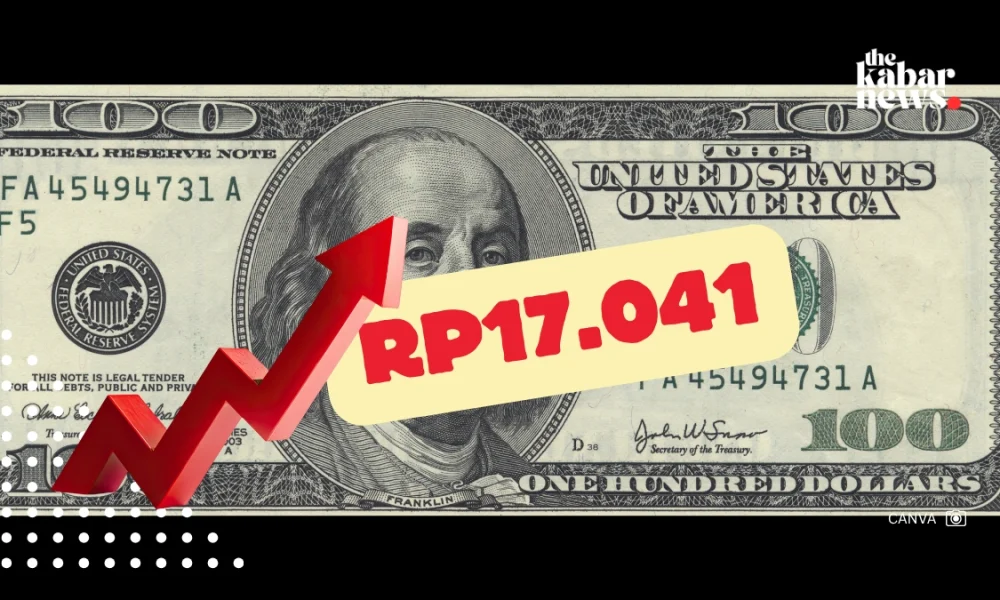
Jakarta, Thekabarnews.com—The Indonesian rupiah is at its lowest point ever due to escalating tensions between countries. There is also a dramatic spike in the price of energy around the world.
The currency’s collapse suggests that the world markets are becoming less stable, especially because vital oil supply lines closed. At the same time, the rupiah is valued as if it had been shut down.
On Tuesday, March 31, the spot market closed, with the rupiah valued at Rp17,041 for every US dollar. This was a 0.23% reduction from the Rp17,002 close the day before. The currency has never plunged this low before.
The JISDOR reference rate from Bank Indonesia likewise went down a touch. The rupiah lost 0.035 percent of its value per day, pushing it down to Rp16,999 per US dollar.
Market analysts claim that the market is getting weaker largely because tensions are rising in the Middle East. Analysts warn that Iran is effectively restricting access through the Strait of Hormuz, raising global concerns.
A lot of liquefied natural gas and nearly one-fifth of the world’s oil pass through this significant canal. Economist Ibrahim Assuaibi noted that the problems have caused oil prices to rise considerably all over the world.
“The effective blockage of the Strait of Hormuz has caused Brent crude futures to surge by 59 percent in March, the greatest monthly increase ever,” he remarked.
At the same time, the price of West Texas Intermediate (WTI) crude oil rose up by 58 percent. It reached levels that have not been seen since May 2020.
President Donald Trump’s warning that the United States could strike Iran’s oil infrastructure if the strait remained closed has further escalated tensions between countries.
At the time of the warning, Iran had turned down US overtures of peace, and the military situation in the area was getting worse.
The White House said it continues to maintain communication channels with Iran and has even made progress despite increasingly harsh rhetoric. But what people say in public and what they do in private are still different.
The economy in Indonesia is still doing well at home. In February 2026, consumer confidence stayed strong at 125.2, retail sales moved up, and the manufacturing Purchasing Managers’ Index (PMI) stayed in the expansion zone at 53.8.
In early 2026, the government spent more money, which also helped increase demand at home. Analysts, however, warn that growth driven largely by consumption may not be sustainable in the long term. They note that growth will need more investment and productivity gains.
Ibrahim anticipated that the rupiah would stay between Rp17,040 and Rp17,070 per US dollar on Wednesday, April 1, 2026. This is because the markets are constantly reacting to things that happen all over the world.
The most recent fluctuation in currency underscores Indonesia’s vulnerability to external events. This is especially true when it comes to oil markets and political upheaval.






No Comment! Be the first one.