



Warung Madura vs. modern retail: A legal battle over Indonesia’s economic future
Thekabarnews.com—The rapid growth of small neighborhood stores called Warung Madura and modern retail chains has raised new questions about fairness, competition, and economic justice in...

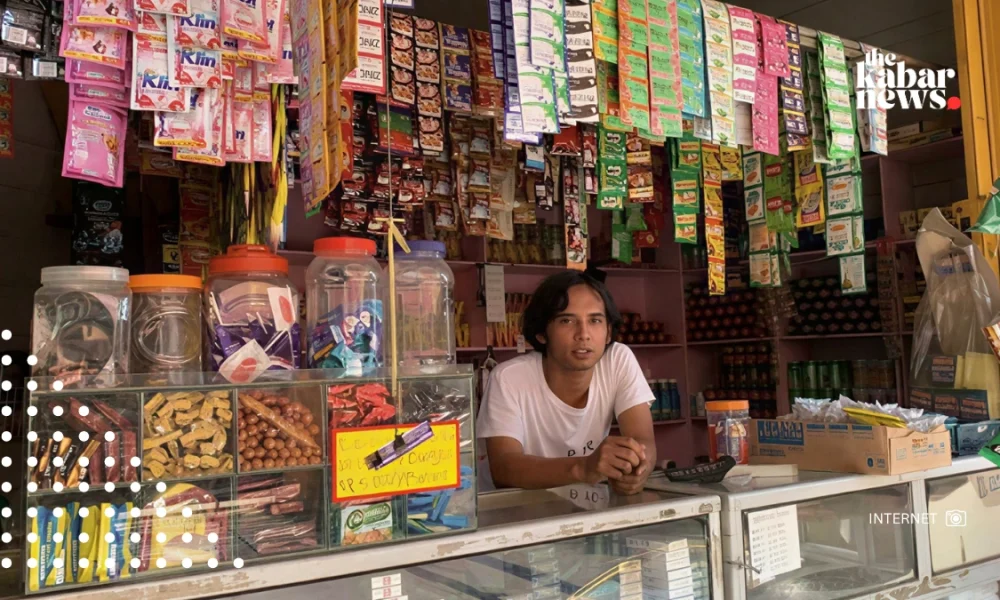
Thekabarnews.com—The rapid growth of small neighborhood stores called Warung Madura and modern retail chains has raised new questions about fairness, competition, and economic justice in Indonesia’s retail sector.
People say that the problem is that new and old businesses are competing for the same customers. However, it is a lot more complicated than that. Other factors such as regulatory differences, market access, and consumer preferences also influence the competitive landscape. The law and the economy are the basis for it.
Indonesia has different rules for small businesses and big retail chains. Law No. 20/2008 on Micro, Small, and Medium Enterprises (MSMEs) classifies most Warung Madura as micro-enterprises. These businesses typically employ fewer than 10 workers.
The Job Creation Law and its subsequent amendments clearly define this distinction. The state supports and protects these businesses because they typically operate with limited financial resources and modest annual revenues.
In contrast, modern retail chains operate as medium- to large-scale enterprises. Corporate management, strong capital, and nationwide distribution networks support them.
This distinction goes beyond administration and carries significant legal implications. The law explicitly protects micro-enterprises and requires the state to safeguard grassroots economic actors.
Article 33 of the 1945 Constitution also supports this idea. It says that everyone should work together to make the economy work. Small and micro businesses are not just small parts of Indonesia’s economy; they are crucial parts of it.
Modern retail is also growing because the economy and the market are getting better. These businesses offer standardized services, state-of-the-art logistics systems, and a lot of efficiency. This allows them to compete effectively with larger retailers and meet the evolving demands of consumers. The challenge lies not in halting modernization, but in ensuring that small businesses keep pace.
The issue of operating hours continues to arise. There are not any strict national rules about how long minimarkets can stay open, but some local governments have made their own rules.
Because they are formal businesses, modern stores have to obey these rules. Small stores can be more flexible because they have fewer rules to follow.
Problems arise when policymakers attempt to impose uniform regulations across fundamentally different business types. By applying uniform rules, policymakers risk disadvantaging micro-enterprises that lack the resources to comply with regulations intended for larger companies.
According to Law No. 5 of 1999 on the Prohibition of Monopolistic Practices, competition law says that fair and healthy competition is essential. If big stores grow too quickly or cut prices too much, they could hurt smaller stores and make the market less stable.
Warung Madura is not just a legal problem; it also shows how the economy and society work as a whole. Many Indonesians run small stores not only to make money but also to stay alive when there are not many formal jobs available. Article 27(2) of the Constitution says that people have the right to a prosperous life.
This means that people who make choices need to be more careful about what they do. The government should not try to make everything the same. Instead, it should establish distinct regulations for each type of business.
For instance, it should closely monitor large stores while allowing small businesses more time and freedom to establish their operations.
The most important question is whether Indonesia should focus on modern or traditional stores. The Constitution says that the real test is to make the economy fair and open to everyone. This way, the people’s economy can grow along with modernization.
Writer: Ruhermansyah, S.H., C.Med, a lawyer and legal consultant at Ruhermansyah & Partners Law Office. Former Chairman of the West Kalimantan Provincial Election Supervisory Agency (Bawaslu), terms: 2013–2018 and 2018–2023.





No Comment! Be the first one.