



Two cultures in urban planning: between data and emotion
Thekabarnews.com—C. P. Snow wrote a book in 1959 called The Two Cultures, in which he attacked the big gap between two types of intellectuals: scientists and humanists. One communicates using...

Thekabarnews.com—C. P. Snow wrote a book in 1959 called The Two Cultures, in which he attacked the big gap between two types of intellectuals: scientists and humanists. One communicates using numbers, models, and experiments. The other person talks about stories, meanings, and what people go through.
The problem is their differences and lack of understanding, which can cause conflicts and hinder collaboration. Snow also talks about how there is a false sense of superiority in this book.
Scientists, like engineers and mathematicians, always think they are wiser and more successful than humanists, like social scientists, historians, and literary experts.
On the other hand, humanists often make fun of scientists because they think they are too practical and do not grasp life as a whole, which can lead to a divide in dealing with complicated issues like regional and urban planning.
I often think that regional and urban planning (PWK) is not just an old theory but something that happens every day. We have a technocratic approach that includes maps, GIS, spatial analysis, growth estimates, and models for reducing the effects of flooding.
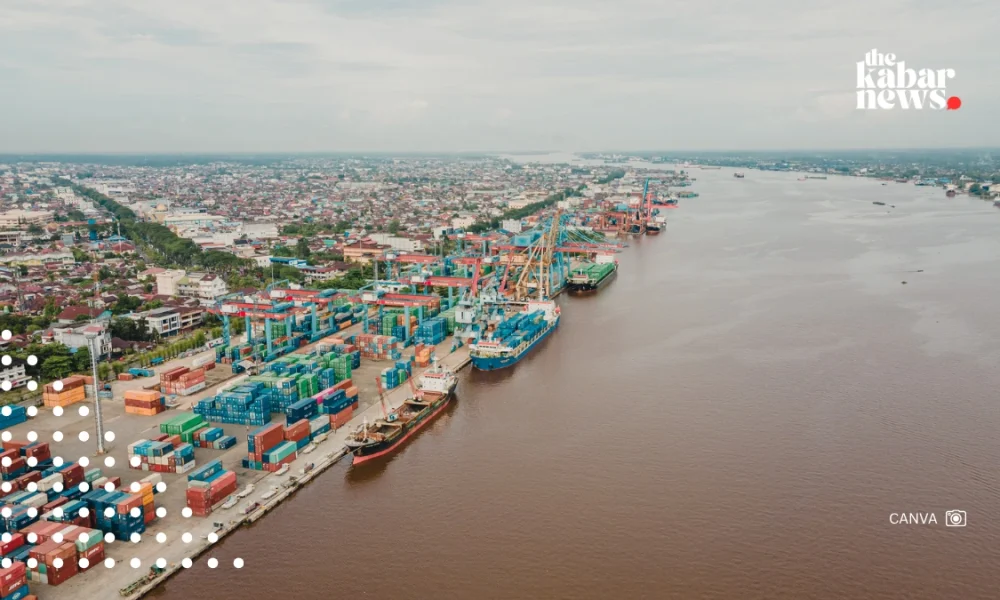
This is all crucial, even necessary. Such analysis is particularly crucial in a city like Pontianak, which is situated next to water, canals, and the changing flows of the Kapuas River. If we work without data, we will lose our way. But a city is not only about numbers and facts.
Even if rules forbid it, river dwellers are a vital part of the city’s history and culture. Some mothers set up little stalls by the ditch. Not simply green areas in planning documents, but also public places where kids play.
This area is where the “two cultures” become clear. Urban planning can soon transform into “the language of statistics.” We get busy figuring out things like the building base coefficient (KDB), the building floor coefficient (KLB), the edges of the river, and so on.
But we fail to ask how the area is really used. What does it mean for the people who live there? Why do people keep living there, even if it’s dangerous? However, a too “humanistic” approach that does not have a technical basis might also be a problem.
We pay too much attention to what the people want and not enough to how much the ecosystem can handle. Ultimately, the choices chosen are not sustainable. Therefore, it is not about picking one. But how can we connect the two?
In his later work The Two Cultures: A Second Look (1963), C.P. Snow came up with the idea of the Third Culture as a way for scientists and literary intellectuals to get along better.
This idea is about the rise of a new group of thinkers, like social scientists and socio-engineers, who can use their technical skills and knowledge of the humanities to tackle genuine problems in society.
Snow expects that this approach will lead to better communication between science and public policy, which will make technological progress have a real and widespread effect on people’s well-being.
Based on my experience teaching and researching riverbank cities in Kalimantan, the most intriguing part is actually in the center. The most fascinating aspect occurs when narratives and data converge, when maps and collective experiences unite, and when regulations and reality align.
For instance, consider the studies conducted on ditches in Pontianak. A ditch is a way to drain water. But socially, it is a place to live: a place to meet people, do business, and even remember things together. We lose half of its meaning if we merely consider it to be a “drainage route.”
This scenario is where the importance of using many different fields in urban planning comes into play. We can not only be “engineers.” We also need to know more than just about sociology and anthropology. You need to do more than just read the map; you also need to listen to the stories.
The socio-engineering method is one way that more and more people are trying to connect these two realms. In fact, the process is not simply about bringing together technical data and formal community involvement.
It is also about making the planning process a real venue for equal dialogue. For instance, hydrological studies and flood models are still the most important parts of developing riverside regions.
But the results are not directly “translated” into legislation. Instead, they are brought back to the community through discussion forums, participatory mapping, or even basic simulations that residents can understand.
Local knowledge, including how inhabitants have read signs of rising water, tide patterns, or flood history, is just as vital as technical data. Planners must also operate in an iterative way with this method: design, test, listen again, and then change.
So it is not a one-time plan; it is a process of learning all the time. It could appear like there is more work to do than with regular preparation, but in many circumstances, it lasts longer and is more socially acceptable, as it fosters community engagement and adaptability to changing needs.
Snow’s ideas still seem crucial to me. He may have never thought of Pontianak, but his ideas can help us understand what is going on in this city and in urban planning now. It is not just the design of a city that matters.
But how it is lived. And urban planners could have too big of a job to bring the two cultures together perfectly. But at least there is a way to persuade these two civilizations to hear each other.
Written by Mira Lubis, a lecturer at Tanjungpura University who teaches Regional and Urban Planning (PWK).



No Comment! Be the first one.