



Singapore turns rain into electricity in breakthrough energy study
Singapore, Thekabarnews.com—Researchers at the National University of Singapore have found a new way to turn rain into electricity. This is a big step forward for technology that runs on solar power....

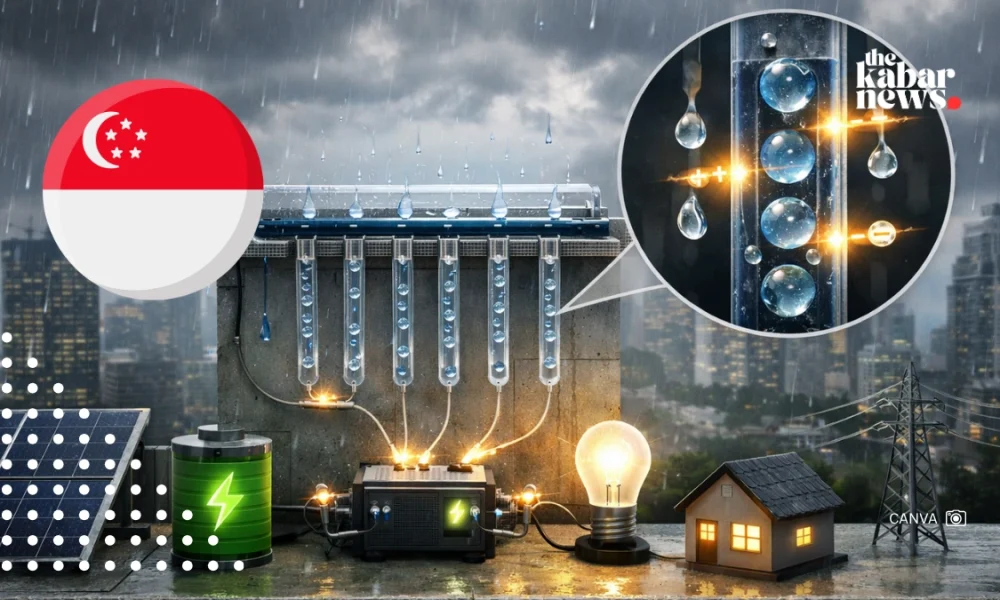
Singapore, Thekabarnews.com—Researchers at the National University of Singapore have found a new way to turn rain into electricity. This is a big step forward for technology that runs on solar power.
The system uses a method known as “plug flow,” in which raindrops pass through narrow, millimeter-sized tubes. As the droplets move through these channels, they break up water ions and make electrical charges.
This segmented flow mechanism helps the system overcome common inefficiencies in conventional fluid-based energy production. For example, it addresses poor energy conversion and suboptimal fluid dynamics.
Unlike other hydropower systems, this one does not need a constant flow of water. It can work with just one drop. Additionally, researchers say that this technology gets around the “Debye length limitation.” This makes it much easier to separate charges and make more energy.
The lab tests went well. It could turn more than 10% of the energy it got into usable power. Its power density was about 100 watts per square meter. These numbers surpass those previously used to extract power from rain.
Some people say this method is ten times better than hydropower, but scientists say that is only true in some places.
Even though it is smaller, hydropower still makes a lot more energy overall. But there are beneficial things about using rain in cities.
This method might work well with other types of clean energy, such as solar power. Solar panels do not work as well when it rains a lot. But systems that turn rain into power might continue doing so, which would help keep the energy supply steady.
This new idea is very helpful in places like Singapore, where there are many people and rain but not enough room for big renewable energy plants.
If installed on rooftops and in buildings in cities, this technology could transform rain into a new energy source. Researchers say that this idea could be an “all-weather” energy source that improves existing power systems.
It is also light and not too expensive, which makes it a viable option for smart city uses. This is especially true in urban areas where space is limited and energy efficiency is crucial.
The progress is still being tested, but it shows that more and more people are using clean energy sources, such as solar and wind. These are essential for reducing reliance on fossil fuels and promoting sustainable energy practices.
Scientists aim to create sustainable, future-ready energy systems by turning a constantly occurring natural phenomenon into power.
“We need to rely more on energy sources that come from the earth,” they said.
Innovators are exploring new ideas, such as converting rain into energy. This could reshape future urban design by integrating rainwater harvesting systems and technologies like rain turbines and piezoelectric materials.






No Comment! Be the first one.