





Thekabarnews.com—The UN and other organizations that track population numbers have new information showing that marriage rates in Southeast Asia are changing significantly. In fact, there are more single individuals in the Philippines than in any other country in this area.
The most current data shows that about 49 percent of people in the Philippines are still single. This number demonstrates that this location has the most people in the whole country.
Next is Brunei with 44.9 percent, then Malaysia with 44.68 percent, and finally Cambodia with 44.60 percent. Myanmar is the last of the top five countries, and 29 percent of its inhabitants are still unmarried.
These data show that this region’s economy and society are changing more swiftly. Moreover, many young individuals in Southeast Asia are waiting to get married. They want to make sure they have enough money, receive a better education, and find a job first.
Another key part of the story is how cities are getting bigger. As a result, people sometimes put off or reassess long-term commitments like marriage when they relocate to cities. Their lives change, and it costs more to live there.
For instance, changes in culture have made it more common for people in Malaysia and the Philippines to stay single for a long time. At the same time, Vietnam (16%), Laos (17%), and Singapore (20%) all had fewer single individuals.
These differences could be due to stronger traditional family structures, changes in the population, and different roles in the government. These factors influence societal norms and expectations regarding marriage and family life. These factors shape how people in each culture view marriage and having children.
The distinctions in Southeast Asia highlight how different the region is in terms of its economics, cultures, and faiths. Some cultures are rapidly adapting to modern life, while others still believe in the necessity of early marriage and childbearing.
Demographers think that more and more individuals will be single in the future. This trend could influence shopping habits, family structures, and the job market.
Governments may also need to adjust the rules they have governing housing, social services, and how many people can reside in a specific location. This change is important to suit the requirements of the growing number of single people.
For instance, they might need to lower the cost of housing and make it easier for single individuals to obtain help from others.
People in Southeast Asia are putting various things first now that they have new means to interact. This adjustment indicates that a usually crowded venue may discover a way to mix the old with the modern.
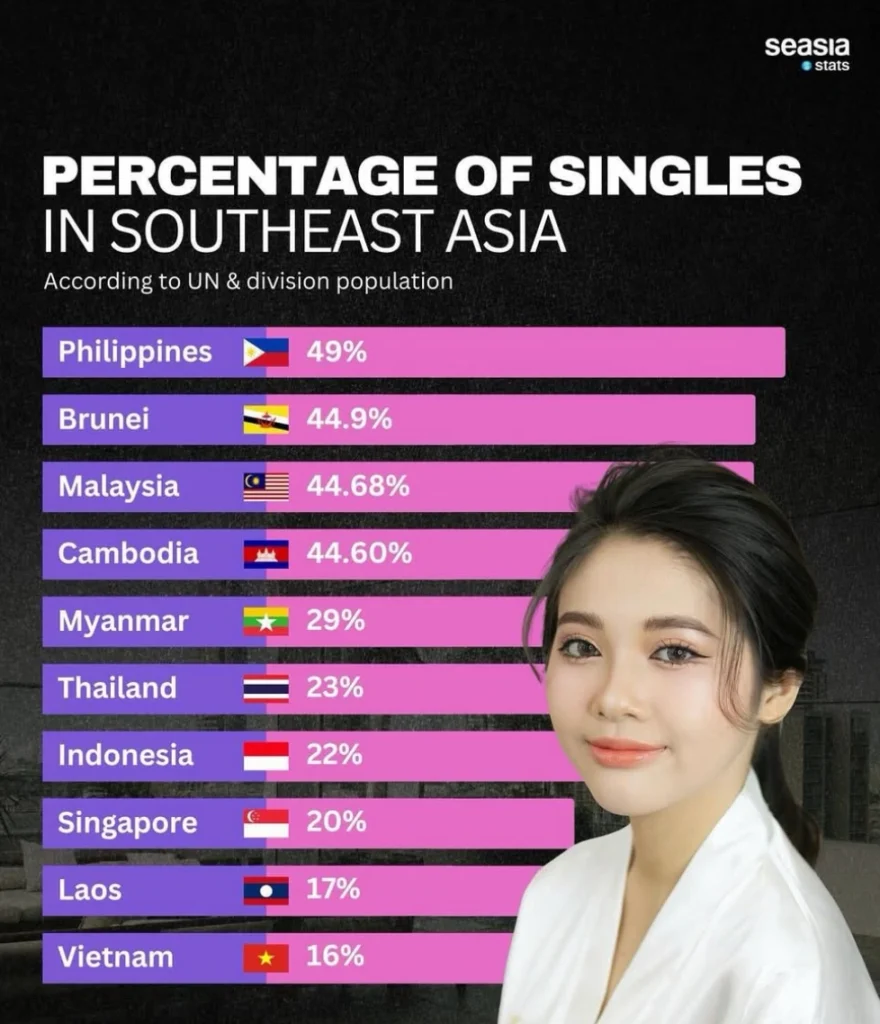
Source: Seasia.stats




No Comment! Be the first one.