




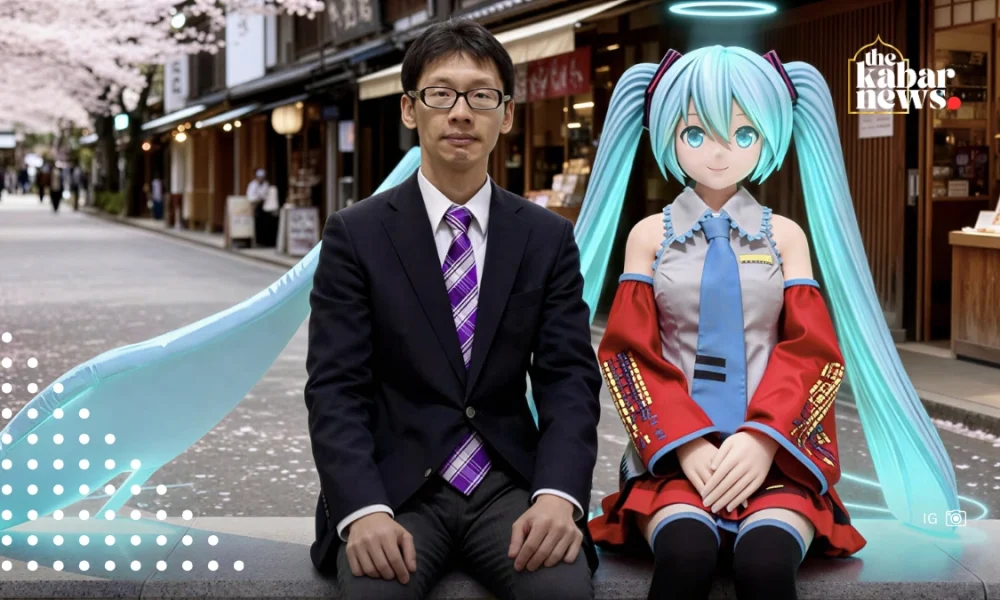
Tokyo, Thekabarnews.com—A Japanese man is having trouble with his AI holographic virtual idol marriage because the service is no longer available. Because of the service discontinuation, the situation has made him feel lonely. It has also made him think about how he really feels about his friends and technology.
Once again, people are discussing a unique love story between a Japanese man and a cyber idol. The event shows that technology and people are coming together more and more.
Akihiko Kondo, 38, is married to Hatsune Miku, an AI holographic virtual pop diva who is known all over the world. People paid about $17,300 to go to the event. In addition, he also had a $1,300 Gatebox. This device let him talk to a real Miku on a screen.
For years, Kondo’s device was like a digital friend that he could “talk” to. When the COVID-19 pandemic hit and Gatebox developer Vine Planning stopped offering its service, things got worse between them.
Since then, the system has been sending “network error” messages over and over again. This issue has ruined the interactive experience and left Kondo feeling isolated from the companionship he once enjoyed.
Kondo still feels emotionally connected, even though the technology broke. He told The New York Times that his feelings have not changed. He also said his “wife” is still alive in a spiritual sense.
Kondo paid someone to make a life-size doll that looked like Hatsune Miku to help him get over losing the digital interface. For him, the doll reminds him of their imagined life together.
More people are like Kondo. Over 100 people in Japan say they are “fictosexual.” This term means they are sexually attracted to characters in books, movies, or video games.
This phenomenon is linked to larger societal changes, such as loneliness and communication. It also relates to how many people use technology.
Sociologists say that these kinds of relationships may seem strange. However, they show that people need more emotional support in a world that is constantly changing.
Technology makes it easier to meet new people. Yet, when services or platforms go down, it shows how few friends you really have. Such a situation makes people feel like they are alone and not really connected to other people.
People are now contemplating how AI and virtual reality change how close people are to each other.
Some people think it is a beneficial idea. On the other hand, others worry that it will affect their mental health and social life in the long run.
The concern is because it could make people feel more alone and less likely to talk to people in person.
As technology makes it harder to tell what is real and what is not, Kondo’s story shows that relationships based on technology can be beneficial. At the same time, such relationships can also be detrimental.
For instance, even in the absence of the catalyst, emotional ties can remain robust.






No Comment! Be the first one.