



PBNU Urges Government to Follow Official Criteria in Determining Eid al-Fitr 2026
Jakarta, Thekabarnews.com—As more and more people talk about how easy it is to see the crescent moon (hilal), the country’s largest Islamic outfit, Nahdlatul Ulama (NU), has asked the...

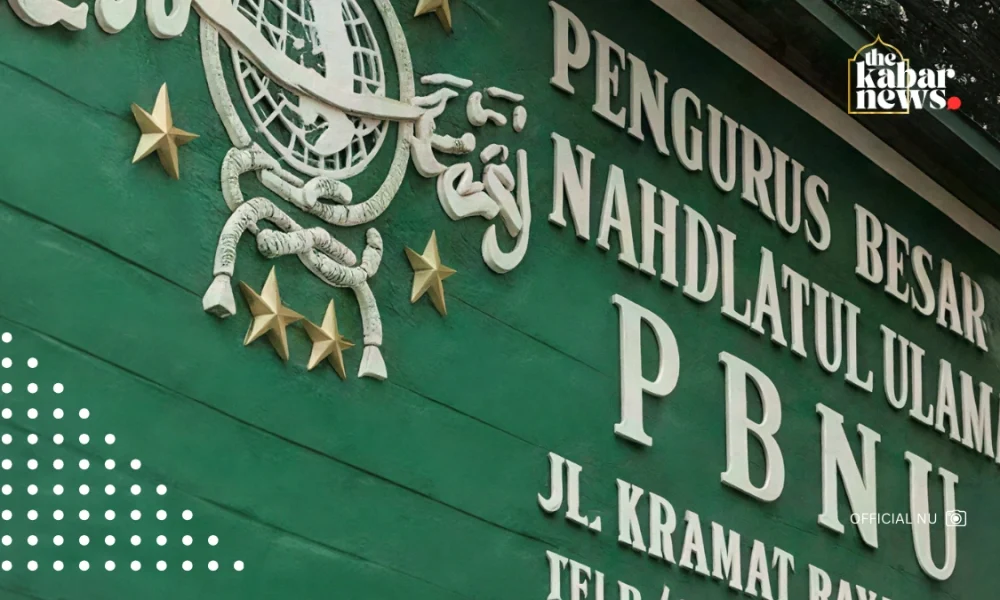
Jakarta, Thekabarnews.com—As more and more people talk about how easy it is to see the crescent moon (hilal), the country’s largest Islamic outfit, Nahdlatul Ulama (NU), has asked the government to make it clear and consistent when Ramadan 1447 Hijri will end.
The Lembaga Falakiyah PBNU, the Religious Affairs Ministry, and the BMKG all agree that the hilal on March 19, 2026, which is 29 Ramadan 1447 H, does not meet the agreed-upon visibility standards. NU scholars define these criteria as imkanur rukyah.
The MABIMS agreement (Brunei, Indonesia, Malaysia, and Singapore) sets the hilal visibility criteria at a minimum altitude of 3 degrees and elongation of 6.4 degrees. However, current astronomical estimates indicate that not all of Indonesia has reached these limits.
Katib Syuriyah of PBNU, KH Sarmidi Husna, stressed how important it is to follow Ministerial Regulation No. 1/2026, which makes these rules official. He told the people in charge to obey the rules that are already in place.
“We hope the ministry stays open and follows the MABIMS agreement and the law as it is now,” he said.
NU scholars also said that imkanur rukyah should be the main way to tell whether moon-sighting testimonies are true or not. If at least five different astronomical methods say the hilal isn’t visible, we should disbelieve anyone who says it is.
People are also raising concerns about rumors that certain parties are attempting to manipulate astronomical data to align Eid al-Fitr on March 20, 2026.
PBNU officials talked about two possible scenarios: sending observation teams to places like Aceh to claim visibility even if there is not enough evidence. In addition, they mentioned changing the elongation threshold from 6.4 degrees to 6 degrees.
Chairman of Lembaga Falakiyah PBNU, KH Sirril Wafa, said that these kinds of actions did not meet scientific and religious standards.
“All the math shows that the hilal is still below the levels we agreed on,” he said.
He also said that requiring results would break long-standing agreements between religious groups. Moreover, such actions could cause significant trouble and make it harder to trust religious leaders regarding the start of the lunar month.
The most recent calculations indicate that the crescent was highest in Aceh, Sabang. It was still below the limit, even though it was 2 degrees and 53 minutes high and 6 degrees and 9 minutes long. Furthermore, the crescent was much lower in Jakarta, only about 1 degree and 43 minutes.
According to PBNU, these results mean that Ramadan should last for 30 days (istikmal). Eid al-Fitr should be on March 21, 2026.
PBNU also told policymakers to be careful (ihtiyath) when choosing religious dates. This is because making decisions too quickly could hurt the purity of Islamic traditions.
“Do not take the choice to set religious time lightly. Things can go very wrong if you are not careful, as hasty decisions may lead to confusion among the community and undermine the significance of the religious observance,” Sirril said.
As Indonesia awaits the official isbat session, the debate demonstrates the value of balancing scientific calculation, religious principles, and public trust in determining one of Islam’s most significant holidays.






No Comment! Be the first one.