



South Korea protests as US moves THAAD missile defense system to Israel
Thekabarnews.com—South Korean officials have expressed concern about the US decision to move parts of its Terminal High Altitude Area Defense (THAAD) system from South Korea to Israel. They are...

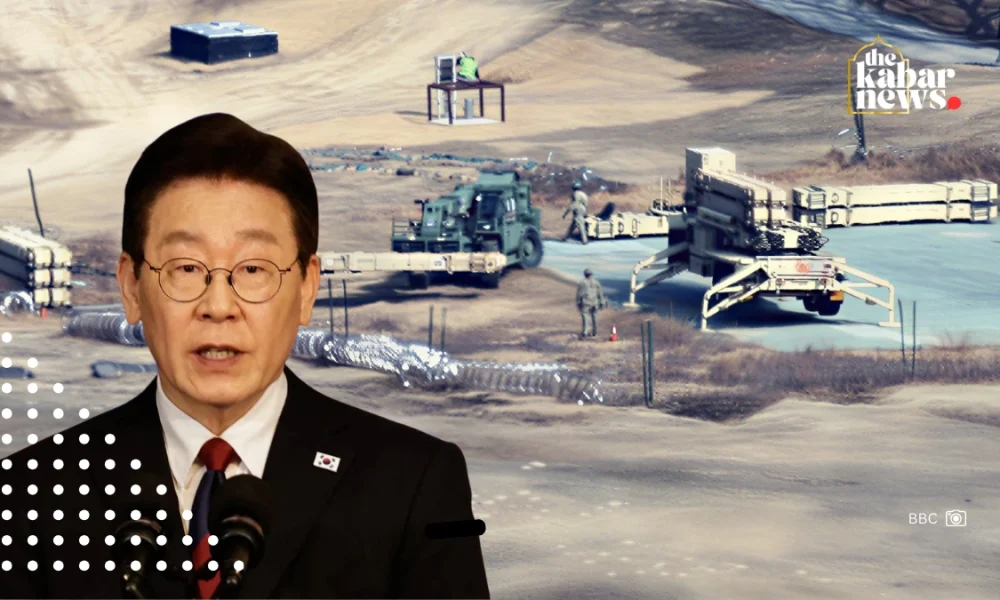
Thekabarnews.com—South Korean officials have expressed concern about the US decision to move parts of its Terminal High Altitude Area Defense (THAAD) system from South Korea to Israel. They are concerned because tensions are rising in the Middle East.
The president of South Korea, Lee Jae-myung, confirmed the news and said he was unhappy with the decision. He said the system has been crucial in keeping South Korea safe from missile threats in the region.
“We do not want to lose any part of the US air defense system that our military requires. But in reality, we cannot force our opinion,” Lee said in a statement about the issue, Friday, March 13, as reported in the Guardian.
The THAAD system intercepts and destroys ballistic missiles during the final stage of their flight. It uses cutting-edge radar to find threats that are coming in. Then, it fires interceptor missiles that destroy the target either inside or outside of the Earth’s atmosphere.
The US military only has about eight THAAD systems in use around the world right now. The military deploys these systems only in regions where missile threats are more likely.
Recent Iranian attacks damaged several missile defense radars in the Middle East. This prompted Washington to relocate the system.
On the first day of Iran’s retaliatory strikes, they damaged a THAAD radar system in Jordan. Additionally, reports indicate that the attacks also targeted another radar station in the United Arab Emirates.
THAAD systems are necessary to stop fast-moving ballistic missiles. Without these kinds of systems, it is much harder to protect against long-range missile threats.
Israel relies heavily on a layered missile defense system that includes the Iron Dome. The Iron Dome is highly effective at intercepting short-range rockets and drones.
However, experts note that engineers designed Iron Dome primarily to counter low-altitude threats rather than high-speed ballistic missiles.
The reported redeployment shows that the military’s priorities are changing as tensions rise in the Middle East. This is especially true after Iran and Israel exchanged missile strikes.
The decision emphasizes the pressing need for improved missile defense technology, as long-range missile systems increasingly threaten more countries.
The move may make Israel’s defense stronger in the current conflict. However, it has also led to discussions in South Korea about the country’s security and the role of US military assets stationed there.






No Comment! Be the first one.