



Tel Aviv residents take shelter as missile and drone attacks intensify
Thekabarnews.com—Things became extremely tense after multiple explosions and airstrikes forced residents of Tel Aviv to take refuge in bunkers. On March 10, 2026, late at night, some parts of the...

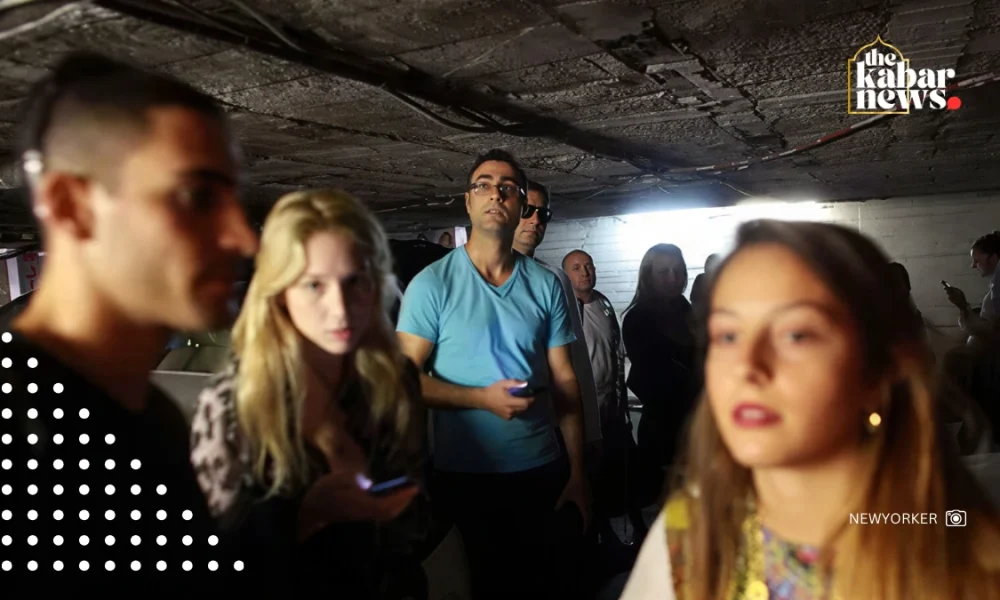
Thekabarnews.com—Things became extremely tense after multiple explosions and airstrikes forced residents of Tel Aviv to take refuge in bunkers. On March 10, 2026, late at night, some parts of the Israeli city were eerily quiet.
Kasra Naji, a BBC reporter in Tel Aviv, said that at night the city looked like a “ghost town.” Many stores closed early, and the streets were mostly empty. People ran to underground shelters as fears of future strikes spread.
Naji said that the people who lived in the city were getting more and more upset.
A Spanish TV reporter who was also hiding in a bunker said that the city shook with two big explosions on Tuesday night. The reporter said that the lack of warning sirens before the explosions was what scared people the most.
People were worried that the country’s air defense system had not heard any sirens.
Reports indicate that Hezbollah, a Lebanese military group, launched missile attacks that triggered the explosions. The escalating standoff between Iran and Israel has fueled fears of further military escalation. As a result, both countries have strengthened their defensive readiness.
The journalist’s story also says that even high-ranking Israeli military officers hurried to find safety during the tragedy. The claim quickly spread on social media. In particular, technology critic Furkan Gozukara shared posts about it on X.
In the meantime, Israeli officials said that some of the most recent attacks may have used cluster munitions, which could mean a change in tactics.
The Jerusalem Post spoke with the Israel Defense Forces (IDF) Home Front Command, which said that cluster munitions let one missile drop many smaller bombs when it hits a target area.
Iranian ballistic missiles typically carry warheads weighing between 500 and 1,000 kilograms. These are designed to create a massive explosion at a single target. Cluster bombs, however, operate differently.
In this system, one missile can drop dozens of smaller bombs, each weighing about eight pounds. When the missile breaks apart in the air, the smaller explosives spread out over a wide area.
These kinds of bombs can cover areas as big as 10 square kilometers. This means they are more likely to harm people in multiple locations, even though each bomb is less deadly than a standard warhead.
The most recent events show how the fighting in the Middle East is changing over time.
Martin Simpson, a former British security adviser and military expert on the Middle East, said that Iran may have more than just missile attacks.
He said that these skills could include cruise missiles, cyber warfare, and mines in the water. Such capabilities could make the area’s safety a lot worse. In turn, such developments could potentially lead to increased military confrontations and civilian casualties in the region.
As tensions rise, the situation is still unpredictable, and people in big cities like Tel Aviv are feeling the effects of the growing conflict more and more.




No Comment! Be the first one.