

When power is funnier than the comedians’ jokes
Pontianak, Thekabaranews.com—In Indonesia, humor is no longer considered just light entertainment. Stand-up comedy has changed from just telling jokes to being a place to talk about politics, the...

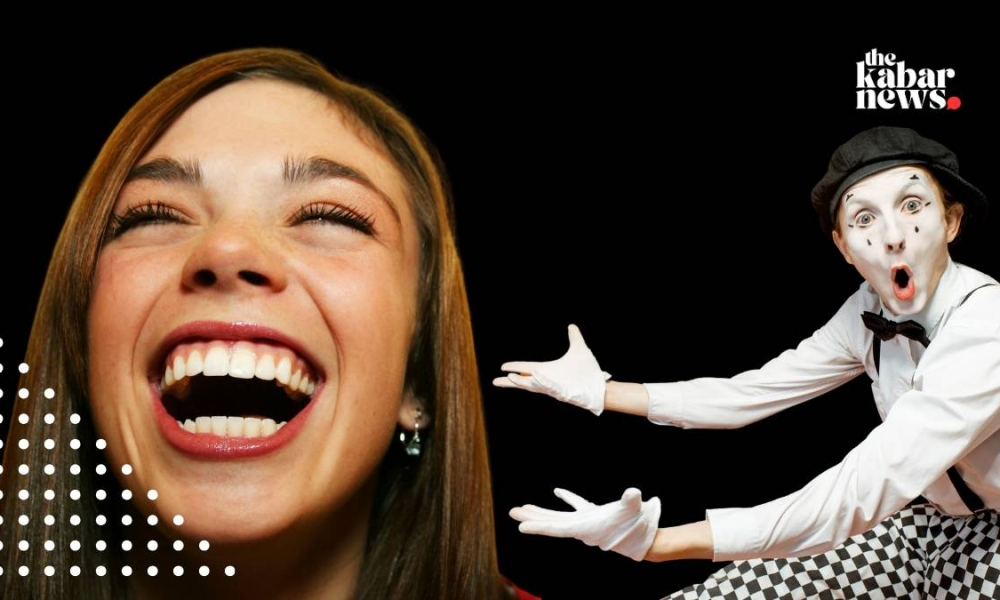
Pontianak, Thekabaranews.com—In Indonesia, humor is no longer considered just light entertainment. Stand-up comedy has changed from just telling jokes to being a place to talk about politics, the law, and how power works. People often discover honesty on the comedy stage that is becoming less and less common in official settings.
Mens Rea by Pandji Pragiwaksono is a key change in this area. Mens Rea does not want to be just entertainment. It took place at the Indonesia Arena in Jakarta in August 2025 and drew about 10,000 viewers. Netflix later released the show. It says that humor can be an obvious and direct critique without losing its attractiveness as a product.
Table Of Content
Laughing in the middle of political tension
The latter part of the Mens Rea tour did not go as planned. In August 2025, there were big protests and turmoil in Jakarta and several other places. Pandji admitted that the rising political atmosphere made people worry about the event’s safety. But the stage stayed, people came, and laughing broke out, illustrating that humor often finds its way into public spaces when they seem too little.
Mens Rea is not a one-time thing. Around it, there have been a lot of TV sketches, satirical podcasts, and movies starring comedians. Many of these works are quite popular with the audience, from light comedies to sharp social criticism. Humor has gone from being a second-rate kind of amusement to a way to more honestly read the spirit of the times.
The question is simple but scary: does the rise of the humor business mean that democracy is working? Or does comedy thrive because it is getting harder and harder to acknowledge the truth about power without laughing at it?
The rise in comedy shows that people are tired of the constant legal and political conflict. When it is dangerous to criticize in formal settings, comedy provides a way to navigate around it—it is more flexible, safer, and frequently more honest. Laughter transforms from being enjoyable to becoming a way to keep people sane.
The issue is that not every power is prepared to be ridiculed. The new Criminal Code (KUHP) and its Criminal Law Procedures Code (KUHAP) make it harder for people to use satire because the laws are flexible and can be read in numerous ways. Pandji admitted that the rising political atmosphere worried people about the event’s safety. When the law lets people read too much into things, laughter stops being safe.
Humor serves as a means to maintain distance
Emha Ainun Nadjib has said many times that comedy helps people stay critical of those in power. For Cak Nun, laughter does not offer a cheap way to revolt; it ensures that common sense does not completely disappear within the system. Humor makes it safe to say what you mean without yelling.
This is where comedians fit in. They are not just performers; they also watch how strange things happen in society. Contradictions, inconsistencies, and the irrationalities of power create stories that elicit silent laughter and agreement. When Pandji talks about legal words and public morality in Mens Rea, he is being critical, yet he does it with a smile.
In a mature democracy, satire is like a vitamin because it keeps public discourse healthy. A stable state tolerates ridicule, whereas an unstable power tends to become frustrated easily.
Goenawan Mohamad once said that criticism, whether it comes from literature, humor, or irony, is an indication that people are still thinking. When criticism is suppressed, not only does freedom of speech die, but so does the public’s energy. Democracy without critique yields mere routines, lacking significance.
The gray zone in Indonesia
Today, Indonesia is in that murky area. On the one hand, it seems like there is room for people to express themselves, and the creative industry is still growing. There are still imprecise legal rules and variable interpretations. When power is unequal, authorities can use complaint-based crimes and rubber clauses to punish people: they label criticism as an insult, treat satire as antagonism, and accuse comedy of crossing invisible limits.
Ironically, the exercise of power itself is often funnier than what comedians say. For example, policies that suddenly shift direction, officials’ remarks that contradict each other, and rules that are flexible upward but not downward. The entire scenario seems like a humorous skit, but the individuals involved are oblivious to its intended amusement.
Mens Rea’s distribution on Netflix sends another message. It seems that global platforms are more open to satire with little restriction, but in the US, freedom of speech still has to confront unwritten rules. This dilemma is not about other platforms being better; it is about how ready we are to take criticism.
The state needs to say again that criticism, even when it is funny, is not a threat. Law enforcement needs to stay away from the hurtful pride of authority. The public must also mature and develop the ability to distinguish between structural critique and personal attacks, as well as between satire and hate.
The funny business might thrive with democracy, but it will not happen on its own. Humor will only exist in other places if people grow up together. In public places, on the other hand, it will be tense, inflexible, and humorless.
How a country treats its comedians is frequently a sign of how it treats its people. Are critical voices encouraged? Is laughter a feature of public conversation? Or do people consider it a threat and view it with suspicion?
If power is funnier than the comedians’ jokes, the problem is a democracy that can’t laugh at itself. When reality is so absurd that we can’t mourn it anymore, laughing at it together is the only thing that keeps us sane.
Writer: M. Hermayani Putera / Pontianak, January 5, 2026.



No Comment! Be the first one.