

When Muhammad Ali met with Saddam Hussein in Baghdad
Thekabarnews.com—As the Gulf crisis unfolded in late 1990, the world held its breath. Diplomacy moved through official channels, including embassies, warnings, news conferences, and closed-door...

Thekabarnews.com—As the Gulf crisis unfolded in late 1990, the world held its breath. Diplomacy moved through official channels, including embassies, warnings, news conferences, and closed-door talks. Governments were careful when they talked, thinking about the risks and outcomes.
At the same time, hundreds of foreigners, including Americans, were stuck in Iraq and could not leave after the invasion of Kuwait. They placed many in perilous situations and referred to them as “human shields,” using their lives as leverage in a global conflict.
Then, in a quiet and almost unbelievable way, one man chose to go regardless. That person was Muhammad Ali.
Ali was no longer the unbeatable heavyweight champion who floated like a butterfly by 1990. Parkinson’s illness had started to make his hands shake and his speech slow down. He did not have a job with the government, a diplomatic mission, or any prospect of success.
Officials said that going to Baghdad on your own would be dangerous, maybe pointless, and politically tricky. Ali heard and got on a plane anyhow.
He believed in something simple
Ali’s trip was not based on strategy documents or the needs of the state. It stemmed from gut feelings and morals. He thought that maybe a face he knew, one that was known even outside of politics, could open a door that formal diplomacy couldn’t. Ali did something while governments talked.
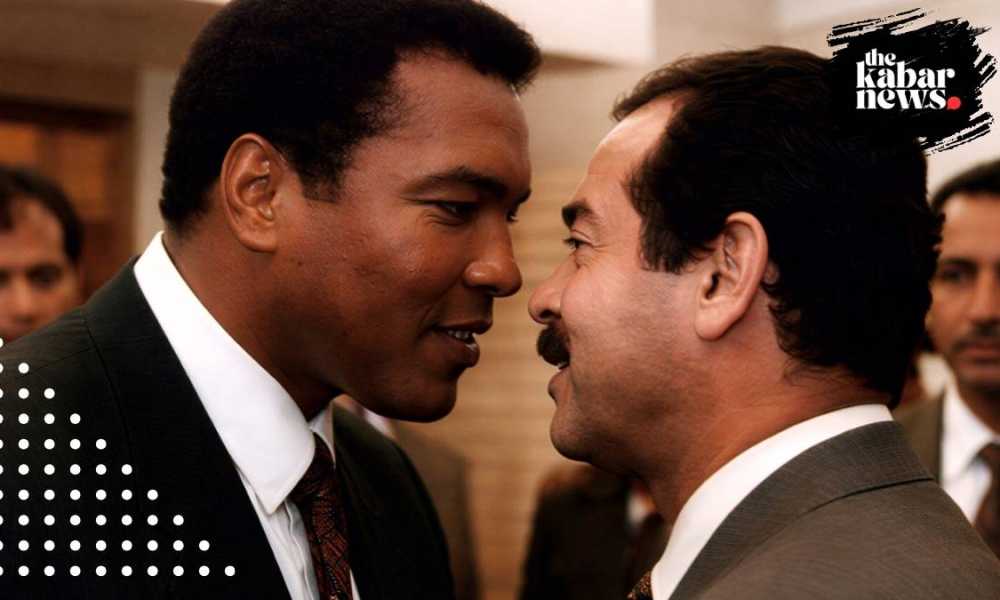
Ali met with Saddam Hussein face-to-face when he got to Baghdad. It seemed strange to be at a meeting with a former boxing champion who looked sick and was sitting across from one of the most feared leaders in the world. Cameras captured the moment, yet its significance extended far beyond what was visible.
What happened next shocked many people who had not believed. On December 2, 1990, Ali and the 15 Americans he had been holding captive in Iraq fled. They were no longer captives. They were on their way home as passengers.
Critics questioned Ali’s choice at the time. Some others said that the visit may make a tyrant seem good or get in the way of official talks. Some people said it was dangerous. These concerns held some merit. There were genuine political risks, and the result was not at all certain.
But the 15 people who got on the plane with Ali weren’t concerned about the dispute. The 15 people who boarded the plane with Ali were no longer symbols or commodities to be traded. They were sons, daughters, husbands, and parents going back to their families because one guy chose to go where others did not want to go.
This story is not about resolving world problems or making Ali appear to be a perfect hero. He did not put an end to the crisis. He did not set everyone free. What he did was lesser, but it might have been more powerful. He showed up and spoke clearly. He took a personal risk without knowing whether it would pay off.
Ali knew something that institutions frequently forget: when people are scared, their personal reputation may mean a lot. Even if systems and protocols run the world, people can still change things. Earned trust over a lifetime often carries more power than official titles.
People would still be arguing about Ali’s boxing records and analyzing his legacy years later. But in Baghdad, at that calm and unexpected moment of diplomacy, he reminded the world that being brave does not always mean being forceful. It can look weak, slow, and very human at times.
And occasionally, history changes when one person steps into a place others fear to enter and asks. Muhammad Ali has proved it.



No Comment! Be the first one.