

Trump says decision to end Iran war will be coordinated with Netanyahu
Thekabarnews.com—President Donald Trump stated he will work with Israeli Prime Minister Benjamin Netanyahu to decide when to stop the current war with Iran. Trump said these words in a short phone...

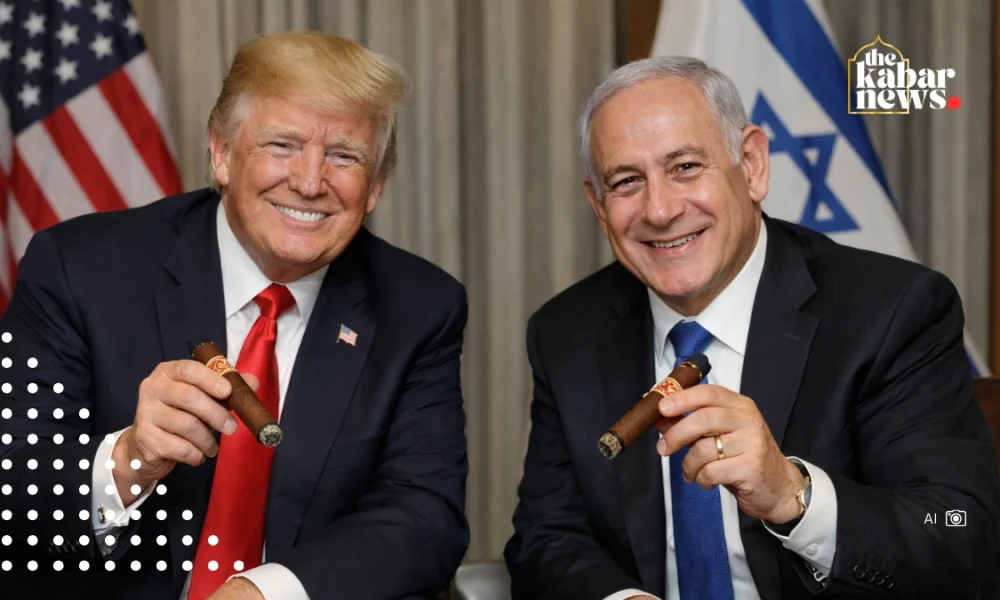
Thekabarnews.com—President Donald Trump stated he will work with Israeli Prime Minister Benjamin Netanyahu to decide when to stop the current war with Iran.
Trump said these words in a short phone conversation with The Times of Israel on Sunday. This shows that the two leaders are still talking to each other. Moreover, the situation goes on.
“I suppose it is a little bit of both. We have been having a conversation. When asked if Netanyahu would influence the final decision, Trump responded in the affirmative. I will make a judgment at the correct moment, but everything will be taken into account,” Trump stated.
Trump did not say when the military campaign will conclude. Earlier, the White House said the war might take four to six weeks. However, officials have said that the schedule could alter based on what happens in the area, including factors such as enemy resistance, weather conditions, and the success of military operations.
This indicates that ongoing assessments of military engagement and local conditions will influence the timeline for the campaign’s conclusion.
Trump has said many times that he will not make a specific schedule. He argues that the situation on the ground will decide what happens next.
When asked if Israel would keep fighting after the US stops bombing, Trump said he does not think it would be necessary.
“I do not think that is going to be essential,” he remarked.
On February 28, the United States and Israel launched a large-scale military operation against Iran. This further escalated the conflict.
The attacks killed more than 1,200 people, including Supreme Leader Ali Khamenei, senior Iranian military officials, and civilians.
Iran has launched a number of missile and drone attacks on US military posts, diplomatic buildings, and troops in the region. It has also launched attacks on many cities in Israel. The retaliatory attacks have killed at least six US soldiers.
Experts in the military assert that Iran has escalated its response. They say Iran has dispatched drones and missiles suspected of carrying cluster bombs.
Iran’s political leadership has also changed a lot since the conflict began. There have been significant shifts in key positions and policies. These reflect a more aggressive stance in response to external pressures, such as increased sanctions and military threats from other nations. On Sunday, it was announced that Mojtaba Khamenei would take over as the new Supreme Leader of Iran following the death of his father.
The Islamic Revolutionary Guard Corps promptly said they were in favor of the appointment.
Trump talked about Mojtaba Khamenei’s chances of becoming a leader in a different interview with ABC News.
“He is not going to last long without our approval,” Trump stated. This implies that the incoming leader must exercise extreme caution when dealing with the US. This step is particularly crucial in managing the complex relationship between Iran and the US. It is important for ensuring regional stability.
Trump also said that the US wants to avoid future wars with Iran. He stressed how important long-term stability is in the area. This is particularly true in the context of ongoing tensions and the need for diplomatic solutions to prevent escalation, as these solutions are essential for fostering peace and reducing the risk of military confrontations in the region.
As the conflict goes on, people from other countries are still paying close attention to the diplomatic talks between Washington, Jerusalem, and Tehran. They are also watching how these talks affect security in the Middle East. In addition, they are watching stability in the world as a whole, particularly how the outcomes of these diplomatic talks may influence global geopolitical dynamics and economic relations.




No Comment! Be the first one.