

This is The Story of a Woman Who Got Revenge on the People Who Killed Her Husband
Thekabarnews.com – Olga, the widow of Igor, Grand Prince of Kyiv, invited the people who killed her husband to a royal wedding. But instead of honoring them, she put them in a ditch and buried...

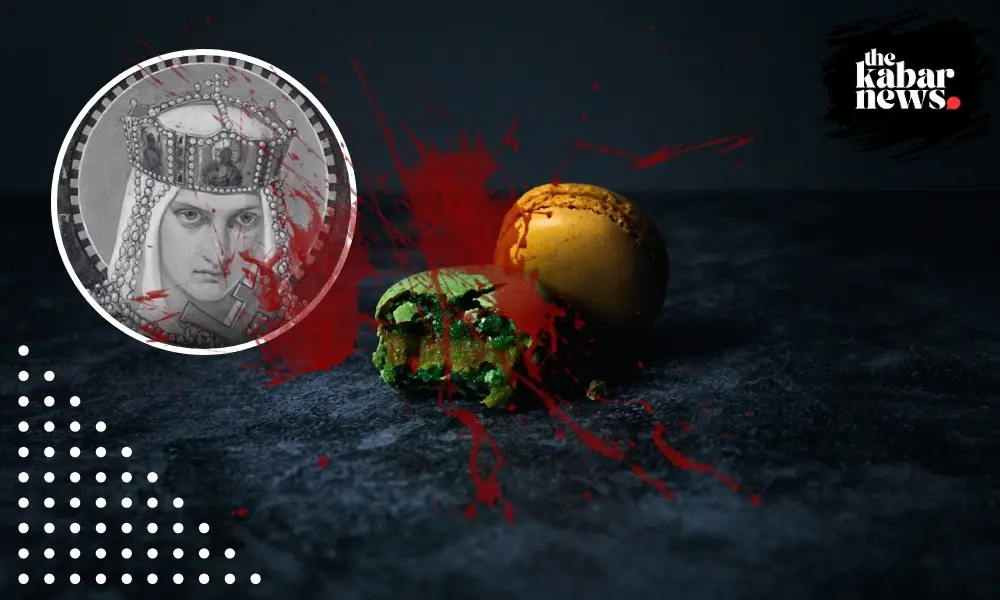
Thekabarnews.com – Olga, the widow of Igor, Grand Prince of Kyiv, invited the people who killed her husband to a royal wedding. But instead of honoring them, she put them in a ditch and buried them alive.
The Drevlians, a Slavic tribe unhappy with Igor’s high tribute demands, assassinated him in 945 AD. The Drevlians bent two birch trees down, tied Igor between them, and then let the trees go, which ripped him apart, according to records.
As a foreigner, Olga had a challenging time with politics as she ruled as regent for their newborn son, Svyatoslav. People around her were probably her enemies who thought she would be weak, simple to deal with, or inclined to marry again for political advantage.
The Drevlians were very wrong about Olga of Kyiv. What happened next became famous—literally. Historians think that the Primary Chronicle, which was written more than 150 years after these events, tells four more detailed stories of revenge that mix real events with folklore. These legends made Olga known as one of the most brutal monarchs in medieval history, no matter how true they were.
The Drevlian prince Mal took advantage of the chance. He could marry Olga, join their lands, and make his revolt legal now that Igor was dead. He sent twenty of his best nobles to Kyiv by boat to ask for marriage.
Olga kindly accepted their message and told the Drevlians to come back the next day on their boats. She promised them that her people would honor them by bringing them to her court.
When Olga’s people got there, they picked up the boats, which still had the ambassadors on board, and carried them through the streets of Kyiv. The Drevlians thought this was a victory march.
But as the procession got to Olga’s courtyard, a deep hole had been dug overnight.
The inhabitants of Kyiv flipped the boats over, put the Drevlians in the hole, and buried them alive.
People say that Olga asked, “Are you finding the honor to your taste?” while the dirt was being shoveled over them.
Olga wrote Prince Mal another note saying she wanted to marry him. But she insisted that he send his best warriors to protect her on her way to Drevlian territory. Mal complied with her request, unaware that it could be dangerous.
Olga welcomed the second group of people by giving them a bathhouse so they could relax after their long trip. Once inside, her troops quickly locked the doors and lit the bathhouse on fire, killing all the travelers in a terrible way.
Olga would not give up, though. She went to Drevlian land herself, supposedly to attend a funeral feast at her husband’s tomb, which was a normal thing to do. The Drevlians, who had no idea what was about to happen, threw a big party in her honor.
Olga’s attendants skillfully intoxicated the Drevlians with mead and wine, ensuring they were thoroughly inebriated. When Olga gave the order, her forces killed about 5,000 Drevlians where they were sitting, leaving them dead.
Finally, Olga attacked Iskorosten, the Drevlians’ capital. After a year-long siege that showed no signs of ending, she sent a message asking for three sparrows and three pigeons from each household as tribute. This was a very tiny request.
Olga’s warriors smartly fastened chunks of sulfur wrapped in fabric to each bird’s legs, set them on fire, and let them go into the air. The birds flew back to their nests in the thatched rooftops of Iskorosten because they had to.
The city was burned to the ground, leaving behind a barren landscape.
Now, let us look at how true these occurrences are in history. While they may be fun and interesting, they likely don’t match what really happened. These stories follow the typical revenge story pattern, with ingenious tricks, increasing violence, and poetic justice. The main goal of them is to show Olga as clever, vicious, and unstoppable.
But the fundamental point is still true: Olga’s military and political skills contributed to the Drevlians’ catastrophic defeat. She took over their land and smoothly added it to Kievan Rus. She became known for her brutal competence, which made other tribes afraid and hesitant to contemplate rebelling.
Olga was a great ruler who ruled as regent from 945 to 963 AD, a period of almost 18 years. Her dominion lasted longer than that of many medieval kings who reigned on their own. She changed the tribute system that had killed her husband by setting fixed rates and making rules for how to run it. By doing these things, she improved Kyiv’s position, gained more influence, and showed that a woman could run things well in a chaotic and male-dominated medieval society.
But something unexpected happened about 955–957 AD. Olga set out for Constantinople and became a Christian, getting baptized by the Byzantine Emperor personally. This change was huge for a king whose legacy was based on revenge and deadly war.
It is important to recognize the limits of Olga’s influence. She tried hard, but she could not get her people to change their minds while she was alive. Svyatoslav, her son, stayed a pagan and refused to accept Christianity. When she tried to convince him to change his mind, he reportedly said he did not want to since his soldiers would make fun of him.
Olga’s Christian influence did not have any effect until a generation later, when her grandson Vladimir successfully converted Kievan Rus’ to Christianity in 988 AD, about 20 years after she died. Even though she helped Rus become Christian, her early success is exaggerated.
Olga died in 969 AD, and the Orthodox Church later made her a saint and gave her the title of Saint Olga, Equal-to-the-Apostles. The church lauded her Christian legacy but omitted the brutal parts of her work, including burying people alive and burning down cities.
Olga’s story makes you contemplate important things. People see her as a saint, although her famous retaliation was really violent. People praise her as a strong female leader, yet her power stems from acts of brutality that today would be considered terrorism. People also say that she brought Christianity to Rus’, although she could not change her son.
There are a lot of these kinds of inconsistencies throughout medieval history. We may recognize Olga’s political skill, her success as a ruler, and her importance in history while still acknowledging that the retribution stories, whether entirely true or exaggerated, show terrible acts of mass violence.
In a world when widows were expected to remarry or go to convents, Olga took power and kept it for almost twenty years. In a harsh political world ruled by men, she became famous for being ruthless, smart, and effective, even better than the strongest of her male rivals.
The Drevlians made a legend by killing her husband in an effort to get rid of a problem.
Conclusion
Olga of Kyiv orchestrated a series of heinous crimes as retaliation for the Drevlians’ murder of her husband. Some of these were burying Drevlian ambassadors alive, setting fire to their envoys in a bathhouse, and killing thousands during a feast.
People argue about how true these stories are, but there is little doubt that Olga was a brilliant politician and military leader. She extended Kievan Rus’ and changed the way it collected taxes.







No Comment! Be the first one.