

The story of how a Harvard scientist’s study of the human body led Dr. Henry Klassen to embrace Islam
Thekabarnews.com – Dr. Henry Klassen spent a lot of time working on science. He was a top stem cell expert and a professor at Harvard University. Throughout his career, he worked to figure out...

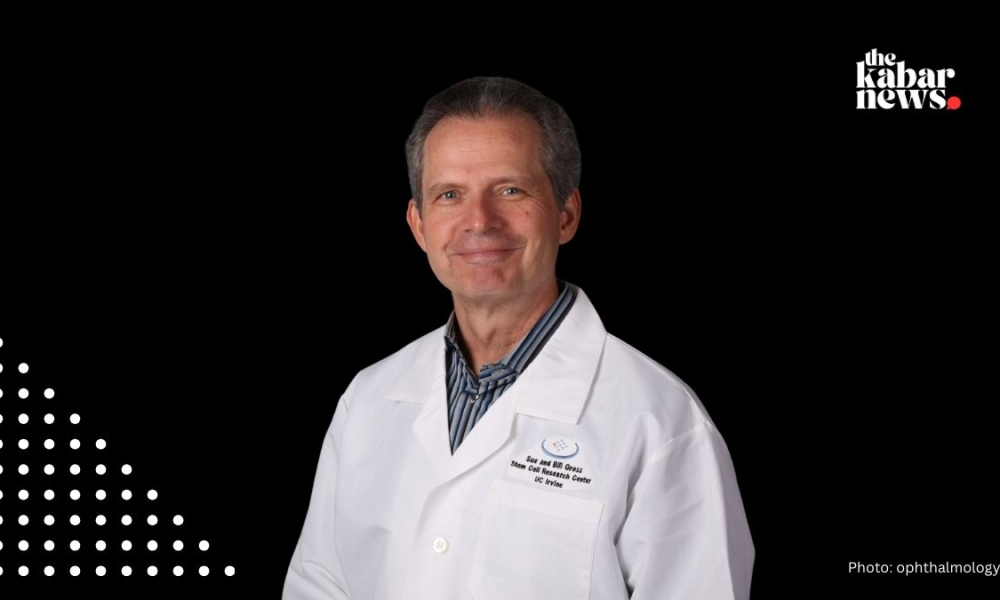
Thekabarnews.com – Dr. Henry Klassen spent a lot of time working on science. He was a top stem cell expert and a professor at Harvard University. Throughout his career, he worked to figure out how the human body works, including how it breathes, communicates, heals, and grows at the cellular level.
All of his work was about being exact. He learned in the lab that even tiny cell changes can be fatal.
Even though it is weak, the human body works in a wonderfully amazing way. No machine has ever been able to copy the flawless timing and accuracy of every system. For example, the list includes the neurological, respiratory, and circulatory systems.
This flawlessness over time led to a query that science could not solve.
“Who made this?” He wondered, “Who balanced it so perfectly?”
Dr. Klassen was curious, so he started reading religious books to see whether any of them described the miracle of human creation in the same way he saw it under a microscope. He looked through a lot of different philosophical and theological texts.
Then, he discovered a verse from the Qur’an that profoundly resonated with him:
ٱلَّذِي خَلَقَ فَسَوَّىٰ وَٱلَّذِي قَدَّرَ فَهَدَىٰ
“Who created and proportioned. And who destined and [then] guided.” (Surah Al-Ala:2–3)
He thought these statements represented what he had seen in his research for years: perfect design, calibrated balance, and guided function. Cells knew when to split. Organs know how to function together. Life followed a plan that was much more than just luck.
What truly struck him was that the Qur’an did not simply talk about creation; it also talked about proportion, destiny, and direction. These were all ideas he had learned about in his work.
The revelation was not only emotional for Dr. Klassen; it was also intellectual. He thought that the way the body worked together showed that it was made on purpose, not merely by chance. His scientific respect slowly developed into a spiritual belief.
He later explained his decision with a strong statement: “I did not kneel down because I was weak; I did it because I understood.”
Dr. Klassen grew up in a Christian home, but he later became a Muslim because he thought its beliefs fit the order and balance he witnessed in nature.
His path did not lead him away from science; instead, it led him to finish it by finding significance in things other than just numbers and formulae.
His story challenges the common belief that science and faith must conflict. It says that being careful about how you see the world may lead to spiritual thoughts.
He saw every breath, nerve transmission, and cell division as evidence of God’s wisdom. The more he learned about life, the more he wanted to believe.
People often tell the story of Dr. Henry Klassen as a lesson in how learning can make us humble and how science can help us believe instead of shutting us down.
It reminds us that faith does not always come from tradition. It can also come from staring through microscopes, working in labs, and spending long nights doing research.
His experience connects reason and religion in a world that often keeps them apart. It shows that looking for the truth, whether through science or scripture, can lead to the same place.
And for many who hear his narrative, it sends a clear message: knowing how complicated life is might not make religion weaker, but stronger.







No Comment! Be the first one.