

The failure of Chinese radar occurred during U.S. military operations in Venezuela during the Collapse
Thekabarnews.com – The swift and organized attack by U.S. troops in Venezuela determined the outcome far faster than most experts anticipated. Air bases, military camps, and other crucial...

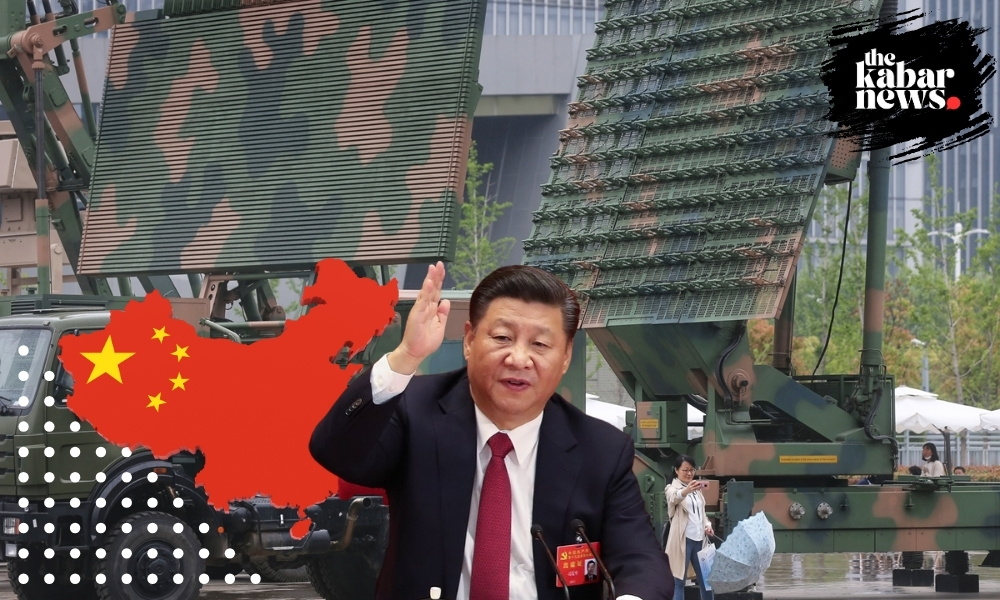
Thekabarnews.com – The swift and organized attack by U.S. troops in Venezuela determined the outcome far faster than most experts anticipated. Air bases, military camps, and other crucial locations became useless within hours. But the rapidity of the operation hid a deeper and more important truth. Venezuela’s Chinese-built air defense network did not perform when faced with contemporary, multidomain warfare.
This incident highlighted the failure of Chinese radar in Venezuela when scrutinized under actual combat conditions. The event underlined how the complicated interaction between forces led to the failure of the radar supplied by China. The failure of Chinese radar occurred in Venezuela as a key highlight during the conflict.
China Electronics Technology Group Corporation (CETC) built the radar system that was at the center of Venezuela’s defenses. For years, Beijing had pushed these systems. These systems included the JYL-1 three-dimensional surveillance radar and the JY-27 metric-wave radar. They were promoted as advanced sensors that could find stealthy planes and provide the backbone of a strong integrated air defense system.
However, the reality of the operation presented a different picture.
Military analysts, who looked at operational assessments, said that the U.S. forces used heavy electronic warfare to weaken Venezuela’s radar coverage during the first part of the campaign. Key sensors were either blocked or turned off. Such actions immediately eliminated the air defense network’s ability to provide early warning. Interestingly, China’s radar failure coincided with operational stress in Venezuela. The breakdown happened at the same time as extensive power failures in several regions of the country. These events made command-and-control services even more useless.
One defense expert who knew about the operation said, “The radar network never came back. Once the sensors stopped working, the whole system fell apart.” The failure of the Chinese-built radar systems was central to the collapse.
Venezuela’s long-range air defense systems, especially the Russian-made S-300V and Buk-M2 platforms, did not work very well without working radar inputs. These systems were made to work in a layered, networked environment. However, they depended on real-time sensor data and centralized command lines that were no longer there.
The U.S. strikes made the collapse worse. Two or more Buk-M2 systems were directly hit and destroyed, taking away the last of Venezuela’s ability to defend itself from medium-range air attacks. The loss of data lines and airspace control cut off individual air defense groups. This rendered them unable to coordinate or respond effectively. Again highlighting the radar failure supplied by China during moments of intense battlefield pressure.
In just a few minutes, the U.S. forces had complete control of the air
That control of the skies made all the difference. Once they took down enemy air defenses and neutralized command nodes, U.S. special operations aviation forces moved in. The 160th Special Operations Aviation Regiment helicopters, often known as the Night Stalkers, flew freely over disputed regions. These included MH-60M Black Hawks, MH-47G Chinooks, and MV-22 Osprey tiltrotors.
Later, official U.S. comments acknowledged that only one helicopter encountered ground fire, and it successfully returned to base. Analysts said that the 9K338 air defense system was only used a little bit by Venezuelan forces. However, they also said that point defenses like this were not enough without a deeper understanding of the situation as a whole.
Venezuelan armored units, fire support equipment, and maneuver elements remained mostly stationary on the ground. Analysts attribute this paralysis to a lack of targeting information and cooperation in an environment rife with electronic warfare.
A military observer in the area observed, “You can have tanks, missiles, and guns, but without sensor integration and real-time command, they become blind and useless.”
Experts say the failure did not stem from a single malfunctioning radar or missile system but exposed deeper flaws in a command-and-control structure that relies heavily on centralized nodes and remains vulnerable to electronic disruption. The complete collapse of the Chinese radar system in Venezuela was a significant factor in this debacle.
Critics say that Chinese-designed systems have often focused on hardware performance while ignoring the resilience needed to work during long-term electronic attacks. On the other hand, the U.S. forces showed that they could combine intelligence, cyber operations, electronic warfare, air power, and special operations into a single, well-organized operational cycle.
Defense specialists all across the world, especially in nations that depend on Chinese air defense systems, have been paying careful attention to the Venezuela operation since then. They claim the lesson is clear.
Modern warfare is not just about specific platforms anymore. It is a contest of systems—of networks that need to be able to handle disruptions, change on the fly, and keep working even when they are under attack. That system did not work in Venezuela. And after that, everything else happened.






No Comment! Be the first one.