

Rejected by investors, this 19-year-old has built the global AI company worth $14 billion
Thekabarnews.com—Alexandr Wang unknowingly unearthed the missing element of the global AI revolution by looking into an empty refrigerator. Wang did not mean to mess up artificial intelligence when...

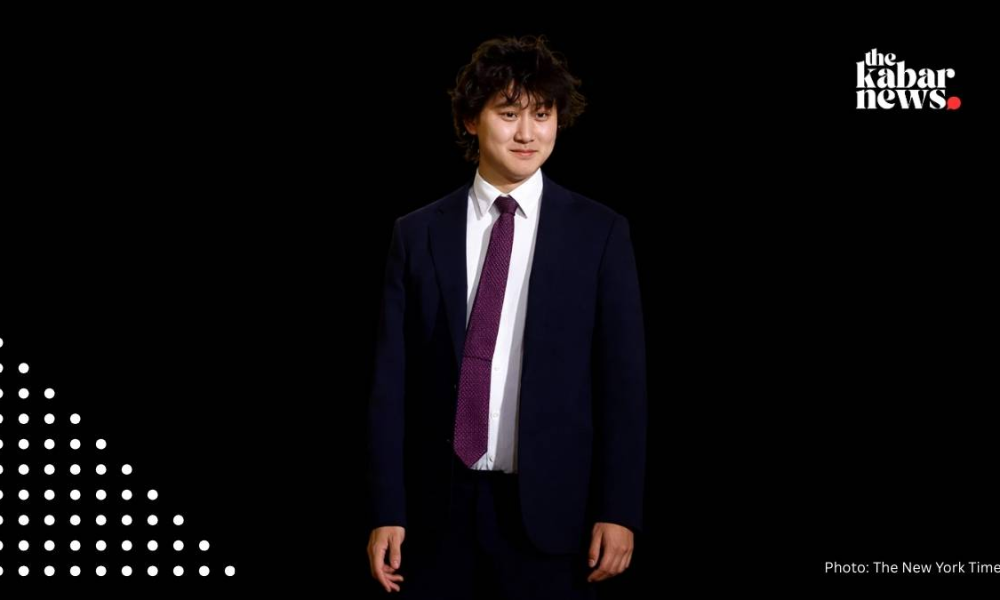
Thekabarnews.com—Alexandr Wang unknowingly unearthed the missing element of the global AI revolution by looking into an empty refrigerator.
Wang did not mean to mess up artificial intelligence when he opened the fridge in his MIT dorm room. He was just upset. Again, the milk was gone.
The answer was clear to the 19-year-old student. An AI-powered camera could keep an eye on things in the fridge and let people know when they were running low on supplies. It was a beneficial idea that came out of a common problem.
But when Wang tried to build it, he ran across a much bigger problem. The AI system was not working well. There was not enough information to teach it.
Table Of Content
That moment changed everything
Wang found something that many people in the tech business had missed as he explored further. It was not algorithms or processing power that were the biggest problems with AI. The biggest problem was data, specifically high-quality data that included labels.
Back then, the tech sector was working hard to make systems that were faster and smarter. Few people were paying attention to the infrastructure below. Wang recognized an opportunity while others perceived only monotony.
Wang came to the conclusion that even the best AI models will fail without dependable data pipelines.
Leaving MIT to start Scale AI
Wang made a choice in 2016 that would shape his career. He was just 19 when he left MIT and informed his parents, who were both Chinese immigrant physicists working at Los Alamos National Laboratory, that he was going to spend the summer trying out a business idea.
There were only three people working for the company at first. It even felt too early to have a name. It was not “scaled” yet. Investors who entered the market early were uncertain about its potential.
Wang did not agree with the investors who said the market was too small and data tagging would never become a big business. They didn’t think it could support a corporation worth a billion dollars.
They had to start from the ground up
Wang and his tiny team did not have any status, money, or a big network, so they had to rely on speed and persistence. In just three days, they bought a domain, made a landing page, and launched on Product Hunt.
After that, they went to one of the biggest computer vision conferences in the business. With computers and live demos in hand, they walked from booth to booth, trying to sell their answer to anyone who would listen.
The method worked. Scale AI got its first customers and proved that its business strategy worked. Then, the industry transformed soon after.
When AI became popular
As more and more firms started using AI, they all realized they had a common problem: they all needed a solid data infrastructure. Initially considered a niche service, Scale AI’s offerings became essential.
The company’s valuation reached $7.3 billion in 2021. In 2022, when Wang was 25 years old, he became the youngest self-made billionaire in the world. Because the market was unstable, Scale AI’s worth dropped considerably in 2023. Wang had to fire 20% of his employees and lost his place on the list of billionaires.
Observers believed the momentum had vanished. Instead, Wang changed his mind. He focused on his capabilities, moved into new markets, and put more money into data infrastructure.
Scale AI is worth more than $14 billion right now. Its technique works with almost all of the world’s biggest language models, including those made by Microsoft, OpenAI, and Meta. The US Department of Defense even uses its systems.
Wang’s anecdote highlights an aspect frequently overlooked in AI discussions. Thousands of people are behind every powerful AI system, tagging data, organizing it, and making it useful.
Wang constructed the infrastructure, while others created the visible elements. Data labeling and annotation may not sound exciting, but they are vital. AI does not work without them.
A lesson that goes beyond tech
Alexandr Wang watched his parents solve complex challenges at one of the world’s most advanced research settings when he was a child. He learned early on that doing the hardest, least appreciated job frequently has the most effect.
Wang did not follow the most popular AI idea, but he resolved the problem that no one wanted to deal with.
Wang’s journey, from a completely empty fridge to powering the global AI ecosystem, reveals that the best chances are frequently in locations that people do not consider.
People who want recognition do not always build the future. Instead, it is the people who are willing to do the hard work that keeps things together.






No Comment! Be the first one.