

President Prabowo revokes 28 corporate licenses in Sumatra, but will the people’s land finally return?
Jakarta, Thekabarnews.com—The Agrarian Reform Consortium (KPA) welcomed President Prabowo Subianto’s decision to revoke the licenses of multiple companies found responsible for forest destruction in...

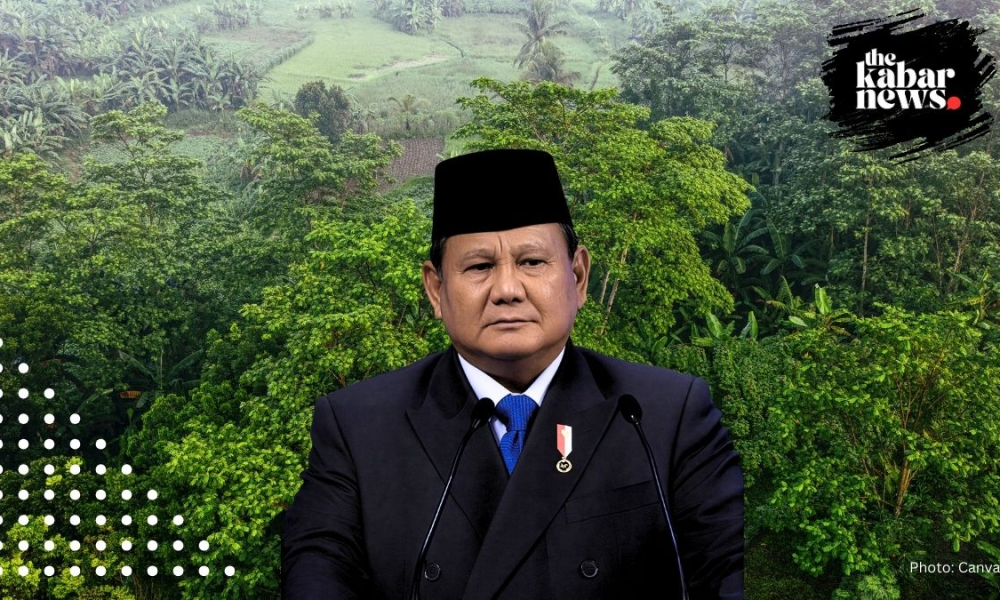
Jakarta, Thekabarnews.com—The Agrarian Reform Consortium (KPA) welcomed President Prabowo Subianto’s decision to revoke the licenses of multiple companies found responsible for forest destruction in Sumatra that triggered ecological disasters. However, the group asserted the need for concrete steps to reinstate people’s land and customary rights following the migration.
State Secretary Prasetyo Hadi said, Tuesday, January 20, that the government had taken away the permits of 28 businesses that were doing business in Aceh, North Sumatra, and West Sumatra because they had broken the law.
Table Of Content
The government has taken away licenses for mining, forestry, and plantations
The government said that the canceled permits include plantation business permits (IUP), mining business license (IUP), and forest possession business license (PBPH) in all three provinces.
PT Toba Pulp Lestari is one of the most well-known cases. It has concessions spanning 167,912 hectares. KPA said that for about 40 years, the business had taken land that belonged to the Batak people in North Sumatra and harmed their forests.
Delima Silalahi, a member of the KPA National Council and a longtime advocate for the Indigenous People of Tano Batak, said the government’s decision deeply moved her.
Delima continued, “This is a victory for all the people of Tano Batak.” It honors women land defenders, Indigenous rights activists, and agrarian defenders who have faced threats and violence while fighting for their rights. We must continue to safeguard our victory to ensure it truly benefits the people.
The decision came after a long fight
Dewi Kartika, the KPA Secretary General, agreed, saying that the revocation was the consequence of decades of protest from Indigenous communities and civil society groups.
“The Indigenous People of Tano Batak, agricultural movements, and civil society groups at both the regional and national levels have made huge sacrifices to keep asking for the closure of TPL and other enterprises that take land and harm the environment,” Dewi added.
Dewi said that the government should not just take away permits or hand over authority to state-owned companies.
“Law enforcement must go hand in hand with restoring people’s rights to land, customary forests, communities, and farmland that corporations seized or the state unilaterally claimed as state forest areas,” Dewi stated.
KPA emphasized that it will closely monitor the process to ensure that the revocation results in the genuine restoration of Indigenous land rights in Tano Batak. In addition, KPA will observe the redistribution of land to former company workers as part of agrarian reform. The group will also monitor the ecological recovery throughout Sumatra.
Numerous agrarian conflicts have occurred
KPA found that, besides PT Toba Pulp Lestari, at least 17 of the 28 companies whose licenses were revoked have long been involved in agrarian conflicts. These problems come from companies claiming and taking communal land in Aceh, North Sumatra, and West Sumatra.
PT Aceh Nusa Indrapuri, PT Rimba Timur Sentosa, PT Rimba Wawasan Permai, PT Minas Pagai Lumber, PT Biomass Andalan Energi, PT Bukit Raya Mudisa, PT Salaki Summa Sejahtera, PT Barumun Raya Padang Langkat, PT Gunung Raya Utama Timber, PT Hutam Barumun Perkasa, PT Multi Sibolga Timber, PT Putra Lika Perkasa, PT Sumatera Riang Lestari, PT Sumatera Sylva Lestari, PT Teluk Nauli, PT Agincourt Resources, and PT North Sumatera Hydro Energy are some of the companies.
KPA said the data shows that large-scale plantation, mining, and forestry companies—both state-owned and private—directly cause ecological disasters in Sumatra through land monopolies. These monopolies result from companies forcing local inhabitants off their land.
Dewi added, “This phenomenon is not just in Sumatra.” Big companies run extractive industries all over Indonesia, taking people’s land, destroying forests, and stealing their livelihoods.
The organization has requested a national evaluation
KPA advised the government to take this chance to launch a full review of business concessions not just in Sumatra but all over Indonesia. The organization called for an immediate end to land monopolies created by the seizure of farmers’ land, Indigenous territories, fishing grounds, and the living spaces of women and children.
KPA suggested empowering the Special Committee for Agrarian Conflict Resolution (Pansus PKA) to speed up the resolution of agrarian conflicts. Additionally, they urged the government to convene all relevant stakeholders to monitor and evaluate agrarian policies across sectors, including land, plantations, forestry, mining, agriculture, and food security.
KPA also asked President Prabowo to quickly set up a National Agricultural Reform Implementation Agency. This would be a separate and powerful group in charge of carrying out full agricultural reform across the country.







No Comment! Be the first one.