

PDIP says free meals program (MBG) funded by education budget
Jakarta, Thekabarnews.com— Several government officials have said that the free meals program (MBG) gets its money by being more efficient and saving money. The Indonesian Democratic Party of...

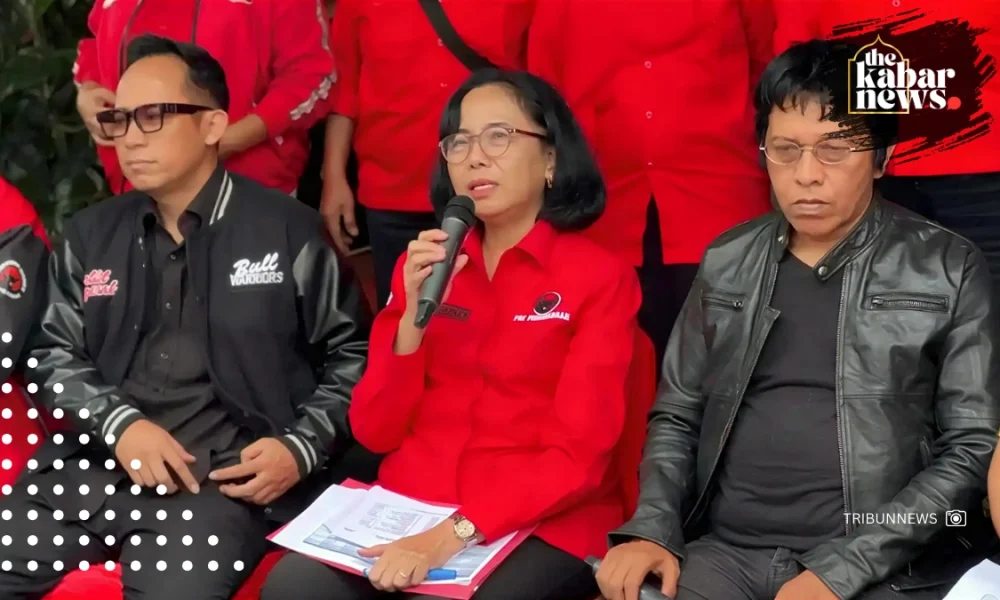
Jakarta, Thekabarnews.com— Several government officials have said that the free meals program (MBG) gets its money by being more efficient and saving money. The Indonesian Democratic Party of Struggle (PDIP), on the other hand, has made it clear in public where the program gets its funds from. The national education budget funds the program, according to the PDIP.
PDIP officials said they made the clarification because party members and the public had become increasingly confused about the source of the MBG budget. The media got the answer on February 25, at a press conference at the party’s training center in Lenteng Agung, Jakarta. In addition, TribunNews quoted the statement.
A member of the PDIP Central Board and the Deputy Chair of Commission X of the House of Representatives, Esti Wijayati, said that the party needed to be clear about the issue. The media and social media were disseminating contradictory statements. Moreover, many were questioning these statements.
Esti made it clear in his speech that Indonesia’s constitution says the country must spend at least 20 percent of its national and regional budgets on education. She thinks that the education budget for 2026 will be about Rp769 trillion. Most of that money, according to her, should go to helping students.
She says that official state papers seem to show that some of this money goes to the MBG program. Moreover, the annex of the State Budget Presidential Regulation states that the education budget should set aside about Rp223.5 trillion to help the program.
“We need to explain clearly so that everyone can understand the facts that are based on official data,” Esti said.
PDIP Deputy Secretary General for Communications Adian Napitupulu also stated that efficiency measures in ministries and government agencies did not fund the MBG program.
He told people to read the State Budget Law of 2026 and the rules that put it into effect. This way, they could better understand how operational education funding includes money for the free healthy meal program in both general and religious schools.
The Presidential Regulation that sets the State Budget for 2026 also gives the National Nutrition Agency more than Rp223 trillion to help run the program.
According to Adian, the purpose of PDIP’s decision to make the data public is to foster transparency. It also aims to follow the rules in the Constitution about how the government should handle money. Furthermore, he stressed how important it is to give people clear information based on official laws and rules so that they can understand it.
PDIP is optimistic that the clarification will elucidate the financing of the MBG program and dispel any ambiguity. In addition, people are more interested in what the government spends money on. They closely watch how the government balances funding between social welfare programs and education.




No Comment! Be the first one.