

Myanmar junta leader Min Aung Hlaing elected president, tightening grip on power
Thekabarnews.com—The parliament, supported by the military, has elected Min Aung Hlaing as president. This position gives him even more power five years after the coup that took down Aung San Suu...

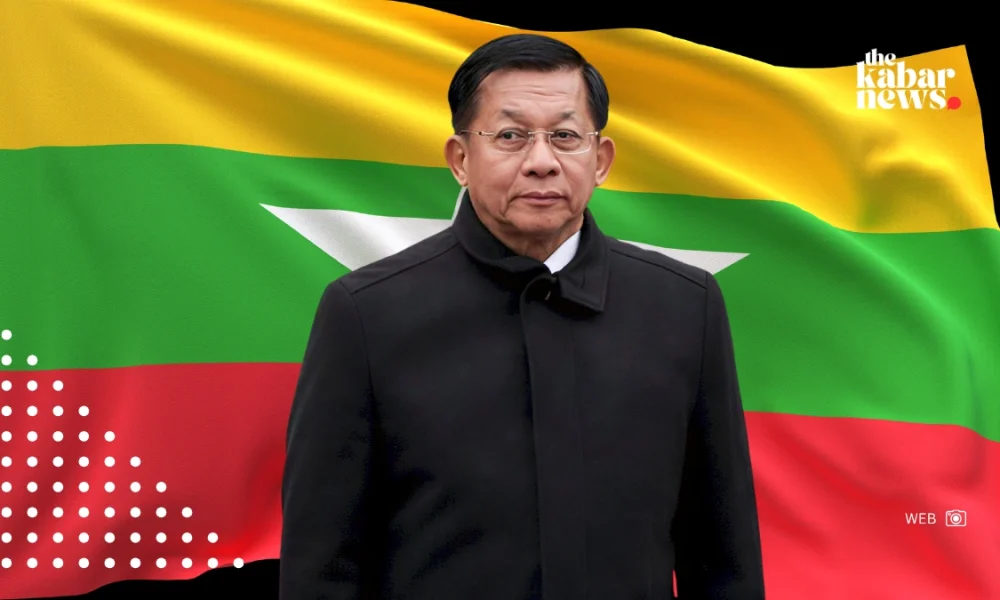
Thekabarnews.com—The parliament, supported by the military, has elected Min Aung Hlaing as president. This position gives him even more power five years after the coup that took down Aung San Suu Kyi’s civilian government.
The parliament speaker Aung Lin Dwe said that Min Aung Hlaing won with 429 out of 584 votes. This indicates his significant backing in a legislature predominantly composed of military-supporting groups.
Many people have said negative things about the election that took place between December 2025 and January 2026. The army backed the Union Solidarity and Development Party (USDP), which won.
Many people, including some Western governments, have called the election a “sham.” They think it was meant to make military rule look like civilian rule.
The constitution of Myanmar says that the military can have 25 percent of the seats in parliament. This gives them even more control over what happens in politics.
The constitution says that the president can’t be the commander-in-chief of the military. Min Aung Hlaing had to stop being the military’s commander-in-chief before he could become president.
Ye Win Oo, who was responsible for intelligence and was a close friend of his, is now in charge of the army. This change is more about gaining power than making things more democratic.
Independent Myanmar analyst Aung Kyaw Soe said that Min Aung Hlaing has wanted to be president for a long time. This step makes his power official. However, it does not mean that politics will change.
Different countries have reacted in different ways. China quickly accepted the new government. Foreign Ministry spokeswoman Mao Ning said that China would keep working together, especially on infrastructure projects that are part of the Belt and Road Initiative. She said the decision was despite the ongoing civil war and the instability it brings to the region.
The political change, on the other hand, happens in the middle of a civil war that is still going on and making the country less stable. People who do not like the military, like those who back Suu Kyi’s political movement and other ethnic armed groups, have stepped up their fight against the junta.
The Steering Council for the Emergence of a Federal Democratic Union said again that it wants to end military rule and set up a federal democratic system.
In many places, the junta and opposition groups are still fighting. This conflict leads to ongoing violence and instability that affects civilians. Additionally, it hinders efforts for peace and recovery. Such violence is detrimental for the health of people and the stability of the country in the long run.
The country’s political crisis is not over yet, even though the government has changed. Min Aung Hlaing’s concentration of power could make the divisions worse. It could also make it harder to bring the country back together.




No Comment! Be the first one.