

Malaysian politician criticizes Singapore over Iran’s negotiation stance on Hormuz Strait
Thekabarnews.com—A politician from Malaysia has publicly criticized Singapore for not talking to Iran about how to make the Strait of Hormuz safer to cross. This shows that Southeast Asian countries...

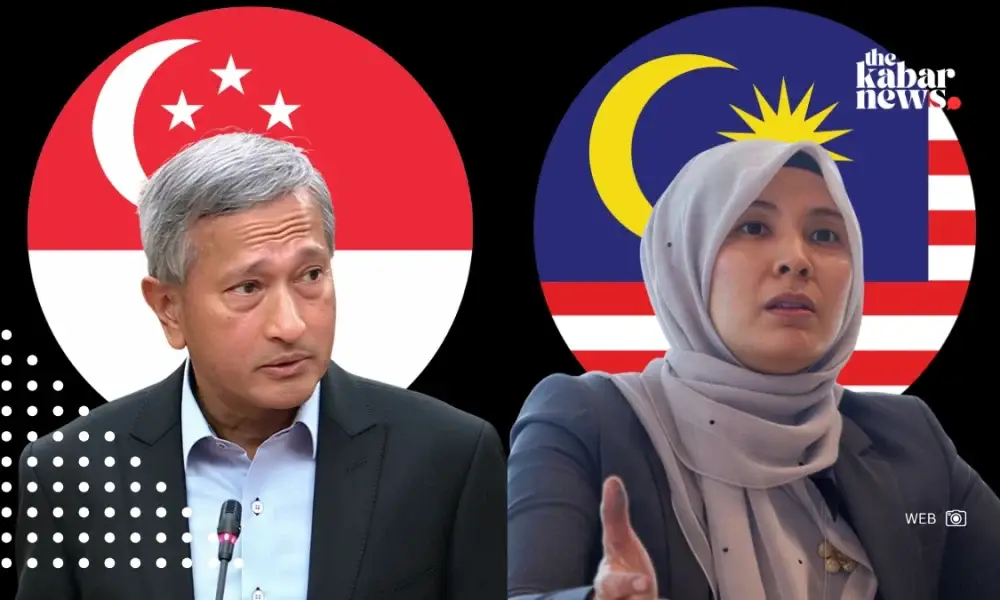
Thekabarnews.com—A politician from Malaysia has publicly criticized Singapore for not talking to Iran about how to make the Strait of Hormuz safer to cross. This shows that Southeast Asian countries are starting to talk to each other in new ways.
Nurul Izzah Anwar, the deputy president of Malaysia’s People’s Justice Party (PKR), said that Singapore’s stance shows a narrow strategic view. This view puts working with outside powers ahead of regional responsibility. Furthermore, it puts outside powers ahead of diplomatic engagement.
She made this statement after Singapore’s Foreign Minister Vivian Balakrishnan announced that Singapore would not discuss navigation rights in the Strait of Hormuz with Iran due to international law.
Nurul Izzah said that Malaysia still puts diplomacy first, especially when it comes to issues that could make the region less stable and the world’s energy supply less safe. She stressed the importance of further discussions to ease tensions in vital waterways, including the Strait of Hormuz. These waterways are crucial for global energy supply and regional stability.
She stated that Malaysia believes in the use of diplomacy, not its abandonment. Nurul Izzah also said that Prime Minister Anwar Ibrahim wants to work with other countries to keep things stable and protect the region’s interests.
Nurul Izzah also said that Singapore’s position may be more in line with larger geopolitical trends than with making fair policy. This could undermine the collaborative efforts of ASEAN member states to address regional issues effectively. In particular, she cited areas such as trade, security, and environmental concerns.
Such actions could negatively impact ASEAN and hinder the group’s ability to present a unified front in diplomatic matters. She says that this kind of behavior could hurt ASEAN’s long-standing promise to fair and independent diplomacy.
The different points of view show that there are more significant disagreements within ASEAN about how its member states should handle global conflicts and competing geopolitical interests. Some countries say that it is essential to follow international laws exactly. However, others think that diplomacy should be more flexible.
Nurul Izzah said that talking could improve things, while silence could worsen them. She emphasized the necessity of open dialogue among ASEAN member states to address their differing views on international laws and diplomacy.
Nurul Izzah told leaders in the area to think about how their foreign policy choices affect the whole world. She also said that history shows that disengagement often leads to escalation.
Singapore, however, asserts that it is adhering to the law of the land to uphold its position. Balakrishnan said in a parliamentary session on April 7 that everyone is entitled to move freely through international straits. He noted that this right cannot be negotiated.
Balakrishnan said that the UN Convention on the Law of the Sea was the basis for Singapore’s stance. He says all nations should be able to cross the sea without paying or making deals with coastal states.
“It is not a toll to be paid. It is a right of all nations’ ships to traverse,” Balakrishnan said, and he also said that international law supports this idea.
The Strait of Hormuz is still one of the most important places in the world for shipping oil. Any problems with navigation in the area have an immediate impact on the energy and trade markets around the world. For instance, shipping costs may increase, oil supplies may experience delays, and global oil prices may fluctuate.
The conflict between Malaysia and Singapore shows that ASEAN is having trouble balancing the law, diplomacy, and the way things really are in the world. Such tensions could make the area less stable. In addition, these tensions could change trade routes like the Strait of Hormuz.






No Comment! Be the first one.