

For more than 4.5 Years, a Deep-Sea Octopus Mom Kept Her Eggs Safe
Thekabarnews.com – In the deep, silent ocean, marine biologists have discovered a story of dedication, where a deep-sea octopus mom kept her eggs safe. It surpasses the limits of what a parent...

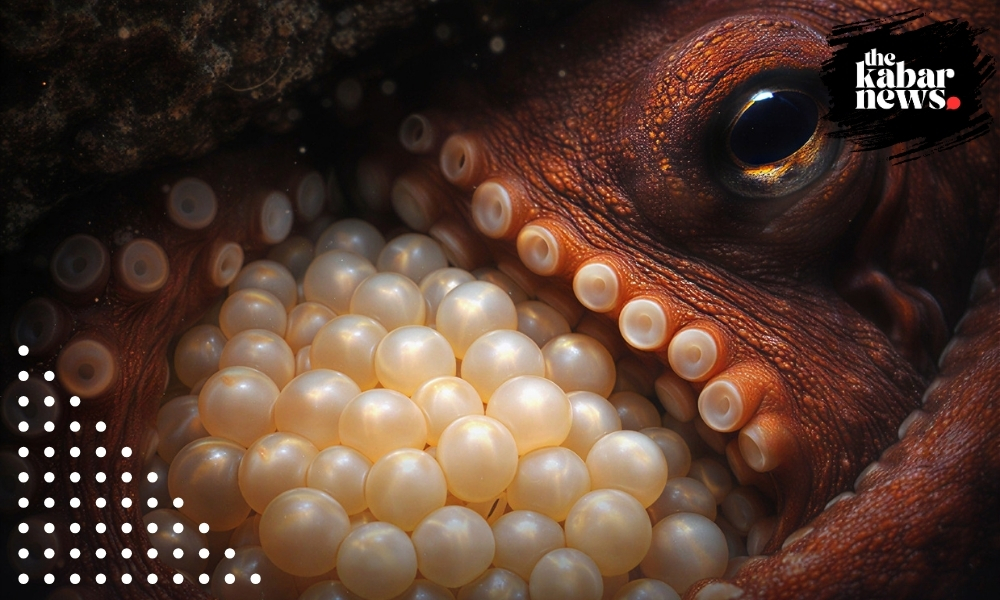
Thekabarnews.com – In the deep, silent ocean, marine biologists have discovered a story of dedication, where a deep-sea octopus mom kept her eggs safe. It surpasses the limits of what a parent can do for their child. This remarkable instance, showcasing how a deep-sea octopus mom kept her eggs safe, astounds scientists.
One of the most extreme examples of parental perseverance ever recorded has shocked marine biologists: a deep-sea octopus. Graneledone boreopacifica, the species, was seen brooding her eggs for an incredible 4.5 years. This is the longest time known for an animal to guard its eggs.
The octopus was located deep in the Monterey Submarine Canyon, around 1,400 meters below the surface of the ocean. The water there is almost freezing, which slows down biological activities a lot. It’s in this harsh environment that a deep-sea octopus mom kept her eggs safe, despite the challenges.
This freezing, deep-sea environment greatly slows down embryo growth. It turns what would typically take months into years. Researchers went back to the same place many times throughout the years and always discovered the mother still protecting her eggs—a testament to how a deep-sea octopus mom ensured her eggs remained safe.
During this lengthy time, she stayed almost entirely still. The octopus meticulously cleaned the eggs, kept them safe from predators, and kept touching them all the while to make sure they lived.
The Fact About Octopus Mom
This wonderful vigil came at a terrible cost. The mother did not depart to eat while she was brooding, which is common for many octopus species. She died soon after the eggs emerged. Her sacrifice ensured that the offspring emerged fully developed and better equipped to endure the harsh conditions of the deep ocean, illustrating how a deep-sea octopus mother safeguarded her eggs until they hatched.
The finding, which was published in PLOS ONE (Robison, Seibel & Drazen, 2014, article e103437), changed how scientists think. Specifically, it altered the perspective on how organisms reproduce in very harsh conditions, where safeguarding eggs becomes a daunting task.
It serves as a potent reminder of how existence in the deep ocean pushes organisms to their limits. The parent must make the ultimate sacrifice to ensure the survival of the next generation, much like the deep-sea octopus mom who kept her eggs safe against all odds.







No Comment! Be the first one.