

Kapuas Raya—Celebrating the Kapuas: Rethinking regional expansion through ecology and spatial justice
Pontianak, Thekabarnews.com—The public debate about the proposed Kapuas Raya Province has come again. Some people think of Kapuas Raya as just a question of moving about the state. Establishing a new...

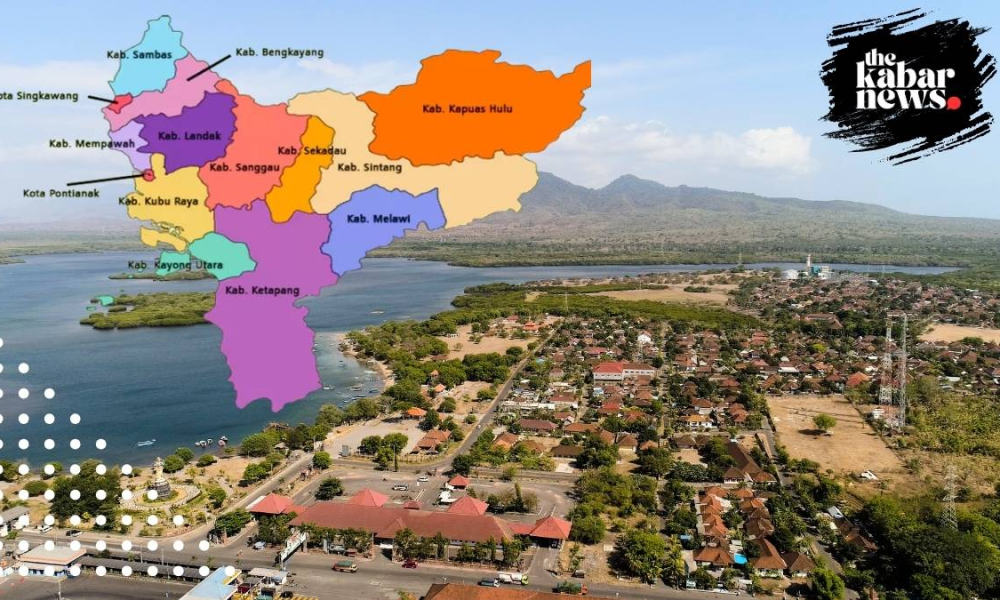
Pontianak, Thekabarnews.com—The public debate about the proposed Kapuas Raya Province has come again. Some people think of Kapuas Raya as just a question of moving about the state. Establishing a new administration and reorganizing the state budget are part of it.
Table Of Content
But if you look closely, it’s more than just painting new lines on a map. It has to do with how a region sees itself, including its space, distances, and the lengthy history of life molded by the river.
Kapuas Raya is more than just an administrative term; it also helps us grasp the region’s identity better
People often discuss Sintang, Melawi, Kapuas Hulu, Sekadau, and Sanggau as parts of the proposed Kapuas Raya. These locations are not empty spaces awaiting development. For eons, these areas have helped West Kalimantan by connecting towns, rivers, and forests in complicated ways.
When talking to villagers, teachers, customary leaders, and village authorities, one thing that comes up a lot is a feeling of being far away from the center. This divide goes beyond borders and into the spheres of politics and administration.
It doesn’t take long to travel from Pontianak to Sintang or Putusibau. It also shows how far away the bureaucracy is. People in Pontianak often have to wait for things like licensing processes and coordination. Consultations and access to public services take time as well.
For many towns along the river and in the interior, people want closer services, faster decision-making, and regulations that match their way of life. This is precisely where the concept of Kapuas Raya becomes relevant.
The Kapuas River serves as a lens through which to conceptualize space
If imagined accurately, Kapuas Raya would be along the Kapuas River, which is the longest in Indonesia and the most important one in West Kalimantan. Ironically, people often label the upper and middle reaches of the river as “back areas,” even though migration history, river-based economies, agriculture, and cultural networks all began there.
Therefore, people should not view regional growth as a breakaway from the parent province. Instead, they should understand it as an acknowledgment of the river-based spatial logic that governs the region. The upstream, middle, downstream, and border areas need different kinds of development than coastal areas or province capitals.
It is important to stress that if Kapuas Raya just copies development models that focus on highways and cities, it could make current inequities worse. However, if it starts with a profound grasp of rivers, ecology, and local knowledge, Kapuas Raya might become a living laboratory. It could promote more sustainable inland development in Indonesia.
People should not treat river governance, forest conservation, traditional land management, and water-based mobility as ancillary issues. They are what make ordinary life in the area possible.
Questions and risks remain unanswered
There are always hazards involved with expanding to new areas. Experiences from previously established autonomous regions indicate that potential problems may arise. These include financial problems, more bureaucracy, and competition among elites. Furthermore, short-lived political excitement can occur. These facts make it necessary to ask some very basic questions right away.
Who is going to use this new province? How will the connections between cities and villages, as well as between communities upstream and downstream, change? Will Indigenous peoples and communities around the river be actively involved, or will they just be watching?
Kapuas Raya could end up being just a new moniker for existing problems if it does not have a clear and inclusive goal.
Kapuas Raya is a wonderful chance for Indonesia to reassess how it runs its inland and border areas, no matter if the extension happens or not. It makes people think about how to run rivers in a way that includes everyone. Building in a way that is beneficial for the environment is crucial. Providing public services that extend beyond big cities is crucial.
One thing is for sure: we can no longer ignore voices from the interior and upstream regions as unimportant. These are voices from the heart of Kalimantan that could change how people think about and picture the island’s future.
Mira S. Lubis: Lecturer of urban and regional planning at Universitas Tanjungpura, Pontianak.






No Comment! Be the first one.