

Jerusalem: A 5,000-year history behind one of the world’s most contested cities
Thekabarnews.com—People have lived in Jerusalem without pausing since about 3500 BCE, making it one of the oldest towns in the world. Jews, Christians, and Muslims all care a lot about the city. It...

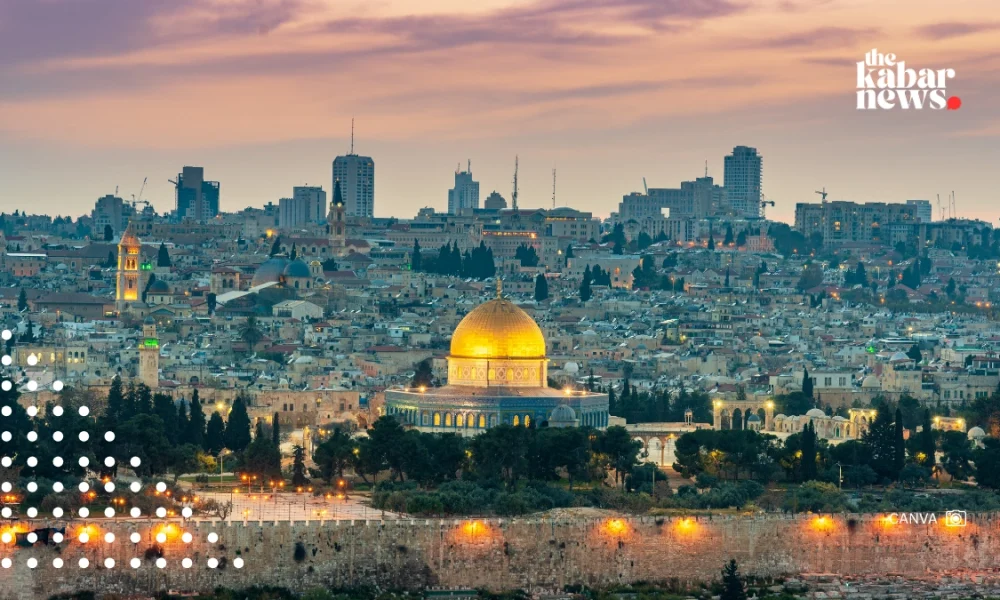
Thekabarnews.com—People have lived in Jerusalem without pausing since about 3500 BCE, making it one of the oldest towns in the world. Jews, Christians, and Muslims all care a lot about the city. It has been a place where politics, culture, and religion have all come together for thousands of years.
It still generates problems in politics all around the world, particularly due to ongoing conflicts over territorial claims and religious significance among these faiths, which often lead to tensions and violence in the region.
Historians think that the Canaanites were the first people to reside in what is now Jerusalem. They built settlements there and named them Salem.
Around 1000 BCE, King David took over the city and made it the capital of the old Kingdom of Israel. After him, King Solomon erected the First Temple. This made Jerusalem the most important city for Jews.
The city was destroyed and rebuilt many times. The Babylonian Empire destroyed Jerusalem and the First Temple in 586 BCE.
When the Persians were in power, the Jewish exiles returned and rebuilt the Second Temple. In 70 CE, the Romans broke it down. The Romans later changed the name of the city to Aelia Capitolina so that it would sound different.
In 638 CE, Umar ibn al-Khattab led Muslim warriors into Jerusalem without any violence. This was a major deal. In Arabic, it is named Al-Quds, and it became a highly important place for Islam.
The Umayyad period saw the construction of the famed Dome of the Rock, which made it an even more prominent site to pray.
During the Crusades, Christian armies from Europe took over Jerusalem in 1099. But in 1187, Saladin, the Muslim leader, gained it back, restoring Muslim control over the city and allowing for the re-establishment of Islamic practices and governance.
From 1517 to 1917, the city was part of the Ottoman Empire. In the past, most members of different religions coexisted peacefully.
The UK took control after World War I. The UN’s intention to split the territory in 1947 and the Arab-Israeli war that followed in 1948 transformed the area, leading to significant demographic changes.
They also created ongoing tensions between Jewish and Arab populations that continue to affect the region today. Israel gained control of East Jerusalem following the 1967 Six-Day War.
Competing national identities and deeply rooted historical, religious, and political claims continue to make Jerusalem one of the world’s most difficult conflict zones.
Israel claims the entire city as its capital, while Palestine seeks East Jerusalem as the capital of a future state.
Jerusalem continues to draw global attention due to its deep spiritual heritage and ongoing political tensions, particularly the conflict between Israel and Palestine over its status.






No Comment! Be the first one.