

Iranian missiles strike Southern Israel, raise concerns near nuclear facility
Thekabarnews.com—Israeli officials say that a wave of Iranian missile strikes has gotten through Israel’s air defense system. The missiles hit two southern cities near a nuclear facility,...

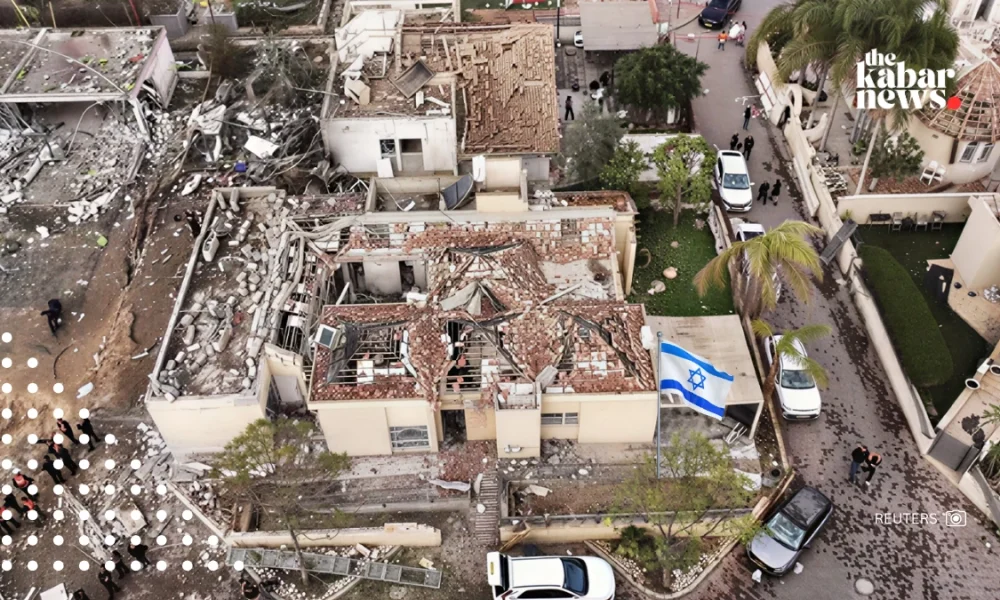
Thekabarnews.com—Israeli officials say that a wave of Iranian missile strikes has gotten through Israel’s air defense system. The missiles hit two southern cities near a nuclear facility, injuring more than 180 people.
Israel’s Health Ministry said that 116 people were hurt in Arad and 64 others were hurt in Dimona after ballistic missiles hit the cities on Saturday night, March 21. The attacks represented one of the biggest holes in Israel’s air defense system in the last few months.
Iranian state TV reported that the strikes were in response to an attack on Iran’s Natanz nuclear facility. Reports indicate that the attack occurred earlier that day.
The Israel Defense Forces, on the other hand, said they did not have any confirmed information about a strike on Natanz at that time.
Eyewitnesses reported significant damage in the affected areas. Several homes sustained damage, according to Ahmadiel Ben Yehuda, a resident near the impact site in Dimona.
“Many ceilings fell and windows broke, even in my home,” he stated. He also said it was difficult to understand how powerful the explosion was.
Israeli Prime Minister Benjamin Netanyahu and President Isaac Herzog visited the affected areas on Sunday, March 22. Their visit demonstrated how serious the situation is.
The attacks have made people worry again about how well Israel’s air defense systems work.
Officials claim the system ranks among the world’s most advanced, yet it cannot ensure the prevention of all threats.
Recent attacks have sparked concerns about the system’s effectiveness and the potential for catastrophic consequences if it fails to intercept a threat.
The attacks also got a lot of attention because they were close to the Negev Nuclear Research Center. Analysts frequently associate this center with Israel’s covert nuclear weapons.
Analysts have long associated the facility, formally known as a research center, with the country’s nuclear weapons program.
Israeli officials said that there were no radioactive leaks. They assured the public that people living nearby were not in any immediate danger.
In the meantime, Iran’s Atomic Energy Organization spoke out against the supposed attack on Natanz. They called it a breach of the Treaty on the Non-Proliferation of Nuclear Weapons.
The exchange shows a dangerous pattern of escalation, with both sides attacking infrastructure that is important for military operations. Such actions could lead to unintended consequences and further destabilization of the region.
The situation keeps making people worry about the stability of the region. The possible dangers of attacks near nuclear sites remain a concern.
As tensions persist, international observers are closely monitoring the unfolding events. In particular, they are watching the impact on security and the broader context in the Middle East.







No Comment! Be the first one.