

Iran says Israel will never cross through the Strait of Hormuz, even after the war
Thekabarnews.com—Iran’s most recent policy pronouncement could transform the way politics works in every country. Iranian President Masoud Pezeshkian claimed that Israeli ships will never be allowed...

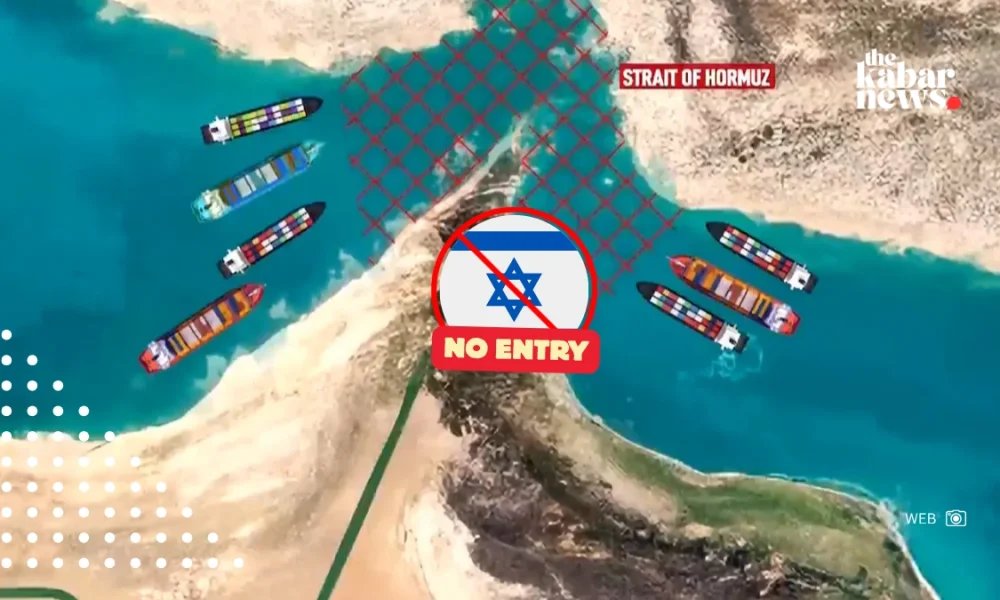
Thekabarnews.com—Iran’s most recent policy pronouncement could transform the way politics works in every country. Iranian President Masoud Pezeshkian claimed that Israeli ships will never be allowed to cross through the Strait of Hormuz. This strait is a significant oil transportation route around the world.
This speech on April 1st shifted the power balance in the Middle East and made things a lot more tense.
The Strait of Hormuz is not only a local waterway; it is also a vital route for transferring energy throughout the world. Changes in its flow affect the price of oil. They also impact the supply chain and the stability of the international economy.
Some individuals believe that Iran’s “Hormuz Doctrine” is a strategy for leveraging geography to advance its political goals. Iran’s location gives it control over one of the world’s busiest shipping lanes.
Their offer comes at a horrible moment since things are becoming worse in Tehran. Many individuals have responded to the news of a cease-fire, which has led to missile launches again.
The move looks like more than simply a gesture; it looks like it is part of a bigger plot to show strength and scare off adversaries.
Iran is also working toward selective alignment by only permitting ships from Russia, China, India, Iraq, and Pakistan through. However, it does not let ships from Israel through. This plan fits with the new groups that are growing all around the planet.
But this procedure has many hazards. Experts say that setting this kind of limit could make things worse than they are currently. It could even draw the attention of major foreign countries that want to keep shipping lines open.
The US and its partners may have to make a tough choice: either deal with limited access or send more ships to the area. This choice might ignite a war.
The Strait of Hormuz is an area where things are not clear, which might make the oil markets throughout the world unstable from an economic perspective.
Prices can change only because people perceive things are not stable. Such uncertainty has an effect on economies of all kinds. But the wider picture is that such behavior will have long-term repercussions because it establishes a norm.
If politics keeps standing in the way of shipping routes, it might happen to other vital commerce routes around the world as well. This kind of option would affect the rules for how countries trade with each other.
Diplomatic ties remain strained, prompting people worldwide to pay careful attention. Iran’s actions indicate that battles between countries are no longer simply about land and air—they are also about critical economic lifelines. The issue is not whether this fight will alter the global order, but to what extent it will.






No Comment! Be the first one.