

Iran reportedly produces thousands of kamikaze drones monthly in war strategy
Tehran, Thekabarnews.com—People say that Iran’s goal is to fight a long war that will weaken the US and its allies’ military and economic power. Recent intelligence reports indicate that...

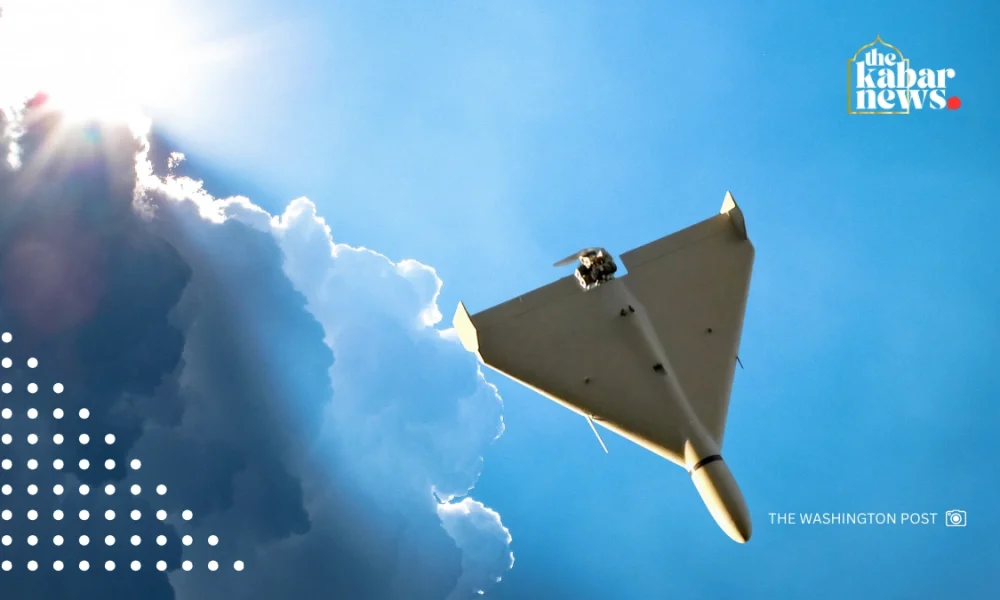
Tehran, Thekabarnews.com—People say that Iran’s goal is to fight a long war that will weaken the US and its allies’ military and economic power. Recent intelligence reports indicate that Tehran has significantly improved its weapons production capabilities. As a result, it can now make thousands of unmanned aerial vehicles (UAVs) every month.
Some military experts say that Iran’s industrial network can now make more than 5,000 kamikaze drones every month. These developments could change how modern asymmetric warfare works.
A lot of these drones are from the Shahed series. These drones are cheap and hit their targets by crashing into them. Moreover, experts say that Iran can use a lot of these drones at once because they cost less than more advanced missile systems.
The plan will only work if there are a lot of air defense systems in place. Iran could send out many drones at once. In that case, the other side would have to spend a lot of money on missiles to stop them.
The US and its allies’ systems for shooting down drones cost thousands of times more per shot than the drones themselves. If attacks keep happening for a long time, this economic imbalance could slowly make it harder to buy weapons and protect yourself from them.
Some people call the situation a “war of attrition,” which means that one country tries to weaken its enemy by winning battles and running out of money and supplies.
A lot of these kinds of plans may depend on Iran being able to keep up its high levels of production. People say that the country has spent a lot of money on underground production facilities. Notably, these facilities can continue operating even during prolonged airstrikes.
Defense experts assert that Iran can continue to acquire weapons by manufacturing them even during attacks.
Tehran has also been using diplomacy to send signals that make it look like they want to talk, possibly to buy time for their military to strengthen and enhance their capabilities. The delay is part of a bigger plan to give the military more time to get stronger.
People who watch say that Iran might be able to get past even the best air defense systems if they keep making many drones and use “swarming tactics,” where many drones attack at once.
Opposing forces may need to devote considerable resources to preventing repeated drone incursions.
The changing role of drones, driven by new technology and factories’ production capabilities, signifies a shift in modern warfare. Therefore, this capability allows for rapid production and deployment of drones that can overwhelm traditional defense systems.






No Comment! Be the first one.