

Iran launches Sejjil missile strike on Israel in latest wave of retaliation
Thekabarnews.com—On Sunday, March 15, the Islamic Revolutionary Guard Corps (IRGC) of Iran started a new round of missile attacks on Israel. Iran used the strategic Sejjil missile for the first time...

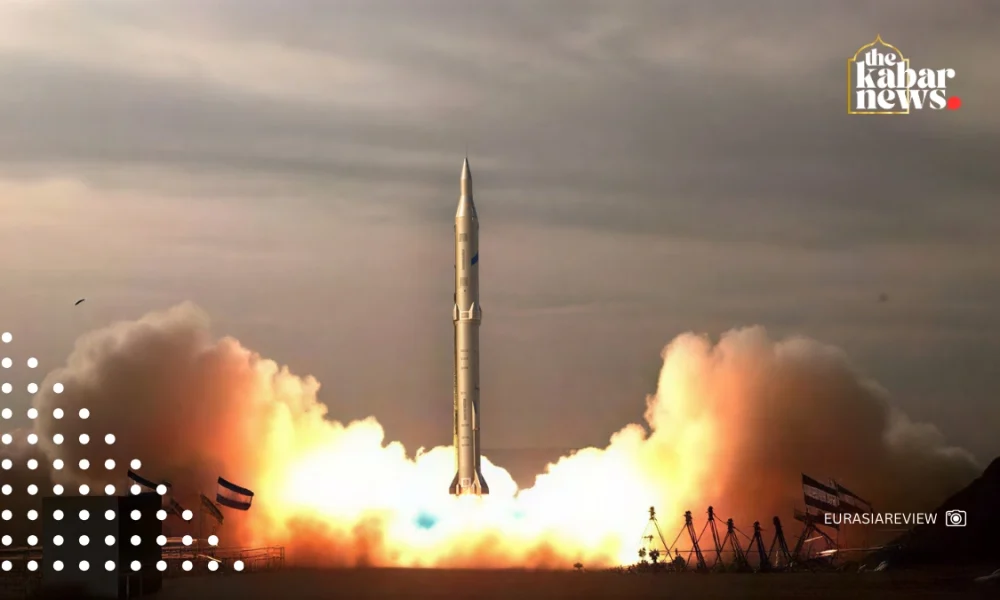
Thekabarnews.com—On Sunday, March 15, the Islamic Revolutionary Guard Corps (IRGC) of Iran started a new round of missile attacks on Israel. Iran used the strategic Sejjil missile for the first time in the current war during this strike.
Iran’s “True Promise 4” campaign of retaliation included the attack. Iranian sources said that the most recent attack was the 54th wave of missile strikes on Israeli positions. This period began after the fighting got worse when the US and Israel attacked Iran on February 28.
The IRGC used different types of missiles during the operation, according to Tasnim News Agency. Iranian troops reportedly employed heavy missiles, including the Khorramshahr and Sejjil missiles. They also used missiles like the Khaybar-shekan, Qadr, and Emad.
Iranian officials said the missiles targeted Israeli command centers and decision-making facilities. Analysts believe these facilities influence the country’s air operations. The IRGC also said the strikes targeted infrastructure linked to Israel’s military and defense industries.
Iranian sources also stated that the attacks targeted “occupied territories,” or locations where Israeli soldiers were congregating.
The Sejjil missile, also known as Ashura, is one of Iran’s most advanced solid-fuel ballistic missile systems. On the other hand, solid-fuel systems facilitate quicker launch preparations. They also reduce the likelihood of detection before launch.
This ability gives you a big tactical advantage in battle. It lets you deploy quickly without having to go through long fueling processes.
According to The Economic Times, Iran designed the Sejjil as a two-stage solid-propellant ballistic missile for long-range attacks.
Iran developed the missile as a medium-range ballistic missile (MRBM). With a range of about 2,000 kilometers, the weapon could hit targets in a lot of the Middle East. These include Israel, as well as parts of Europe and Asia.
CSIS says that the missile is 18 meters long and 1.25 meters wide. The system weighs about 23.6 tons when it launches and can carry a load of 700 kilograms.
Iran’s first test of the Sejjil missile took place in 2008. Since 2012, there have not been many public reports of more test launches.
The most recent missile attack shows how the situation is getting worse. Both sides keep attacking each other, which could make things even worse.







No Comment! Be the first one.